I love making big pot of thick soup a few times per week. They are rich, filling, and very satisfying; full of good-for-you ingredients, and are easy to make – just chopping, no advanced cooking skills required!
This is recipe for a sweet potato and lentil stew, with an eggplant twist.
I’ve been making a variation of this recipe for the past couple of weeks, and I don’t get bored of it. One reason is that I can never follow a soup recipe exactly as it’s written – I always, always experiment (just as with green smoothies), depending on the contents of my fridge.
This time it was eggplant. I don’t buy it often (as I don’t know many good recipes that use eggplant as ingredient and it often gets wasted), but this time I bought two locally grown eggplants at BJ’s (to support local farmers) and I decided to turn one into a soup.
Since none of the eggplant soup recipes sounded enticing, I thought, why not add it to a curried sweet potato-lentil combination. My son usually loves soups that have sweet potatoes (or any winter squash) in it, so I was hoping that he will eat it too.
It turned out delicious!
Sweet Potato-Eggplant-Lentil Soup (or Stew) Recipe
Makes 8-12 servings
Ingredients
- 2 tablespoons olive oil (or other cooking oil), optional
- 1 medium onion, diced
- 2 small tomatoes, diced
- 1 tablespoon curry powder
- 1 teaspoon minced fresh ginger
- 1 teaspoon cumin
- 1 teaspoon ground coriander
- 1/4 teaspoon ground cinnamon
- sea salt to taste
- 2-3 medium sweet potatoes, peeled and cut into ¾” cubes
- 1 small eggplant, peeled and cut into ¾” cubes
- 1/2 package dry lentils, rinsed and picked through
- 7 cups water
- 1 cup finely chopped fresh cilantro leaves
Preparation:
Heat the oil over medium heat in a large, deep pot. Add the onion and cook, stirring frequently, for two minutes or until the onion starts to soften. For fat free cooking, skip the oil and add 2-3 tablespoons of water.
Stir in the curry, cumin, coriander, cinnamon, and a small pinch of salt. Stir in the tomatoes and ginger and cook for three minutes. Cook and stir for two minutes, then taste for seasonings; try to use only enough salt to heighten the flavors.
Add the chopped sweet potatoes, water, and lentils. Stir well, and bring to a boil over high heat. When the mixture comes to a boil, reduce the heat, cover, and simmer for 40 minutes or until the lentils and sweet potatoes are soft.
Blend in a blender to a smooth consistency, if desired. I usually only blend a few cups, leaving the rest of the soup chunky.
Served on its own or as a soupy stew over brown basmati rice or couscous, this dish is hearty and filling.
Pour into bowls and sprinkle with cilantro before serving. Bon appetit!
This soup gets even better on the second day, as the flavors develop.
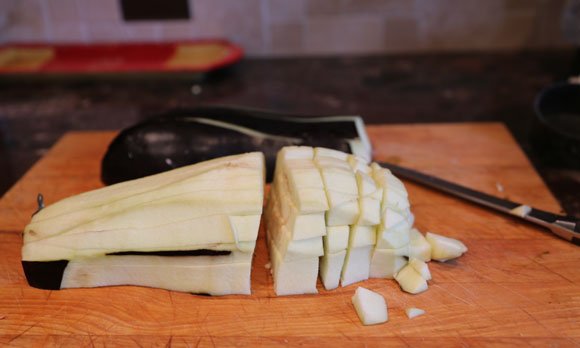
Sweet Potato Eggplant Lentil Soup: Chopping eggplant
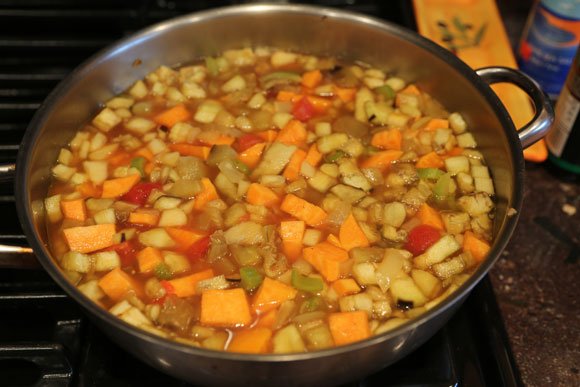
Sweet Potato Eggplant Lentil Soup: Make a big pot to last a few days.
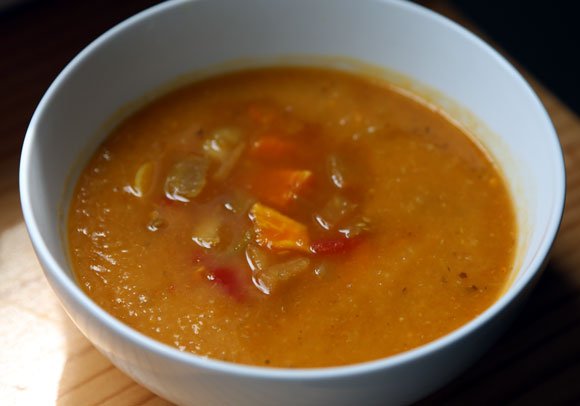
Sweet Potato Eggplant and Lentil Soup: Partially blended with Vitamix
For all my blending recipes I use Vitamix. If you don’t already own a VitaMix, I strongly encourage you to check out what this machine is capable of! For more information about VitaMix you can go directly to the VitaMix website. You may also want to read my post about the Best Blender.
I LOVE my VitaMix and highly recommend investing in one if you are ready to make serious changes to your diet. I have had mine for almost 5 years and use it daily!
If you decide to purchase Vitamix – be sure to use Promotional Code 06-004554 to get free shipping.
Questions? Comments? Suggestions?
If you have a favorite recipe, why not submit it here in the comment section of this smoothie recipes blog for others to enjoy too!
I also welcome any comments, questions and suggestions. Thanks!
As the temperatures are rising, are you hungry for a delicious frozen treat that is healthy and nutritious?
I know my family is.
Everyone in our home loves ice cream, so I’ve decided to experiment with home-made frozen desserts that are actually good for you AND for the planet, and here are the results.
(Why do I bother with making ice-cream at home, when perfectly delicious concoctions can be bought at any convenience store and grocery store? The answer is coming up soon….but for now – here are the recipes).
How to Make Ice Cream Without an Ice Cream Maker?
Ice cream makers are a fun and easy way to churn up frozen treats at home, however, most people don’t own it (I don’t), and I would never deem it a kitchen necessity. Single-tasking kitchen tools are a major pet peeve of mine, as they take up precious kitchen space, and usually get little usage.
So what’s an ice-cream-lover to do (other than running to the nearest store)?
There are several methods to make ice cream at home, and the easiest one in my opinion is to use your Vitamix (or other high power blender) or food processor.
It’s easy, it’s simple and it only takes a few minutes and your frozen treat is ready.
Tips For Making Delicious Homemade Ice Cream
That ingredient that I use most often in homemade ice cream recipes, is banana! Ripe bananas, when frozen and blended up, turn creamy instead of crumbly, with a smooth texture any home ice cream chef would love to have in their frozen treats.
The major tips can be summed up as:
- Peel your bananas first.
- Cut them into small pieces.
- Freeze for a few hours on a plate.
- Blend, blend, blend – scraping down the bowl when they stick.
- Add other ingredients – frozen fruits, nut butters, nuts, chocolate powder, vanilla, cinnamon, etc. , and blend some more.
- Scoop into bowls and top with sliced fruit or your favorite sauce.
- Enjoy the magic moment!
Almond Butter-Banana Ice Cream
- 4 frozen very ripe bananas, cut into pieces
- 1/4 cup of almond butter
- 2 tablespoons agave nectar (or any other liquid sweetener)
- 1/2 teaspoon vanilla extract
- pinch of sea salt
Combine all ingredients in a food processor or Vitamix and blend until smooth and creamy. Serves 4.
Make this dairy-free dessert tonight – it is amazing! It takes just 5 minutes to prepare and delivers tons of satisfaction for a little over 200 calories per serving!
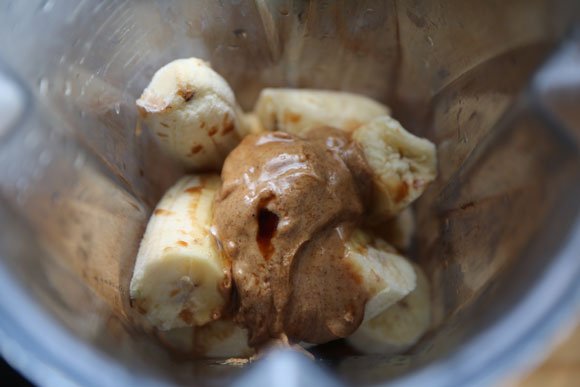
How to Make Ice Cream in under 5 minutes (some preparation – like freezing bananas – required)
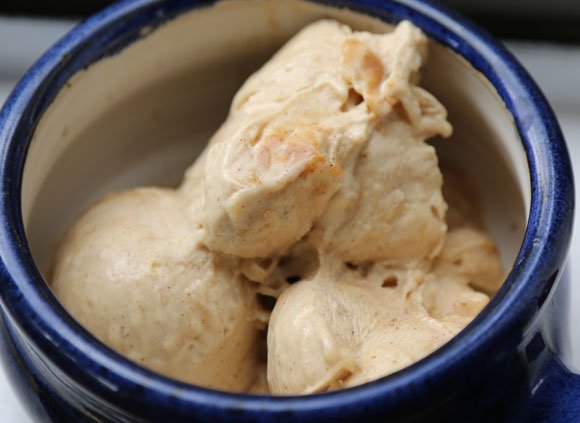
Homemade Almond-Butter – Banana Ice Cream: Dairy-Free, Cruelty-Free and Simply Delicious!
Banana Chocolate Cherry Ice Cream
- 3 frozen medium bananas
- 1 cup frozen organic cherries
- 5 dates, pitted
- 2 tablespoons organic virgin coconut oil
- 1 tablespoon vanilla extract
- 2 tablespoons raw cacao
- pinch sea salt
In a food processor or blender (Vitamix or other), pulse dates, coconut oil, vanilla, and a pinch of salt into a thick paste. Add in cherries and bananas and blend until smooth. Eat immediately or freeze in covered container until firm, 2-4 hours. Serves 4.
It’s best to consume all ice cream immediately. If you’d like to store some for later, I’d recommend to give it a good stir after the first 30 minutes in the freezer.
You can also freeze leftovers in an ice cube tray, transferring the cubes to a zip-top bag when frozen solid. To prepare the leftover ice cream, place the frozen ice cream cubes in a food processor, let them sit for a couple of minutes to soften slightly, and pulse until smooth and creamy.
For all my blending recipes I use Vitamix. If you don’t already own a VitaMix, I strongly encourage you to check out what this machine is capable of! For more information about VitaMix you can go directly to the VitaMix website. You may also want to read my post about the Best Blender.
I LOVE my VitaMix and highly recommend investing in one if you are ready to make serious changes to your diet. I have had mine for almost 5 years and use it daily!
If you decide to purchase Vitamix – be sure to use Promotional Code 06-004554 to get free shipping.
Questions? Comments? Suggestions?
If you have a favorite recipe, why not submit it here in the comment section of this smoothie recipes blog for others to enjoy too!
I also welcome any comments, questions and suggestions. Thanks!
As long as I keep drinking green smoothies regularly, I never suffer from constipation. The only times I do get constipated is when I travel and am unable to consume my usual diet rich in green smoothies and other whole foods.
Consuming lots of fresh, raw fruits, vegetables, and greens, definitely helps to “keep things moving” in this department. These foods provide such abundance of fiber and liquids that they virtually swipe your intestines like a broom, and are the best remedy for constipation relief.
Green smoothies act like a broom, cleaning up your many, many feet of intestinal tract, and helping elimination of all the unnecessary stuff and garbage from your body.
However, if you are just beginning to drink green smoothies (or switching to a more natural-fiber-rich diet), you may feel surprisingly bloated and constipated initially. This will come as an unpleasant surprise, especially, if one of your motives has been better digestion and better elimination.
You may be asking yourself: “Why am I constipated after drinking green smoothies?”
Constipation can be a surprising side effect of increasing the amount of fiber in the diet for some people. Usually, this is a result of a sudden increase of fiber coupled with dehydration.
Let’s say that you’ve been eating a diet rich in animal protein (no fiber) and white flour breads and pastas (very little fiber), which is common for many people eating a Standard American Diet (SAD). Then you suddenly flood your body with green smoothies and whole foods and your fiber intake jumps to 2 or 3 times (or more). All of that soluble fiber in fruits and vegetables is now absorbing moisture in your intestines and slowly trudging through your bowels. This will cause problems especially if you have not increased your water intake.
Many people give up at this point, assuming that this type of diet is not for them. They will be blaming raw fruits and vegetables for their problem, and vow to avoid them at all cost.
BIG MISTAKE!
Fact is your body needs time to adjust to the new healthier regimen, and if you are experiencing difficulties, you’ll just need to slow down a bit and give your body some time get used to the new diet.
If you are not used to eating loads of fresh fruits and vegetables, then increase your water consumption and make sure you increase your fiber intake GRADUALLY over a week or two.
Avoid taking fiber supplements if you are getting adequate fiber in the diet through green smoothies and fresh fruits and vegetables. Reduce your consumption of dried or powdered foods (even the super-foods).
If you are still feeling a bit “backed-up” and bloated, try out one of the prune smoothie recipes below as a natural and nutritious way to get things moving. It’s great for digestion and boosting energy. This smoothie is full of beta-carotene, folate, vitamins B1, B3, and B6.
Do prunes really work as a laxative?
There are many old wives’ tales out there regarding our health, however, in this case, your grandma was right.
Prunes are especially high in fiber and contain sorbitol, a stool-loosening sugar that naturally helps relieve constipation. Sorbitol is a mild colonic stimulant that helps reduce transit time of stool and thus decrease the risk of constipation. That is why prunes are often recommended for fast constipation relief.
Fresh plums are filled with minerals and also have a mild laxative effect. They can relieve gas and have a cleansing effect on your intestines.
However, prunes are generally considered more effective than plums for constipation relief.
How To Use Prunes In A Green Smoothie
The prune smoothie recipe requires a bit of advance preparation to plump up the prunes by putting them in a cup of hot water for about ten to twenty minutes but the results are well worth it.
“Keeping things Moving” Prune Smoothie
- 9 prunes, pitted and soaked
- 1 pear
- 1 cup water or organic apple juice
- 1/2 tsp vanilla essence
Apple Prune Smoothie
- 6 prunes, pitted and pre-soaked until plump
- 1 1/2 cup apple juice
- 2 stalks of celery
- one handful of organic spinach
- 1/4 tsp cinnamon
- pinch of nutmeg
PRUNE POWER Smoothie With Yogurt
- Pitted prunes, 6 pieces
- Apple juice, 1 cup
- Crushed ice, 1 cup
- Non-dairy vanilla yogurt (such as soy), 1 cup
- Cinnamon powder, 1/4 teaspoon
- Grated nutmeg, 1 pinch
First, submerge the prunes in warm water for 15 minutes. Then drain the prunes. Let it cool down. Blend in the prunes, apple juice, ice and yogurt. Add cinnamon and nutmeg to taste.
Blend to desired consistency. Serve and enjoy!
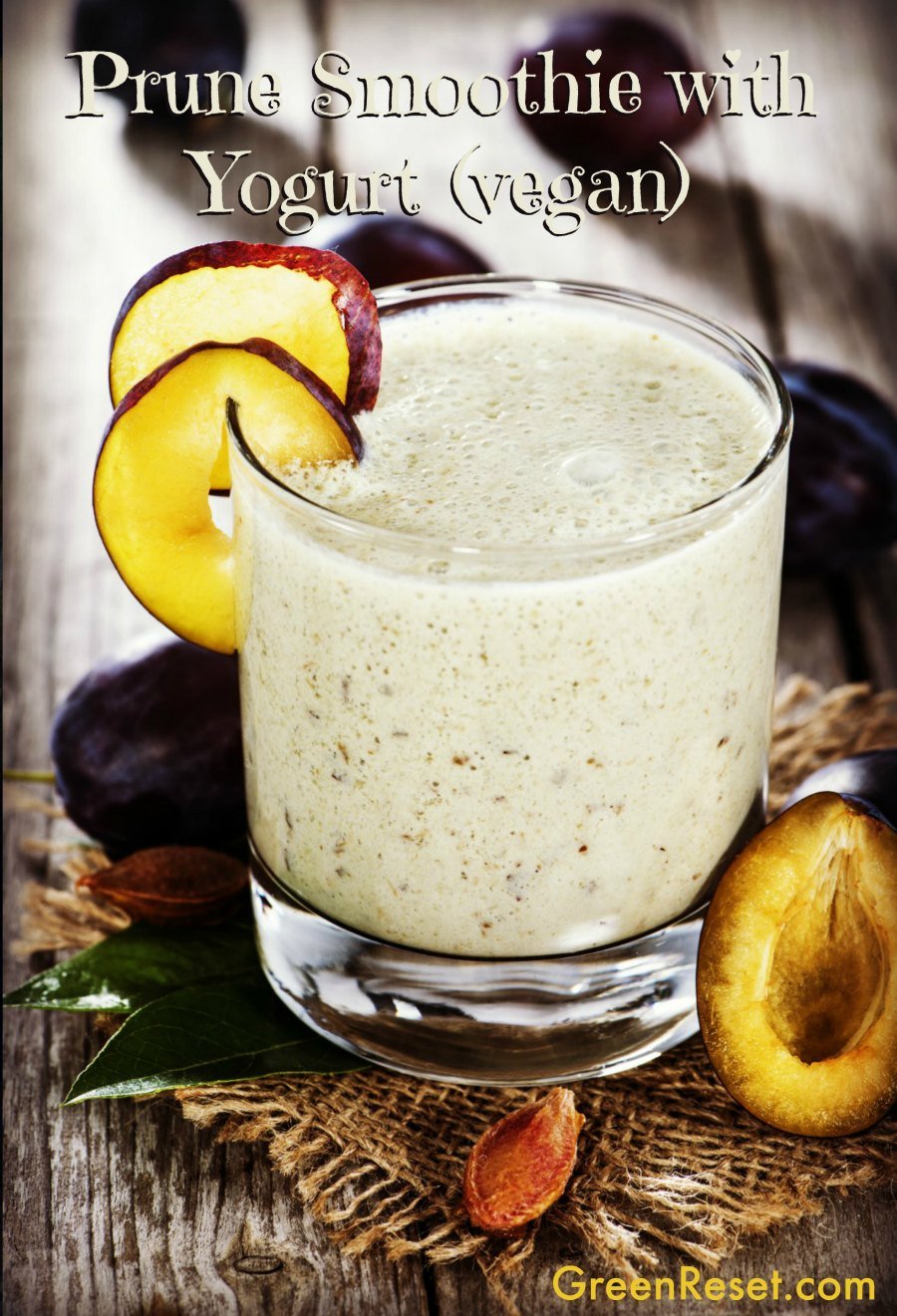
If you drink green smoothies every day, your elimination will become effortless, almost odorless and quick – you will not be able to catch up on your reading while sitting on the toilet, because you’ll be done by the end of the first paragraph ;-).
Note: If constipation continues to be a problem, or if it is a common problem for you no matter what diet you are on, then consult a qualified health practitioner who can help rule out any health issues.
For all my blending recipes I use Vitamix. If you don’t already own a VitaMix, I strongly encourage you to check out what this machine is capable of! For more information about VitaMix you can go directly to the VitaMix website. You may also want to read my post about the Best Blender.
I LOVE my VitaMix and highly recommend investing in one if you are ready to make serious changes to your diet. I have had mine for almost 5 years and use it daily!
If you decide to purchase Vitamix – be sure to use Promotional Code 06-004554 to get free shipping.
Questions? Comments? Suggestions?
If you have a favorite recipe, why not submit it here in the comment section of this smoothie recipes blog for others to enjoy too!
I also welcome any comments, questions and suggestions. Thanks!
I want to share with you today an example of the dangers of the isolated thinking that is so common today. I’m talking about the prevalent belief that we can compensate for our bad eating and living habits by popping a pill or a supplement to make all problems disappear.
The problem with this approach is that it just doesn’t work.
As I learn more and more about various aspects of human health and nutrition, I come across more and more examples of the potential dangers that this fragmented thinking can cause.
I want to illustrate it with the folate vs folic acid debate.
(Plus, I want to give you one more reason to keep drinking green smoothies!)
What is Folic Acid?
Every woman in child-bearing age knows about folic acid.
Women who are pregnant or might become pregnant are urged to take folic acid during pregnancy to prevent miscarriage and neural birth defects such as spina bifida that occur when the fetus’s spine and back don’t close during development. Health authorities emphasize the critical importance of taking folic acid supplements during pregnancy and women follow that misguided advice.
When I was pregnant (and even prior to that, when I was trying to conceive) I was taking folic acid religiously. Surely, no woman wants their child to be at risk for birth defects!.
Is it the right approach?
Well, needless to say I was shocked to learn that I may have increased my own and my son’s risk for certain cancers by taking these supplements. I learned about this as I was reading “Super Immunity” by doctor Joel Fuhrman. Here is what I learned.
Folate Versus Folic Acid
Most people don’t know the difference between folate versus folic acid, as the terms are often used interchangeably.
*Did you know that folic acid is not found in natural foods at all?!!*
It is the synthetic form of folate that is used as an ingredient in vitamin supplements. Basically it’s a cheap counterfeit isolate of the naturally occurring nutrient, folate.
Folate is a member of the B vitamin family and is found naturally in plant foods, especially green vegetables. It is involved with DNA methilation, which essentially turns genes on and off. This critical role makes folate essential in fetal development and nerve tissue health, as well as cancer progression.
Folate is needed for the proper development of the human body. It is involved in producing the genetic material called DNA and in numerous other bodily functions.
Foods that are naturally high in folate include leafy vegetables (such as spinach, broccoli, turnip greens, and lettuce), okra, asparagus, fruits (such as bananas, melons, and lemons), legumes, yeast, mushrooms, orange juice, sunflower seeds, and tomato juice.
Folic acid has been added to cold cereals, flour, breads, pasta, bakery items, cookies, and crackers, as required by federal law.
The term folate (NOT folic acid) really encompasses a multitude of naturally occurring chemical cousins – chemists call them isomers – that have a wide range of health benefits. Without full-spectrum natural folate, our body becomes a breeding ground for various diseases, including Alzheimer’s, coronary heart disease, osteoporosis, neural tube defects, poor cognitive performance, depression, hearing loss and many types of cancer.
The liver can convert the isolate folic acid into the complete spectrum of isomers that constitute folate. But as we age, that ability declines. Then no matter how much folic acid you take, your folate blood levels decline.
The result is a folate deficiency, which invites all those diseases associated with old age mentioned earlier. Folic acid has also been suspected of shuffling DNA around a bit, producing unpredictable results. It is not worth gambling with your health!
What is Wrong With Taking Folic Acid Supplements
The problem with folic acid is what you just learned: that it’s not the same as the folate found in whole foods.
Maybe folic acid is not too bad all the time. But it is certainly very risky over the long term. Recent studies have demonstrated significant concerns about folic acid.
While eating too much folate-rich foods is not a concern, consuming too much folic acid has been implicated in increasing the occurrence of certain cancers.
In patients with ischemic heart disease in Norway, where there is no folic acid fortification of foods, treatment with folic acid plus vitamin B12 was associated with increased cancer outcomes and all-cause mortality. In the United States, Canada, and Chile, the institution of a folic acid supplementation program was associated with an increased prevalence of colon cancer. A random control trial found that that daily supplementation with 1 mg of folic acid was associated with an increased risk of prostate cancer.
“The present system, where women rely on a pill and not on real foods, leads to a plethora of serious health problems in children- childhood asthma, infant respiratory tract infections, and cardiac birth defect. On the other hand, the children of women who consumed more food folate during pregnancy were less likely to develop attention deficit hyperactivity disorder (ADHD). Even more startling is the reduction of childhood cancers seen in the children of women who consumed folate-containing green foods during pregnancy and did NOT take folic acid supplements.”
The reliance on folic acid during pregnancy, instead of educating women about the importance of consuming natural food for their folate needs, is indeed dangerous. Many researchers believe supplementation in this way can never work effectively, since about half of all pregnancies in the U.S. are unplanned, and not all women will comply with the recommendation.
And even pregnant women should NOT be supplementing with synthetic folic acid, as it appears to lead to increased risks for cancer.
“Getting enough folate from natural foods can keep cancers from starting, by repairing errors in DNA, but folic acid appears to feed tumor development and promote carcinogenesis. In light of the existing research, I do not recommend that pregnant women take a prenatal that contains folic acid. I do recommend a blood test for folate sufficiency before even contemplating pregnancy, and I do recommend a high-folate diet rich in green vegetables. A diet that includes the regular consumption of green vegetables is the safest way to protect your offspring and achieve protection from cancer, heart disease, and all cause mortality.” Says dr. Joel Fuhrman.
Sources of Folate: Nature knows best when it comes to healthy nutrition
Fortunately, there is no need to take folic acid, as folate is abundant in many foods, especially dark green vegetables. Spinach, kale, broccoli, and other veggies are well bestowed with folate. It’s also available in whole grains and legumes that you purchase dry. You can even get it from citrus fruits, melons, and bananas. An excellent folate source that can be used as a supplement is unfortified brewer’s yeast.
| Spinach, raw |
843 μg
|
|
Edamame |
225 μg
|
| Endive |
835 μg
|
Tomatoes, yellow |
200 μg
|
| Romaine lettuce |
800 μg
|
Tomatoes, orange |
180 μg
|
| Asparagus, cooked |
750 μg
|
Chickpeas |
150 μg
|
| Mustard greens, raw |
700 μg
|
Red peppers, raw |
150 μg
|
| Collards, raw |
550 μg
|
Papaya |
90 μg
|
| Okra, cooked |
520 μg
|
Snow/Snap peas, raw |
100 μg
|
| Bok choy, raw |
500 μg
|
Summer squash |
100 μg
|
| Brocolli Rabe, raw |
375 μg
|
Tomatoes, red |
85 μg
|
| Arugula, raw |
340 μg
|
Strawberries |
75 μg
|
| Artichokes, cooked |
330 μg
|
Oranges |
70 μg
|
| Brussels sprouts, cooked |
300 μg
|
Beets, cooked |
50 μg
|
| Broccoli, cooked |
300 μg
|
Blackberries |
55 μg
|
| Cauliflower, raw |
225 μg
|
Avocado |
50 μg
|
| Red leaf lettuce |
225 μg
|
Sunflower seeds |
40 μg
|
| Celery, raw |
225 μg
|
Quinoa, cooked |
35 μg
|
Beware of Hidden Dangers of Synthetic Supplements: What you don't know can hurt you!
Another reason to eat your greens & drink your green smoothies every day!
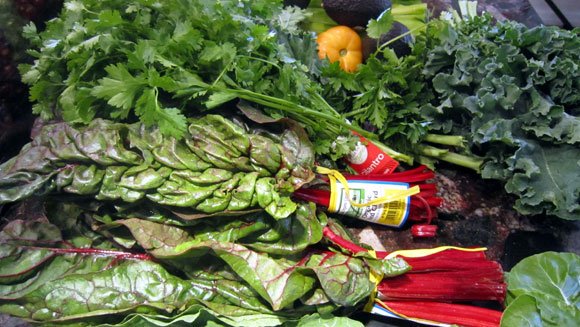
Nature knows best when it comes to nutrition. Whole foods are best! Eat your greens and drink your smoothies!
More Resources
“Super Immunity” by Joel Fuhrman, MD
If you are pregnant, DO NOT take prenatal vitamins that contain folic acid!
The little known (but crucial) difference between folate and folic acid
Is the mainstream still cheating you out of the best health possible—with folic acid?!
The Folic Acid Fallacy: How Your Multi-vitamin Might be Killing You
Questions? Comments? Suggestions?
If you have a favorite recipe, why not submit it here in the comment section of this smoothie recipes blog for others to enjoy too!
I also welcome any comments, questions and suggestions. Thanks!
If you love milkshakes, then you will not believe how much this this delicious MILK-FREE recipe will taste like a dairy-rich, sugar-sweetened, artery-clogging shake!
Serve this to your milkshake-loving friends and they’ll not believe it doesn’t have any dairy in it.
When I was a child, milkshakes were special treats in my family. Oftentimes, we don’t crave a food because of the taste; we’re really just longing for a familiar emotion that once comforted us. Well, this milkshake recipe definitely fulfills the emotional memory I have from childhood. But, it tastes even better (no kidding, you’ve just got to try this!).
Basic Shake Recipe
Ingredients:
- 4 large bananas, frozen
- 1/2 cup raw almonds
- 2 tablespoons agave nectar (or other sweetener)
- 1 cup ice (more or less)
- 1 cup water (or more, if too thick)
- a pinch of sea salt
Variations:
- For a CHOCOLATE shake, add 2 tablespoons raw cacao powder (or carob powder)
- For a STRAWBERRY shake, add 3/4 cup fresh or frozen strawberries (use less ice if berries are frozen)
- Other fruits that will work great include: peaches, raspberries, blueberries, and other — whichever is your favorite!
- Use any plant-based milk instead of almonds and water.
- Toppings: pieces of fruits, crushed nuts, vegan cookies, etc.
Directions:
- Make sure your bananas are well frozen (for a minimum of 24 hours!!!). This is really a key factor in achieving the perfect ice-creamy texture.
- Place all ingredients in your blender container (Vitamix or other high speed blender is best) and mix on high until a smooth, milkshake consistency is reached.
- If you’re on a low-fat diet, you may skip the almonds or only use a few to taste.
Milkshakes are the ultimate drink when it comes to comforting, refreshing treats. What could be better than a thick, creamy shake in a frosty glass? There are many non-dairy alternatives to make your vegan shake as rich and satisfying as ever. Let’s look at some of the delicious options…
Ingredients for Plant-Based (Vegan) Milkshakes
Plant milks. Almond, rice and soy milk does not have as high a fat content as coconut milk, which is nice if you’re trying to cut down on fat grams. And there are a number of flavor options, such as vanilla, chocolate, sweetened and unsweetened, so you can play with your favorites.
Nut butters. Peanut butter, cashew butter and almond butter taste terrific in shakes and both go particularly well with the malt powder flavor. Nut butters thicken a shake, adding protein and nutrients such as calcium, iron and magnesium.
Flavor extracts. Vanilla, maple, almond, lemon, peppermint, cinnamon, cocoa powder… there are many flavor extracts you can use to add tantalizing twists to a shake. Purchase flavor extracts that are all natural with no synthetic or imitation flavors or mysterious ingredients.
Malt powder. This tip I found on EarthBalance website. Malt powder is a germinated grain (usually barley). It has no added sugar but the sugar or syrup from your other shake ingredients should be enough. You can order malt powder online or buy at some specialty stores. Lookout for malted milk, which is not vegan.

add your favorite fruit, and top with your favorite topping
Please, pretty please, only use plant-based, cruelty-free milks in your milkshakes – check them out here:
 Please use only non dairy milk in your smoothies! Even this doctor and doctors at PCRM.org will tell you so!
For all my blending recipes I use Vitamix. If you don’t already own a VitaMix, I strongly encourage you to check out what this machine is capable of! For more information about VitaMix you can go directly to the VitaMix website. You may also want to read my post about the Best Blender.
I LOVE my VitaMix and highly recommend investing in one if you are ready to make serious changes to your diet. I have had mine for almost 5 years and use it daily!
If you decide to purchase Vitamix – be sure to use Promotional Code 06-004554 to get free shipping.
Questions? Comments? Suggestions?
If you have a favorite recipe, why not submit it here in the comment section of this smoothie recipes blog for others to enjoy too!
I also welcome any comments, questions and suggestions. Thanks!
