A simple miso soup recipe for greens and garlic lovers!
I love miso soup because it takes just a few minutes to prepare and it’s a great for times when I’m in the mood for an Asian-inspired taste.
Plus, it’s good for you. According to some studies, soy bean products like tofu, and miso are supposed to help to prevent breast cancer.
What is Miso Soup?
Miso soup is a Japanese soup that is made with miso paste (fermented soybean paste) and seaweed.
There are two major types of miso: red and white. Red is a dark reddish brown, and white is actually a sort of yellow-brown. Red is supposed to be saltier and stronger in flavor, though not all red miso is. White is more popular, and more versatile. There are as many kinds of miso in Japan as there are cheeses in Switzerland, though outside of Japan we only tend to see the major brands.
Miso paste can be purchased in any Asian supermarket, or even a regular grocery store. It is delicious and refreshing, whether served hot, warm or even chilled.
You can use seaweeds (such as wakame or kelp) for authentic flavor, but I usually just load it with land-grown greens, such as spinach, bok choy, or broccoli.
It’s the perfect side for veggie sushi and other Asian inspired dishes.
How to Make Miso Soup Unconventional Way
Miso Soup
Ingredients:
- 2 1/4 cups water
- 2 ounces firm tofu, cut into 1/4 inch cubes
- 1 tablespoon light miso paste (adjust the quantity to your taste)
- 1/2 cup fresh shiitake mushrooms (or button, or white), sliced
- 1/2 cup green veggies, such as spinach, bok choy, broccoli or kale, washed and chopped
- 1 scallion (green onion), thinly sliced, for garnish (optional)
- 1/2 carrot, grated (optional), for garnish
- 3 cloves garlic, minced
Directions
- In a medium saucepan, bring the water to a boil. Save about 1/2 cup of the boiling water in a cup. Add tofu. Reduce the heat to medium, cover, and cook for 1 to 2 minutes. Add spinach or bok choy, garlic and shiitake; simmer about 1 to 2 minutes, or until the greens are tender. Remove soup from heat.
- Blend miso and with reserved hot water and pour into soup. Pour into into bowls, garnish with scallion and/or carrot. Serve and enjoy.
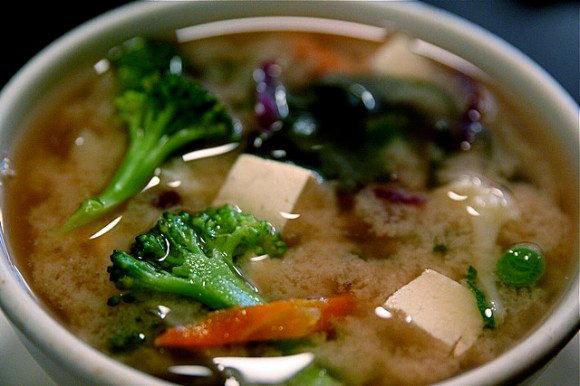
Miso soup recipe: Let's add some unconventional ingredients!
Questions? Comments? Suggestions?
If you have a favorite recipe, why not submit it here in the comment section of this smoothie recipes blog for others to enjoy too!
I also welcome any comments, questions and suggestions. Thanks!
Bok choy (also known as pak choi or Brassica chinensis) is a relative of cabbage and kale, and belongs to cruciferous vegetables, a family of especially nutrient-dense vegetables that contain unique anti-cancer compounds.
It is a common ingredient in many Asian-inspired recipes. You should have no trouble finding bok choy at the market as it is available almost year-round. Look for a plant with firm stalks that is free of brown spots.
Bok choy has crisp, white stalks and dark green leaves, and in Chinese its name means “white vegetable.” There are 20+ different varieties of bok choy – the two most often found in the U.S. are the traditional and “baby” or “Shanghai” bok choy. If you take a trip to your local Asian market, you may find some other varieties.
Bok Choy Health Benefits
Bok choy is one of the most nutrient-dense foods in the world, providing lots of vitamins A, C, and K as well as folate, calcium, and other nutrients.
It is highly beneficial for its calcium availability – bok choy is lower in oxalate, a substance that binds up calcium and prevents it from being absorbed, than most other leafy greens. 54% of the calcium in bok choy can be absorbed by the human body – compare this to 5% in spinach, a high oxalate vegetable, and 32% in milk. We can much more readily absorb calcium from bok choy than from dairy products.
Bok Choy Recipes
Bok choy has a distinctive, slightly bitter flavor. It’s less bitter than kale, and certainly a lot less bitter than dandelion or watercress. It can be eaten raw in salads, green smoothies, or vegetable juices, or cooked in stir-fries, soups, or other vegetable dishes.
In a green smoothie, its taste is easily masked by just about any fruit you add to it. You can substitute bok choy in any recipe that includes spinach. Be sure to use the entire white stalk too!
Baby Bok Choy Smoothie Recipe
- 2 apples, cored
- 2 oranges or tangerines, peeled and deseeded
- 2 heads of baby bok choy (about two cups)
- 1/4 avocado
- 1 teaspoon of ground cinnamon
- 1 or 2 cups of water
Blend well in your blender and enjoy!
Baby Bok Choy in Tangy-Sweet Vinaigrette Dressing
If you’ve only had these babies sauteed, fried, or cooked in some other way, try them raw in this salad recipe.
Salad Ingredients (serves 2-4, depending on your portion size :-))
- 6 heads baby bok choy, thinly sliced
- 1 carrot, thinly shredded
- 1 tablespoon toasted sesame seeds, for garnish
Dressing ingredients:
- 2 cloves fresh garlic, pressed through garlic press
- 1 tablespoon toasted sesame oil
- 1 teaspoon toasted sesame seeds
- 1 teaspoon honey
- 1 tablespoon low sodium soy sauce
- 2 tablespoons rice wine vinegar
- 1 tablespoon olive oil
Combine dressing ingredients and mix together until well combined.
In a mixing bowl, pour the vinaigrette over bok choy and carrot, and toss together well to coat. Sprinkle with sesame seeds and enjoy!
Braised Bok Choy
Ingredients (serves 2)
- 8 baby bok choy or 3 regular bok choy
- 1 teaspoon low sodium soy sauce
- 2 cups shiitake mushrooms, chopped
- 2 large cloves garlic, chopped, optional
- 1 tablespoon toasted sesame oil
- 1 tablespoon sesame seeds, lightly toasted
- Toast sesame seeds in a pan over medium heat for 3 minutes, shaking pan frequently.
- Cover bottom of large skillet with 1/2 inch water. Add bok choy cut into pieces.
- Drizzle with soy sauce and sesame oil. Cover and cook until bok choy is tender, about 5 minutes.
- Remove bok choy and add mushrooms and garlic to the liquid in the pan.
- Simmer until reduced to a glaze, pour over bok choy and sprinkle with sesame seeds.
- Serve with a side of whole grains, quinoa, or basmati rice.
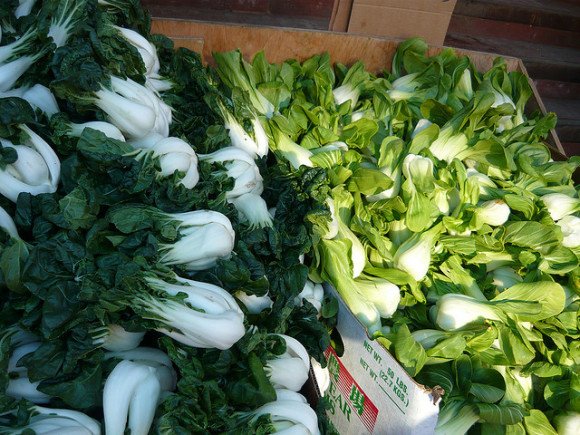
Substitute bok choy in any recipe that includes spinach. Be sure to use the entire white stalk too!
For all my blending recipes I use Vitamix. If you don’t already own a VitaMix, I strongly encourage you to check out what this machine is capable of! For more information about VitaMix you can go directly to the VitaMix website. You may also want to read my post about the Best Blender.
I LOVE my VitaMix and highly recommend investing in one if you are ready to make serious changes to your diet. I have had mine for almost 5 years and use it daily!
If you decide to purchase Vitamix – be sure to use Promotional Code 06-004554 to get free shipping.
Questions? Comments? Suggestions?
If you have a favorite recipe, why not submit it here in the comment section of this smoothie recipes blog for others to enjoy too!
I also welcome any comments, questions and suggestions. Thanks!
Whenever you hear someone say one thing about health and nutrition, you can always find someone else saying an exact opposite. No wonder most people are confused about what to eat! It’s hard to make sense from all that noise.
For example, Is there a hidden danger lurking in green smoothies? There have been articles appearing on the Internet recently about dangers of oxalic acid and how it can have devastating effect on your health.
The authors’ advice has been to limit or completely avoid greens and stop making green smoothies! (What should we be eating instead? Butter, milk, meat and sausages – according to one author, whom I will not cite here).
Even though 2/3 of our population is currently considered obese; diabetes, high blood pressure, cancer and other ailments reached epidemic proportions; as people load up on high fructose, genetically modified corn syrup-filled sodas, french fries and fried chicken, pizza and super-sized meals…we need to limit green smoothies as they can “devastate” your health?
Wow, really??
The incidence of kidney stones is high in the US. However, it’s extremely unlikely that greens are the reason why we have lots of kidney stones, since most Americans eat very little greens.

It is estimated that about a million people in the United States are treated for kidney stones each year. About 80% of kidney stones formed by adults in the U.S. are calcium oxalate stones – surely these people aren’t all obsessive green smoothie drinkers (or even spinach-salad-fanatics, for that matter).
Most of the foods that contain oxalates are powerful healing superfoods that can have a profound POSITIVE effect on your health and well-being, and should not be eliminated from the diet!
There is plenty of research that confirms the benefits of leafy greens, fruits and vegetables. A diet rich in alkaline foods (vegetables, fruit) is associated with a lower risk of stone formation, as well as lowered risk for most chronic diseases.
These are the natural foods for humans – foods that our bodies have been designed to thrive on.
Instead of limiting greens, how about eliminating the true contributors to kidney stones (as well as obesity, diabetes, high blood pressure, and cancer) – for optimal health:
Soft drinks
Sugar
Animal proteins
Bad fats
Salty foods (or any refined salt)
Coffee, tea and alcoholic beverages
How come no one is screaming about the dangers of consuming excessive animal protein, sugar or sugar substitutes? Is it because they are safe? Or perhaps there is too much money at stake, with big industries protecting their profits?
Multiple studies in different countries have demonstrated that the over-consumption of animal protein is a major risk factor in kidney stones formation. Sodas and other highly processed high-fat, high-sugar foods have been implicated in obesity and diabetes epidemic. Yet, we see them everywhere around us – advertised on TV, online, and even in school cafeterias.
Noone is campaigning for more spinach or broccoli.
And now spinach is being under attack, accused of causing serious health consequences.
So, What About Oxalix Acid
Oxalic acid (also referred to as oxalates) is found in many foods, including spinach, swiss chard, strawberries, soy, almonds, and many other foods. Oxalate content of a single food group varies based on the time of year, the type of soil it is grown in and a host of other factors specific to the growing conditions of the plant.
Our bodies produce oxalic acid, often synthesizing other substances such as vitamin C into oxalic acid, so whether you eat foods that contain it or not, your body maintains a naturally-occurring level of oxalic acid.
Oxalic acid has been shown to bind with calcium (and magnesium, iron, sodium and potassium) in the intestine, thus interfering with the absorption of these. ‘Typically, foods that have high oxalic acid also have high calcium, so they buffer each other.
Oxalic acid seems to be a controversial subject among nutritionists and health experts. Finding a clear answer regarding the potential safety or dangers of this substance can make your head spin. Victoria Boutenko did an excellent job addressing this issue, so if you want detailed research, read this blog post.
If You Are Concerned About Oxalates
Even though oxalic acid is not believed to be a health concern for most people, it can be difficult to digest for a certain percentage of the population. The most common cause of a toxic build-up of oxalate in the system is poor intestinal health or function, including an unhealthy of unbalanced intestinal flora (often from overuse of antibiotics), irritable bowel syndrome, leaky gut, celiac disease or fat malabsorption.
If you have a history of kidney stones or a medical condition that is complicated by the consumption of oxalate-rich foods, consult your doctor or health practitioner for advice.
In general, replacing oxalate-rich greens such as spinach and parsley with Romaine lettuce or other lettuces will lower exposure, but also lower overall nutrient density of your smoothies. Mixing spinach with lower-level oxalate-containing greens will help lower oxalate content.
HIGH OXALIC ACID CONTENT:
Beet leaves, purslane leaves, spinach, swiss chard (leaves & stalks), rhubarb, parsley, amaranth leaves, sorrel.
LOW OXALIC ACID CONTENT FOODS:
Dandelion greens, most fruits, bok choy, kale, watercress, escarole, mustard greens, turnip greens, broccoli, tomatoes, asparagus, and cabbage.
Rotating greens and other foods regularly is important as it helps to limit over-consumption of any one nutrient (or toxin) and provides more health-promoting benefits.
Also, listen to your body and learn to pick up on the subtle cues it’s giving you.
Green Smoothies with Low Oxalic Acid Content
For those of you, who would rather not consume high amount of oxalic acid, here are some recipes of green smoothies with very low oxalic acid content (from Victoria’s blog).
Sweet Sprouts
1 bunch green leaf lettuce
1 handful alfalfa sprouts
2 ripe apples, peeled, pits and stems removed
2 ripe bananas, peeled
2-3 cups water
Blend well.
Yields 2 quarts
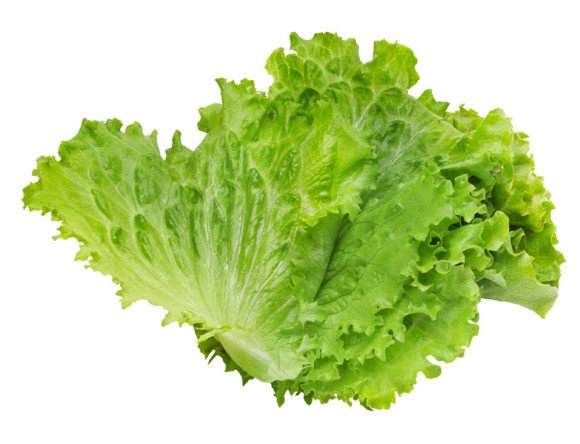
Romaine Green Smoothie
1 head romaine lettuce
2 ripe apples, peeled, pits and stems removed
1 ripe mango, peeled, pit removed
3 cups water
Yields 2 quarts
Green Freshness
1 head red leaf lettuce
1 ripe cantaloupe, peeled, seeds removed
1 cup fresh apple juice
2 cups water
Yields 2 quarts
Lettuce Drink to Your Health
1 handful red leaf lettuce
1 handful green leaf lettuce
1 cup cherries, pits removed
2 ripe bananas, peeled
2 cups water
Yields 2 quarts
Enjoy Your Green Smoothies!
Green smoothies provide tons of nutrients that our bodies need to function optimally, many of these from the potent antioxidants found in spinach, kale, chard, watercress, blueberries, strawberries, carrots, oranges, peppers, tomatoes and other – all of which have oxalic acid.
I certainly wouldn’t avoid spinach or other leafy greens because of the oxalic acid effect. Spinach has a lot to offer nutritionally: it’s an excellent source of folic acid, potassium and magnesium, as well as vitamin K, carotenes, vitamin C and lutein, important for healthy eyes.
So go ahead and enjoy your green smoothies and the health benefits they provide!
More reading on this issue:
Oxalic Acid and Green Smoothies
Can green smoothies “DEVASTATE” your health?
More Meat, More Disease
I’m really no good at baking, mainly due to the fact that I like improvising in the kitchen and substituting ingredients (I always seem to be missing something, especially if the list is longer than 5 items), which is really a recipe for disaster when it comes to baking.
That is why I LOVE these raw nut cookies which are so easy to make and delicious.
Plus, no baking is required – it’s just mix and eat!
This will really save you time and energy; plus they are ideal dessert in the summertime (other than ice-cream, of course), when you don’t want to be using your oven.
To make your cookies, nuts are bound together with the stickiness of the dates. If your cookies are too crumbly, just add a few more dates to the mix. Or you can add a tablespoon of water, agave syrup or olive oil, to add more moisture that will help keep the dough together, if needed.
Basic Raw Nut Cookie Recipe
Ingredients
- 3 cups nuts, such as hazelnuts, Brazil nuts, or walnuts
- 1 cup dates, pitted and chopped
- 1/2 cup raisins (optional)
- pinch of sea salt (optional)
- 1 tablespoon vanilla extract
Place the nuts and seeds in a food processor or Vitamix and break down nuts into chunks. Add the rest of the ingredients and process until the nuts bind together with the sticky fruit. Process until you reach the desired consistency. It you don’t want chunky cookies, blend until almost creamy.
Test the batter by taking a handful and squeezing to make sure it holds together. If it’s not sticky enough, you may add a few more dates, some water, agave nectar and/or olive oil until it holds together. Using your hands, roll the mixture into ping-pong-sized balls.
For additional “wow” effect, dip in shredded coconut or cocoa.
Serve as is, or cover and refrigerate before serving until thoroughly chilled for a more solid consistency.
Once you get the hang of the basic recipe, have fun experimenting with various ingredients:
- nuts: hazelnuts, Brazil nuts, almonds, cashew or walnuts
- seeds: sunflower, pumpkin, chia
- dried fruits: dates, apricots, raisins, cranberries
- spices: cinnamon, nutmeg, cloves, ginger, vanilla extract, shredded coconut, carob/coconut, etc.
- sweeteners: agave, maple syrup, honey, etc.
- oatmeal or granola
- shredded coconut and cocoa for added cuteness
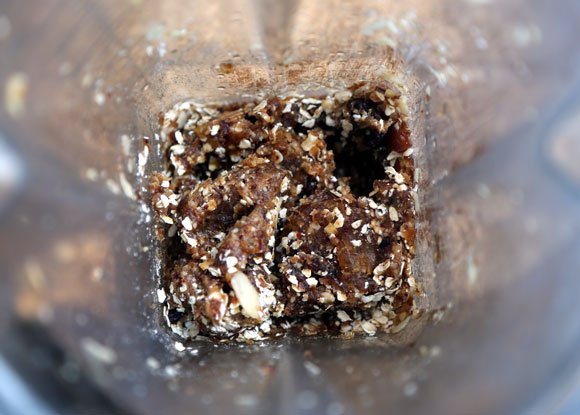
Peeking into my Vitamix: The Making of No Bake Cookies
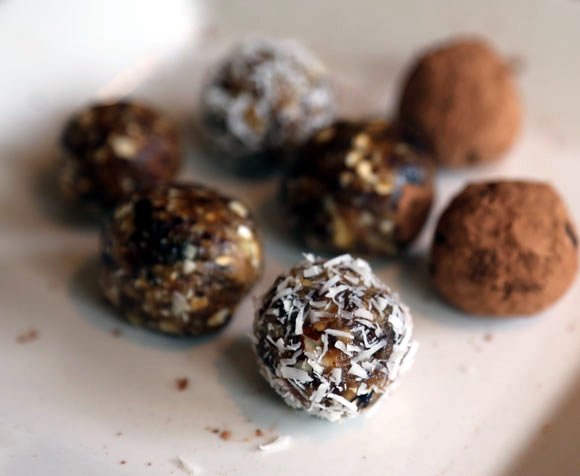
Date Nut Cookies: No baking required, ready in 10 minutes or less
But aren’t nuts and seeds high in calories and fats?
Yes they are, so don’t go crazy on me with these cookies (they are delicious!)
Nuts and seeds average about 175 calories an ounce, and one or two ounces a day would provide 15 to 30 percent of a daily caloric intake from the fat range.
However, judicious regular consumption of nuts and seeds is highly beneficial for health, but also for weight loss and even diabetes.
Studies on nuts indicate an inverse association between frequency of consumption and weight, contrary to the situation with oil or other fats. Several studies have confirmed that, even though raw nuts and seeds are not low in calories and rather high in fat, eating them may actually help suppress appetite – and thus help lose weight or even get rid of diabetes.
Of course, it doesn’t mean that we should binge on these foods in an effort to lose weight, as this can easily backfire. Eat about 2-4 ounces per day, but only an ounce of nuts per day if you are trying to lose weight.

Nut cookie balls can be a quick and easy, healthy desert! Plus, they look cute, too.
Benefits of Nuts and Seeds for Health
Raw nuts and seeds are packed with nutrients that provide a variety of health benefits. Nuts and seeds are high in fat and protein, but their effects on the body are completely different when compared to animal fats and protein, or processed vegetable fats and oils. They have been demonstrated in hundreds of medical studies to dramatically extend life and protect against disease.
Eating too many wrong fats or too little fat is a bad thing. Too little fat in the diet leads to dry skin, thinning hair, muscle cramps, poor sleep, high triglycerides, and poor exercise tolerance. Too little fat in the diet can also compromise the absorption of fat-soluble vitamins and phytochemicals. Eating more healthy fats – such as these in nuts and seeds, supplementing with DHA, the long-chain omega-3 fats, and eating fewer processed foods helps relieve these problems.
When you eat seeds and nuts with your meals, the fatty acids supplied significantly increase the absorption of micronutrients. For example, when you add nuts and seeds to your salad, you will absorb more of the micronutrients in the raw vegetables. More than 10 times as much of certain nutrients is absorbed, according to some studies. It’s worth to note that the same effect was NOT observed when a fatty dressing was used.
Remember that it is best to eat nuts and seeds raw or only lightly toasted. The more nuts and seeds are cooked, the more nutrients are destroyed.
For all my blending recipes I use Vitamix. If you don’t already own a VitaMix, I strongly encourage you to check out what this machine is capable of! For more information about VitaMix you can go directly to the VitaMix website. You may also want to read my post about the Best Blender.
I LOVE my VitaMix and highly recommend investing in one if you are ready to make serious changes to your diet. I have had mine for almost 5 years and use it daily!
If you decide to purchase Vitamix – be sure to use Promotional Code 06-004554 to get free shipping.
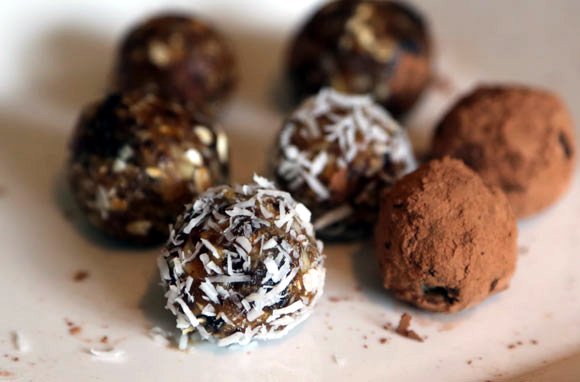
No Bake Nut Cookies: Easy to make, delicious to munch on!
Questions? Comments? Suggestions?
If you have a favorite recipe, why not submit it here in the comment section of this smoothie recipes blog for others to enjoy too!
I also welcome any comments, questions and suggestions. Thanks!
Green smoothies is just one way to eat your greens. I love smoothies because they are easy and effortless, but don’t stop there. Get creative. Get fancy.
Why not use them in veggie wraps and veggie sushi rolls.
Why Veggie Sushi?
Sushi is all the rage these days, and vegan sushi is certainly nothing new.
If you love sushi, like many people do, you may wonder, Why vegetable sushi? Why not just have the real thing.
All of us heard about the benefits of eating fish, especially for their Omega-3 content. Plenty of publications have been written about the wonders of fish and fish oil – not to mention the various brands of dietary supplements that are now available in every health food store and pharmacy.
So, why veggie sushi? Well, aside the fact that this is a veggie-centered site, there are some important reasons why I’m going to try to convince you to skip the fish in your sushi.
One is health risks due to rising fish toxicity. Fish is one of the most polluted foods we eat, and it may place you at increased risks for various cancers. Due to increasing pollution, fish may contain significant levels of methylmercury, polychlorinated biphenyls (PCBs), dioxins, and other environmental contaminants. On top of that, if you are eating fish to get Omega-3s, you need to know that farm raised fish is usually fed artificial diet and as a result no longer contains the Omega-3s that you wanted.
The second reason to skip the fish is the collapse of entire marine ecosystems due to overfishing. What few people know about is that approximately 90% of the ocean’s fish have disappeared in the recent years. That’s right, a decline of 90% of the population of many marine species – especially the large fish species, such as sharks, tuna, and other – has been well documented.
Global fisheries are collapsing. Just as an example, millions of sharks and rays are discarded as “by-catch” each year. An estimated 300,00 dolphins, porpoises, and whales also die as by-catch each year, as they are unable to escape when caught in nets or drift-lines. Fish and other sea creatures are intelligent, sensitive animals who suffer terribly when caught in fishing nets.
For every pound of seafood that ends up on market, over 10 pounds may be thrown away as by-catch.
So what’s a health-conscious person to do, who is also compassionate and cares about the environment?
What most people don’t realize is that no fish actually makes omega 3 fatty acids themselves. And, therein lies the biggest fallacy of all. Omega 3 fatty acids are found in microalgae or plants, which every fish has to eat in order to obtain them.
Since not one fish produces Omega-3s on their own, why not just go to the source. Plant sources of Omega-3s include nuts, seeds, and beans, such as flaxseed, walnuts; soybeans; green vegetables; as well as algae, like spirulina or chlorella. The algae supplements are grown in clean environment, so they don’t contain toxic pollutants.
Veggie Sushi Wraps
OK, back to veggie sushi rolls.
They are a fun dish to prepare with your kids, which makes them more likely to eat their veggies.
So, get your veggies and a sharp knife and you’ll have an impressive-looking appetizer that is easy to put together in minutes!
Veggie Sushi Recipe
Ingredients
Veggie Sushi Recipe
-
- 1 cucumber or raw zucchini, thinly sliced
-
- 1 red bell pepper, thinly sliced
-
- 1 large carrot, thinly sliced
-
- 1 tomato
-
- 1 avocado
-
- 1 fresh lemon
-
- 1 tablespoon (or more) of grated ginger root
-
- a few large collard green leaves, washed, deveined and dried really well (or untoasted nori sheets)
Other ingredients to experiment with:
Dulse flakes
Toasted sesame seeds
Alfalfa sprouts or other sprouts
Fresh cilantro, dill or other herbs
Fresh fruit, such as mango or pineapple, thinly sliced
Brown rice, basmati rice or quinoa
Cooked sweet potatoes
Tahini
Instructions
- Just as with smoothies, experiment with different ingredients that you may have in your kitchen. Collard greens work great, but if you don't have any, other leafy greens, such as cabbage leaves, may do the job.
- General rule is to add some juicy ingredients (e.g., tomato), creamy ingredients (avocado) and some crunchy ingredients (carrots).
- Cut the veggies (carrots, zucchini, bell peppers, tomatoes) into long strands using a knife or julienne slicer. (If you have time you can marinate the veggies for a few hours in a mixture of rice vinegar with some sesame oil).
- Mash the avocado with lemon juice and ginger into paste. If desired, sprinkle a small amount of dulse flakes over the avocado for a salty, seafood flavor rich in minerals.
- Or, you can make veggie "rice" by shredding the entire zucchini into small rice-size pieces. Next, squeeze a some lemon juice or a lime over the pile of rice and add about a tablespoon of dulse flakes. You can also use kelp powder or other sea vegetable, and/or sesame seeds. Toss with the rice with a fork to mix the juice and dulse. To make the sticky rice, mash 1/4 avocado into the zucchini rice with your hand and mix well.
- On a half of collar leaf (the tough stem removed) matte side down, smear some avocado mash and arrange the vegetables on the end closest to you. Then, tightly roll it away from you.
- If using nori sheet, roll tightly and seal the roll by dipping your finger in a little water and rubbing it along the edge of the seaweed and then seal.
- Slice the long roll with a sharp knife into individual pieces.
- Repeat until your ingredients run out.
3.1
https://greenreset.com/veggie-sushi/
Okay, so my sushi picture is not impressive, but I promise to work on my sushi technique and post some better photos soon.
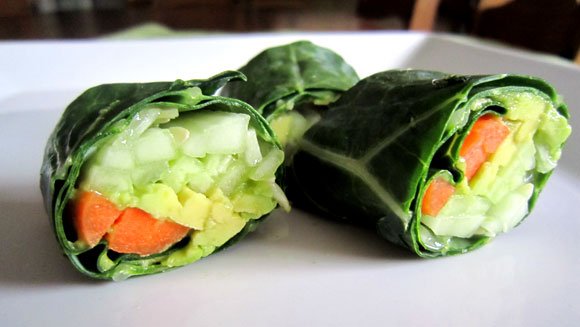
Veggie Sushi Rolls: Turn a collard green wrap into sushi using this method for a healthy and pretty appetizer!
No doubt, this recipe requires some precision cutting, wrapping and patience. It’s not the usual throw-it-into-a-blender-and-drink-it-5-minutes-or-less recipe.
But that’s not a good enough reason not to try it.
Quite the opposite. Let’s use this recipe as an excuse to get educated.
While you are working on your veggie rolls, with or without rice, I want you to download and listen to this amazing podcast about Fish Consumption and By-Catch. Listen to the podcast here.

Cook and Listen
New Ebook: Truth About Eating Fish and Fish Oil
You may be rolling your eyes at another “truth” being exposed, but I challenge you to read my new ebook and tell me you did not learn something new.

The Truth About Eating Fish Or What Your Doctor Never Told You About Fish & Fish Oil Supplements. Fish Are Friends Not Food Ebook
Coming soon to Amazon Kindle!
Questions? Comments? Suggestions?
If you have a favorite recipe, why not submit it here in the comment section of this smoothie recipes blog for others to enjoy too!
I also welcome any comments, questions and suggestions. Thanks!
