If you are worried about getting enough protein when drinking green smoothies, I want to tell you that there is no reason to worry!
You don’t need to be adding any expensive protein powders to your smoothies, munching on protein bars, or loading your salads with “lean protein” to boost your protein intake.
Our entire society is on a protein binge, brainwashed with poor information. We live in such a “must have enough protein” society (thanks to the meat industry and let’s not forget those Atkins and Paleo diet proponents), that few of us actually realize how harmful and unnecessary that is.
How Much Protein Do Humans Really Need?
Protein is an essential macro-nutrient that provides the building blocks for our bodies. However, the amount of protein that we need is greatly overestimated.
Despite the advertising hype of the meat and dairy industries, humans require an extraordinarily low amount of protein in their diets. The primary function of protein is growth, which is negligible in adults, as well as repair from injury and replacement of worn-out cells.
We need only 2.5 to 10% of our calories from protein, according to official sources. Many official groups, including the World Health Organization suggest that eating a mere 10% of our total calories as protein is sufficient. Protein deficiency is extremely rare in developed countries, even for those on strict vegan diets.
If you think that this is not enough, consider this: our greatest need for protein is when we grow the most, i.e., in infancy. An infant practically doubles in size during the first 6 months. The ideal food for a baby is mother’s milk. Therefore, breast milk can be used the “gold standard” for nutrition – including protein content.
Mother’s milk provides on average approximately 6% of calories from protein (far less than cow’s milk, which has 22% of calories as protein). This is the maximum concentration of protein we will ever need in coming from our food.
It should be obvious that adults do not require more protein per calorie than this, as infants, with their extremely rapid rate of growth have the highest need for protein per calorie of all humans.
So even though meat has more protein than vegetables, it doesn’t matter, because the amount in vegetables is already much more than you need. If you’re shopping for a car and one goes 200 miles an hour and the other goes 300, it doesn’t matter, since the maximum speed limit in the U.S. is 80 mph. Two hundred mph is more than enough for a car, and 22% protein from vegetables is more than enough when your protein needs are only 2.5 to 10%.
The extra protein isn’t better, it’s actually harmful. Too much protein – especially protein coming from animal sources – is dangerous and has been linked to various serious health conditions, including heart disease, cancer, strokes, hypertension and osteoporosis.
Most American’s get way TOO much animal protein. The average American eats over 100 grams a day – an unhealthy amount. Most adults only require 30-50 grams of protein a day. Still, many of us, including athletes, fitness enthusiasts, bodybuilders, dieters, and the overweight are obsessing about their proteins and turn to meat, dairy, protein powders, protein drinks, and nutritional bars in a quest for even more protein.
Myth: “People Need 20% Protein—and Animal Protein Is Best”
Many people still believe that protein is only available from meat and animal sources and we will get sick, weak, lose all muscle mass, or even fall over dead without animal protein! They even use “meat” and “protein” interchangeably, as if plant foods had no protein content at all!
(Once you realize that protein is a nutrient that is present in most foods we eat, you will see how the MyPlate recommendations make no sense, since vegetables, fruits and grains all have PROTEIN!)
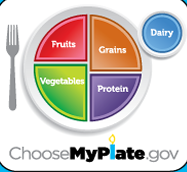
Protein on MyPlate.gov - what is wrong with this picture?
If you are worried about protein deficiency, you need to know that plant foods contain protein too, for example, rice is 9%, potatoes are 8%, corn is 11% and spinach is about 30% protein per calorie.
People often comment they know sickly vegetarians to justify daily meat eating as a healthy lifestyle choice. But of course, not all vegetarians eat a healthy diet or live a healthy lifestyle: although they don’t eat meat, they might eat white bread and cotton candy for breakfast, and avoid exercise like plague! Have you ever seen a sickly gorilla? He eats plants all day and gets plenty of physical activity.
The truth is, taking too much protein – especially animal protein – is not a small matter. It contributes to many diseases, ages you prematurely and can cause significant harm.
While vegetable foods are alkaline, animal products are acidic foods, and they require huge amounts of hydrochloric acid from the stomach to digest them. This acid needs to be neutralized, at the expense of our bones. The excess protein you are not using isn’t stored by the body as protein; it’s converted to fat, or eliminated via the kidneys. Eliminating protein leaches even more calcium and other minerals from the bones and breeds kidney stones.
How Can We Get Enough Protein?
When a diet is centered around WHOLE unprocessed foods (vegetables, whole grains, beans, nuts & seeds), the diet automatically contains a healthy amount of protein. It does not need to be a concern. No protein counting is necessary.
A typical assortment of vegetables, nuts, seeds, beans and whole grains supply about 50 grams of protein per 1000 calories. And don’t forget, some green vegetables are almost 50 percent protein, and when you eat more green vegetables, you are getting your protein with a ton of other super-nutrients for optimal health.
Many factors determine how many calories and how much protein you really need: age, size, growth, activity level, digestion, metabolism, body type, genetics, culture, geography.
By eating a variety of these foods, you are getting much more than protein. Plus, you are priming your body to be disease-proof.
It’s easy to build muscle even on a completely plant-based vegan diet
And if you want to build muscle, let’s remember that exercise, not extra protein, builds strength, denser bones, and bigger muscles. Loading on various protein powders and other muscle building supplements may lead to higher body mass; however, excessive body mass, even excessive muscle development from over-consumption of animal products, is a risk factor for heart attacks and other diseases later in life.
Animal products may lead to quick muscle mass, but eating lots of animal flesh is a Faustian bargain: short-term gain for a steep long-term price.
So, if you are wondering if you should I add protein powders to your smoothie after your workout, the answer is ‘No.’ As an athlete, your body needs carbohydrates at each meal to fuel your muscles, as well as vitamin C, antioxidants and various other nutrients, to neutralize the free-radicals created during the workout; and green smoothies are great for that. There are no antioxidants or vitamin C in meat.
Plant foods supply plenty of protein even for athletes and those trying to build muscle. Remember, the largest land animals in the world, elephants, are exclusively vegetarian. Your body can assemble all the amino acids from a plant protein source to create quality muscle mass.
Eating more calories usually supplies the extra protein for building muscle mass. Carbohydrates are better for supplying extra energy for strenuous activity.
What About Pregnancy and Breast Feeding?
Increased protein needs during pregnancy and breast-feeding are usually met by the extra calories from eating more food.
Plant-Based Diet (and Protein) For Better Health
Even though nutritionists seem to disagree on many topics, most agree that plant-eaters tend to live longer and healthier lives than do meat eaters. In every way, the brocolli-munchers tend to be healthier than the meat-eaters:
- Plant eaters have a lower incidence of cancer, especially colon, stomach, mouth, esophagus, lung, prostate, bladder, and breast cancers.
- Plant eaters have a lower incidence of cardiovascular disease, namely heart attacks and stroke.
- Plant food is better for your heart, since it is low in cholesterol and saturated fat, and high in fiber.
- Plant eaters are much less likely to get diabetes than animal eaters.
- Plant eaters tend to weigh less than meat eaters, even those who skin their chicken and trim the fat off their steak.
Even the U.S. Department of Agriculture’s dietary guidelines recommend eating more vegetables and grains and less meat, despite pressure from the politically-connected meat industry to promote meat.
Green Smoothies are Naturally Rich in Protein
No, really.
They are chock full of amino acids because greens contain lots of amino acids. Your body uses these amino acids to produce protein. The more greens you eat, the more amino acids that you provide your body with.
Dark green leafy vegetables contain similar or larger amounts of amino acids than the Recommended Daily Allowance (RDA). However, because of the confusion between vegetables (roots) and greens, we are told that vegetables, including greens, are a poor source of amino acids. Dr. Joel Fuhrman wrote in his book Eat to Live: “Even physicians and dietitians… are surprised to learn that …when you eat large quantities of green vegetables, you receive a considerable amount of protein.”
I like the explanation provided by Victoria Boutenko on her blog:
Let me explain the difference between complex proteins found in meat, dairy, fish, etc. and individual amino acids, found in fruits, vegetables, and especially in greens.
It is clear that the body has to work a lot less when creating protein from the assortment of individual amino acids from greens, rather than the already combined, long molecules of protein, assembled according to the foreign pattern of a totally different creature such as a cow or a chicken. I would like to explain the difference between complex proteins and individual amino acids with a simple anecdote.
Imagine that you have to make a wedding dress for your daughter. Consuming the complex proteins that we get from cows or other creatures is like going to the second hand store, and buying many other people’s used dresses, coming home and spending several hours ripping apart pieces of the dresses that you like and combining them into a new dress for your daughter. This alternative will take a lot of time and energy and will leave a great deal of garbage. You could never make a perfect dress this way.
Consuming individual amino acids is like taking your daughter to a fabric store to buy beautiful new fabric, lace, buttons, ribbons, threads, and pearls. With these essential elements you can make a beautiful dress that fits her unique body perfectly. Similarly, when you eat greens, you “purchase” new amino acids, freshly made by sunshine and chlorophyll, which the body will use to rebuild its parts according to your own unique DNA.
Contrary to this, your body would have a hard time trying to make a perfect molecule of protein out of someone else’s molecules, which consist of totally different combinations of amino acids. Plus, your body would most likely receive a lot of unnecessary pieces that are hard to digest. These pieces would be floating around in your blood like garbage for a long time, causing allergies and other health problems. Professor W. A. Walker from the Department of Nutrition at the Harvard School of Public Health, states that, “Incompletely digested protein fragments may be absorbed into the bloodstream. The absorption of these large molecules contributes to the development of food allergies and immunological disorders.” Source: Raw Family Blog
What About Adding Protein Powders To A Smoothie
As I have explained above, green smoothies already contain all the proteins that you need. A protein powder is a highly processed food, and I don’t recommend adding any to your green smoothies. If you decide to do it, choose high quality plant-based powder.
If you wish to add more high-protein foods to smoothies to make them more filling, I recommend adding a handful of nuts or seeds, such as pumpkin or sunflower seeds. Adding ground nuts or seeds to your smoothie not only adds protein, but boosts the healthy fat content which makes a green smoothie more satisfying and keeps you full longer. Nuts and seeds are also mineral powerhouses and will make your smoothie not only high in vitamins and antioxidants, but also rich with minerals.
Try small amounts of raw nuts such as almonds, cashews, walnuts, Brazil nuts or macadamia nuts. Sunflower, pumpkin, sesame, hemp, flax and chia seeds are all excellent when ground up and added to smoothies. You can also add a tablespoon of raw nut butter, or substitute water with almond milk.
Just don’t overdo the fat content of your smoothie or else bloating, gas and digestion problems may result.
What About Milk?
While milk does contain protein, all of our smoothie recipes are dairy-free. I do not recommend using milk or yogurt as a base for smoothies, especially green smoothies. Consuming dairy has been linked to a variety of health problems and can get in the way with your ability to lose weight and obtain optimal health. For more on dairy, click here.
Resources:
World Health Organization (http://www.who.int/nutrition/publications/public_health_nut9.pdf)
http://michaelbluejay.com/veg/protein.html
Questions? Comments? Suggestions?
If you have a favorite recipe, why not submit it here in the comment section of this smoothie recipes blog for others to enjoy too!
I also welcome any comments, questions and suggestions. Thanks!
This is an issue I’ve been struggling for many years now time now. I’ve been trying to switch to 100% plant-based diet, but I have to admit it’s been difficult. It’s hard to change if you’ve been eating this way for over 40 years, with my entire family against it, considering me crazy and irresponsible (as a mother) for even trying to give up meat, so it’s been a struggle.
I did manage to significantly reduce how much meat we all eat – which makes me somewhat happy – but I’m making a new commitment to limit it even further, and to become 100% vegan myself.
Here is why.
4 Compelling Reasons To Switch To Vegan Diet
1. Plant Eating for Health
Let’s start with what concerns us most – our own healthy body.
There seems to be a lot controversy surrounding the issue of whether or not animal foods are good for humans. Those who are in favor argue that meat and dairy have been an important part of the human diet for thousands (if not millions) of years. While it’s certainly true, many scientists argue that our anatomy, physiology, biochemistry, and psychology all indicate that we are not carnivores.
A simple test about our true nature would be to put a child in a room with a lamb and a banana. Note which one he plays with and which one he eats.
“To say that carnivores eat meat does not accurately portray such creatures. Animals that live on other animals usually eat raw meat, straight from the carcass, devouring the muscle meat, organs, and sucking up the warm, fresh blood and other bodily fluids. They even crush, split and eat the smaller bones and their marrow. Most people don’t salivate at the idea of crushing the life out of a rabbit with our bare hands and teeth, and the thought of eating one in a freshly killed state is repulsive. The vast majority of people agree that if they had to kill the animals in order to eat, they would not eat meat ever again.” (from 80/10/10 by Douglas Graham).
Today, animal foods have a central place in the Western-style diet. Meat and dairy have grown into big industries, so there are also many interests at stake here – big corporations fighting for huge profits. These industries have successfully lobbied and influenced the government, resulting in favorable laws and subsidies – and resulting in advertising and marketing propaganda being fed to the general public of all ages, starting with children. They have been selling us the mistaken idea that we need meat dairy and eggs in order to be properly nourished.
Many of us have been raised believing that “we need our protein” and “we need calcium for strong bones”, as if that protein and calcium could only be obtained from one source: animal products. We even often use “meat” and “protein” interchangeably, as if they are one and the same, which of course, they aren’t.
Protein is a type of nutrient that can be obtained from various sources, not just animal products, but most (if not all) plant foods contain protein too. Some plant foods, such as greens or beans, contain a lot of protein that is easily available and healthy for humans.
There is lots of research out there that proves beyond a doubt that plant based diet is what humans were originally *designed* by nature to eat, and that these foods are actually best for our health.
Many scientific studies confirm that the plant based diet helps prevent many types of cancer, cardiovascular diseases, diabetes, and other degenerative diseases, as well as slows down aging.
In addition to causing heart disease and cancer, animal products contain harmful contaminants—including bacteria, arsenic, dioxins, and mercury—that can affect our health both in the short and long terms.
Here is an excerpt from an interview with Dr. Esselstyn, one of the world’s leaders in heart attack prevention, where he gives some interesting examples illustrating this issue:
“It is quite striking that even today if you are a cardiac surgeon and you are going to hang out your shingle either in rural China, New Guinea, Central Africa or the Tarahumara Indians in Northern Mexico, just forget it. You better plan on selling pencils because you are not going to have any cardiovascular disease because there is none. These cultures by heritage and tradition are fully plant based.
Yet by way of contrast when we look at the autopsies of our twenty year old GIs in Korea and Vietnam, fully 80% already had gross evidence of coronary disease that you can see without a microscope, though not enough to have their cardiac event yet. That study was repeated about forty years later in 1999. This time it was done in this country looking at young women and men between the ages of 17 and 34 who had died of accidents, homicides and suicides. Now the disease is ubiquitous. Everybody at that young age already had the foundation of coronary disease. So it is very discouraging to think that when you graduate from high school in this country, not only do you get a diploma but you also get a foundation of coronary disease.
We really have been doing some things wrong.
I think this is further accentuated from a very interesting phenomenon that occurred during World War II when the access powers of Germany overran the low countries of Holland and Belgium and they occupied Denmark and Norway. It was characteristic that the Germans would take away the livestock from these cultures, namely their cattle, their sheep, their goats, their pigs, their turkeys gone.
So now suddenly these Western European nations during the war years were deprived of animal food and dairy. It was quite striking to see the report in The Lancet, England’s premier medical journal, in 1951 by Dr.’s Strom and Jansen who reviewed the Norwegian experience with heart attack and strokes during those war years. It was quite striking from 1939 to 1945 deaths from stroke and heart attack in Norway absolutely plummeted, just plummeted.
As soon as there was a cessation of hostilities immediately back came the meat, back came the dairy, back came the heart attacks and back came the stroke.”
Although even most mainstream experts agree that most Americans would benefit from eating a more plant-based diet, meat and dairy producers successfully block any effective campaigns aimed at reducing the amount of animal products consumed, including actively interfering with the USDA Pyramid, and now “My Plate” recommendations for the American public, or suing public figures who dare to suggest people to eat less meat (Oprah comes to mind).
2. Plant Eating to Lower Your Environmental Footprint
Many people don’t concern themselves much about the climate change and the environmental destruction that is happening before our very eyes. We don’t really think about it on a day-to-day basis and there is precious little information about these issues in the mainstream media.
However, let me ask you this question:
Why concern yourself with staying healthy, brushing our teeth, exercising, and other trivial tasks, if we destroy the only planet we know that is inhabitable for humans?
Or, why do we even worry about our children not drinking sodas and saving them from obesity, diabetes, and a host of other diseases – if we keep destroying this planet? Where will they go – is there a plan B?
Did you know that our entire food production system – from growing crops and raising livestock, through distribution, and waste removal – is responsible for approximately one-third of all man-made greenhouse gas emissions?
While most people are well aware that meat and dairy consumption are associated with heart disease, cancer and diabetes; few of us realize that raising animals for food is one of the top contributors to the worst environmental problems around the planet at every level – from local to global.
Here are a few more facts for you it’s worth to know about:
– Livestock production alone is responsible for as much as 18 percent of the global climate change.
– Animal agriculture is a greater contributor to global warming than transportation, according to the United Nations. And due to their high methane output, cattle are one of the worst offenders of all farmed animals.
– The livestock sector is responsible for 18 percent of greenhouse gas emissions, about 40 percent more than the entire transport sector – cars, trucks, planes, trains and ships – combined (according to the UN).
– Nearly 10.2 billion land animals were raised and killed for food in the US in 2010. Globally, the number of land animals killed each year for food has exceeded 65 billion. Approximately 53 billion aquatic animals were killed for food in the U.S. in 2010.
– Animal agriculture uses enormous quantities of water, monopolizes land that could be more productive for crops, and contributes to deforestation of critical rainforest and other habitats.
– It takes over 5,000 gallons of water to produce one pound of meat.
– 55% of our fresh water is being given to livestock.
– Over 70 percent of the grain in the US is fed to livestock.
– 70% of rainforests have been slashed and burned in order to raise livestock.
– One acre of land, if used for vegetables, grain, and/or legumes, yields 10-20 times the amount of food in pounds than if devoted to meat production.
– Omnivores contribute seven times the volume of greenhouse gases that vegans do.
The UN summarized the environmental effects of the meat industry this way: raising animals for food (whether on factory or traditional farms) “is one of the top two or three most significant contributors to the most serious environmental problems, at every scale from local to global. [Animal agriculture] should be a major policy focus when dealing with problems of land degradation, climate change and air pollution, water shortage and water pollution and loss of biodiversity. Livestock’s contribution to environmental problems is on a massive scale. ”
3. Plant Eating for Ethical Treatment of Animals
Animals suffer much more today than they did in the past. Up until the invention of modern farming, chickens would wander around the village, cows grazed the fields. The introduction of the factory farm changed all this. Today, the life of most meat animals is unimaginable suffering.
Welcome to Concentrated Animal Feeding Operations (CAFOs). CAFOs are animal feeding facilities that confine animals for more than 45 days in an area that does not produce vegetation during the growing season. In a CAFO, animals are crammed by the thousands or tens of thousands, often unable to breathe fresh air, see the light of day, walk outside, peck at a plants or insects, scratch the earth, or eat a blade of grass. They are notorious breeding grounds for disease and thus overuse antibiotics, and they pollute the environment in terrible ways. I won’t go into this in more detail, but if you are not aware of the conditions in factory farms, you should be.
Factory farms get away with it, not just because most of us don’t care very much where our food comes from. Many people know that things aren’t quite right with the factory farming, however, the conditions on these farms are so horrific that most people just don’t want to know. It’s easier to turn away, and our silent permission allows the horror to continue.
Here is what John Robbins says about our schizophrenic attitude that we have about animals: “On the one hand most of us love animals. We treat our pets very well in this country for the most part. We feed them. We pay for their food. We pay for their vet bills. They sleep on our beds very often. We consider them part of our families. We lavish our affection on them.
On the other hand though we call other animals livestock. We call them food animals. And we feel entitled to treat those animals with any manner of cruelty just so long as it lowers the price per pound.
There are laws in every one of the 50 states prohibiting some degrees of cruelty against animals. But in every one of the 50 states that legislation specifically exempts animals destined for human consumption. So if you are a meat producer or a dairy producer, you can treat your animals with any manner of cruelty that you wish and there are no legal restrictions on it as long as it’s considered standard farming practice the degree of suffering that the animals endure is not a factor in whether or not that is going to be allowed.
So routinely now factory farms treat animals with a degree of cruelty that if you did that to a dog or cat you would be put in jail but it’s called routine farming practice in industrialized factory farming. ”
That’s right. Farmers have carte blanche to treat animals cruelly as long as the animal is intended for the sale of food and the actions are considered common practice.
On top of that, several states are considering bills that make it illegal to film or photograph inside factory farms without permission. You can be named a terrorist and go to jail for exposing cruelty to animals!
Animals are much more intelligent and complex than most people realize, and scientists are providing more and more evidence of this all the time. They have a capacity to feel, form friendships, play, and suffer. They display personality, emotion, and though process. Pigs have the cognitive abilities to be quite sophisticated – more so than dogs, and more so than three-year-olds. Pigs can even play video games and are fond of walking distances of one to three miles per day. Chickens are inquisitive, have intelligence and can solve problems. Cows form complex social relationships, very much like dogs, licking their companion (animal or human) with their tongues out of love and comfort. Like all animals, cows form very strong maternal bonds with their children and therefore, on dairy farms and cattle ranches, mother cows can be heard crying out for their calves for days after they are separated.
I encourage everyone to read Eating Animals by Jonathan Safran Foer. This book will make you cry.
4. Plant Eating To Help End World Hunger
Study after study shows we can feed more people on a plant-based diet than on a Western diet that is centered around meat, eggs and dairy products.
The demand for animal products in developed countries drives resource depletion in developing countries as well as exacerbates poverty and hunger.
82% of the world’s starving children live in countries where food is fed to animals that are then killed and eaten by more well off individuals in developed countries like the US, UK, and in Europe. One fourth of all grain produced by third world countries is now given to livestock, in their own country and out.
Globally, even with climate change issues and weather extremes, we are producing enough grain to feed two times as many people as there are in the world.
Conversion to plant based food systems for local regions in developing countries would feed more people more nutritiously with more efficient use of their resources, improve long term soil fertility, create economic opportunities, all of which would provide a path toward breaking the poverty and hunger cycle. Read more http://comfortablyunaware.wordpress.com/
The first step to switching to a plant-based diet is finding a good reason to do so.
The reasons I just gave you are something to think about deeply. This is something that shouldn’t be taken too lightly. Changing your eating habits can really have a big effect, so you need to consider why you are doing it. Those with good reasons are often able to stick to this change better than those without solid intentions.
The next thing to do is read up and do some research. That includes questioning the conventional wisdom about diet, the authors say. Don’t just accept recommendations from health authorities, the food industry, or the government, they advise. There are different levels of being a vegetarian and it takes different amounts of effort. Find out what it is all about and what you need to know about it. By learning these things you can brace yourself for what you are about to take on. It will also help you clear any questions that you might have and offer a good amount of guidance for you as well. During this time it will be good to look for forums or support groups which you can turn to during the process of becoming a vegetarian.
5. Plant Eating To Increase Food Safety
There are 76 million cases of food borne illnesses each year; 4 million caused by salmonella, 93% of which are caused by meat, poultry, milk and eggs. The remaining 7% of cases are from shellfish, fresh fruits and vegetables. (Data according to : CDC – Center for Disease Control) The outbreaks are always reported in regard to which food source it was associated with. Typically, it is meat products, which is far under-reported or minimized. But there are many cases that involve plant-based foods, such as melons, tomatoes, salad mix, spinach, peanuts, and …sprouts.
Plants can only be contaminated by coming into contact with polluted water through irrigation, animal fertilizers, and using animal or human feces.Vegetables and fruits can become contaminated if placed in close proximity to or mixed with raw poultry, meat, or eggs, and unpasteurized milk, as all of these products have supply bacteria contaminants on them naturally.
Animal flesh and secretions used for food have a high propensity for distribution of pathogens, because they are found naturally on and within the animal itself during its life, as well as during the slaughtering process. This applies to all animal products, whether it is from livestock, dairy, or fish. This just adds to the ways that eating animals creates a depletion of our health. (Source: Comfortably Unaware, by Richard Oppenlander)
How to Switch to Plant-Based Diet?
Whether you go vegan for the environment, for your health, or for animals, you have the power to change the world, simply by changing what’s on your plate.
With so many great vegan options, eating green has never been more delicious. Protein and calcium can be obtained from beans, broccoli, sesame seeds, and green, leafy vegetables. Include high-fiber foods in your diet. Whole-wheat bread, brown rice, oats, flax seeds, and vegetables supply fiber, which helps lower cholesterol.
The good news is – if done right – there’s no calorie counting to worry about with this vegan diet regimen. You can eat all the organic fruits, veggies, whole grains, and natural food you want. If you skip meat, fish, dairy, eggs, sugar, artificial sweeteners, refined flour, caffeine, diet sodas, and anything that contains chemicals that you can’t pronounce – you are likely not just to lose weight and improve your own health, but significantly reduce your environmental footprint as well.
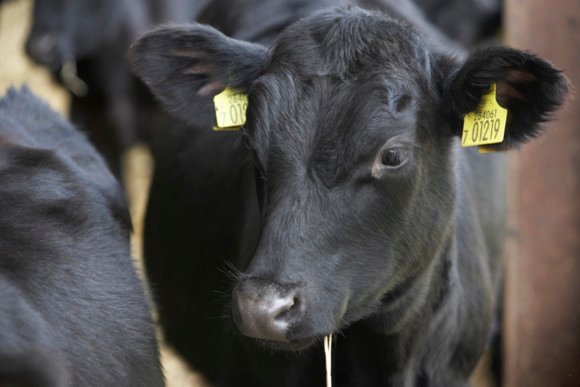
Sometimes it seems to me that we all are on a constant grain binge: pastas, doughnuts, breads, bagels, buns, cookies, crackers, breakfast cereals, cakes, pastries – there is no escaping or hiding from grain-based foods.
Most of us are aware that these foods are not ideal (to put it mildly), so many people are switching to “whole grains” as a more healthy alternative to heavily processed white grains.
Although the U.S. government (heavily influenced by industry lobbyists), as well as many nutrition experts, promote a high intake of grains, following this strategy actually sets up a lot of people for serious health consequences.
Pasta is often touted as “health food.” Highly processed cereals are promoted as “cholesterol lowering” foods, and whole grains are promoted as a way to prevent digestive diseases and cancer. This brainwashing is certainly working. We now consume so much grain products, that for many children cereal is their main source of vitamins!
To stay healthy and maintain ideal weight effortlessly, we should eat far fewer grain products than most of us consume today; and some of us should eat no grains (not even whole grains) at all!
Even the “whole grains”, although an improvement over the refined grains, should be limited, as they are still a processed foods with very low nutrient to calorie ratio. Read my post the Dark Side of Grains here.
So, what should we be eating instead?
More vegetables, fruits, greens, mushrooms, beans, nuts and seeds.
The best way to limit the amount of grain products, and – for those that are gluten intolerant – to get rid of gluten from your diet completely is to eat only unprocessed plant foods. All unprocessed food (obviously, with the exception for the unprocessed grains that contain gluten) is gluten-free, high in nutrients, while naturally low in calories.
Giving up grains requires a major paradigm shift for most of us. To make it easier for yourself, you may want to think about changing your diet as moving to another country and culture. You may attempt to bring all your old habits with you, and struggle to get all of the ingredients that you are used to to create the meals you are used to, or you can gracefully, and with a sense of adventure try the new cuisine.
So, without further ado, here are some ideas on how to substitute vegetables in pasta dishes.
How to Make Zucchini Pasta
Not zucchini with pasta…Zucchini as pasta!!!
Figure on one medium large zucchini per person.
If you have a mandolin slicer or spiral vegetable slicer, any of these will be perfect for the job, and you can hook up the julienne attachment for perfectly formed noodles.

Spiral vegetable slicer in action
If you’re like most people, you probably don’t have any of these, so you can either use a vegetable peeler or a knife. The peeler method will give you long flat noodles, and if using a knife, just cut the veggies into thin slices, stack up, and cut again lengthwise into thin strips.
By the way, you don’t have to limit yourself to zucchini. Use whatever you have: kale, collard greens, butternut squash, red bell pepper, and beets, would all be great to use as “noodles.”
Check out the pictures here Rainbow “Pasta” with an Almond Tumeric Sauce
Now, if you are ready for a hard-core raw pasta, just toss your noodles with the sauce of your choice, such as pesto or tomato, and you are done! (You may want to salt the noodles and rinse after 20 minutes to soften them a little bit).
However, many of you will probably prefer the pasta cooked.
So, just boil some salted water, and add the noodles to the water to cook for about 1 minute. Remove from boiling water quickly and immediately blanch in cold water, to stop cooking.
– or –
Skip the boiling and toss the noodles on a frying pan for a few minutes with some olive oil and your favorite pasta sauce: tomato, pesto sauce, garlic, whatever you wish.
Do not overcook! You don’t want to the zucchini to over cook and get soft.
These noodles can be tossed with any of your favorite sauces, but tend to work better with a simple, and non chunky style sauce.
Zucchini Noodles with Pesto Sauce
Pesto Sauce Recipe
1 bunch of fresh basil (bunch could be as big or as little as you like)
1 cup of pine nuts
4-5 cloves of garlic
2 tablespoons of olive oil
2 tablespoons of lemon juice
1 salt and pepper to taste
Blend all ingredients until thoroughly mixed.
Variations
1. Substitute all or part of basil with other greens, such as parsley, dandelion, arugula, watercress, spinach, cilantro to give the recipe a unique flavor.
2. Substitute pine nuts with walnuts, almonds, basil nuts, etc.
3. For a creamy pesto sauce, add 2 avocados.
4. Toss in some sunflower or pumpkin seeds for more nutrition.
Zucchini pasta is perfect for dieters, gluten intolerant people, diabetics,… and of course for everyone who loves their veggies!
Buy Vegetable Slicer on Amazon
World Cuisine 48297-99 Tri-Blade Plastic Spiral Vegetable Slicer
Just check this vegetable slicer it seems like the perfect tool for the job. This tool is great for making fancy spiral vegetable garnishes for salads as well as making curly fries from potatoes. I haven’t tried one myself, but it looks like a neat tool to have in your kitchen.
It includes three sets of blades: one with 1/8-inch spacing, one with 1/4-inch spacing, and one straight blade for ribbon cuts or curly, ribbon-like slices. It measures 12 by 10 by 6 inches (LxWxH) and is dishwasher safe. Backed by a 1-year warranty. About $30 on Amazon.

Raw pasta recipe – vegetable slicer
Questions? Comments? Suggestions?
If you have a favorite recipe, why not submit it here in the comment section of this smoothie recipes blog for others to enjoy too!
I also welcome any comments, questions and suggestions. Thanks!
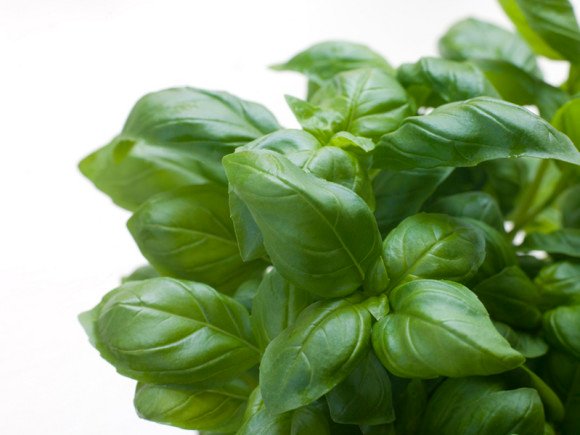
I love fresh basil and pesto pasta is one of my favorite dishes. Fresh basil has a delightful pungent aroma and an incredible flavor that is a cross between licorice and cloves.
Fresh pesto sauce is easy to make and a addition to pasta dishes, vegetable noodles, or as a veggie dip. Why not expand on this recipe a bit and transform with different greens and nuts combinations. Try to experiment with a various ingredients to find your personal favorites.
The traditional way of making pesto is with a mortar and pestle. As much as I enjoy trying traditional methods, I usually just reach for my Vitamix and blend the sauce in a matter of minutes. If you don’t have a Vitamix, use a regular blender or food processor.
The sauce should keep for 2 – 3 days in the fridge but freezes well if you want to keep it longer. Cover and refrigerate until you are ready to use it.
Basic Pesto Sauce Recipe
1 bunch of fresh basil leaves (bunch could be as big or as little as you like)
1 cup of pine nuts
4-5 cloves of garlic
2 tablespoons of olive oil
2 tablespoons of lemon juice
1 salt and pepper to taste
Blend all ingredients in food processor until thoroughly mixed. Do not over-process – it should have a nice chunky texture. Serve like you would any pesto, with pasta, veggies, etc.
Variations
1. Substitute all or part of basil with other greens, such as parsley, dandelion, arugula, watercress, kale, spinach, cilantro to give the recipe a unique flavor.
2. Substitute pine nuts with walnuts, almonds, basil nuts, etc.
3. For a creamy pesto sauce, add 2 avocados.
4. Toss in some sunflower or pumpkin seeds for more nutrition.
5. The basic recipe is dairy-free (vegan), but feel free to add some Parmesan cheese if you’d like.
For all my blending recipes I use Vitamix. If you don’t already own a VitaMix, I strongly encourage you to check out what this machine is capable of! For more information about VitaMix you can go directly to the VitaMix website. You may also want to read my post about the Best Blender.
I LOVE my VitaMix and highly recommend investing in one if you are ready to make serious changes to your diet. I have had mine for almost 5 years and use it daily!
If you decide to purchase Vitamix – be sure to use Promotional Code 06-004554 to get free shipping.
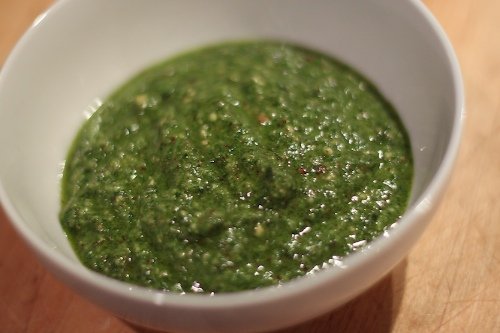
How to Make Pesto Sauce: Don't be limited by traditional ingredients!
Questions? Comments? Suggestions?
If you have a favorite recipe, why not submit it here in the comment section of this smoothie recipes blog for others to enjoy too!
I also welcome any comments, questions and suggestions. Thanks!
Watercress is a sharp and peppery tasting cruciferous vegetable. Like most greens, watercress can easily make it to the top of super-foods list, and it’s a perfect addition to your green smoothies.
Its amazing health benefits are due to its high levels of phytochemicals, the same disease fighting components found in broccoli and cabbage. By weight it contains more vitamin C than oranges, more calcium than milk and more absorbable iron than spinach.
Watercress greens help boost the immune system (contains Vitamin B6; vitamins C and E, which are antioxidants that provide protection form free radical damage; and vitamin A, which enhances white blood cell function and the resistance to infections and carcinogens), contains lutein and zeaxanthine, needed for healthy eyes; provides nutrients for strong, healthy hair and nails (iron, zinc, vitamin A), contains vitamins for beautiful skin; helps thyroid function; helps build strong, healthy bones (Calcium, Magnesium, Manganese, and vitamins A, C, and K), as well as boosts the detoxification function of the liver.
With all of these health benefits, it’s important to add more watercress to your diet!
Since watercress has a very distinct flavor, I recommend that most people use only a handful in a smoothie at a time or mix it up with spinach, if the flavor is too much for you in the beginning.
You can washed it up and store in a refrigerator (in a plastic bag with a piece of paper towel) or freeze it in single-sized servings.
For those who do not have a high-powered blender… watercress fits in the category of tender greens along with spinach and baby greens, as it blends quite easily.
Watercress Orange Green Smoothie Recipe
Ingredients:
2 ripe medium bananas
1 ripe pear or apple
1 cup orange juice
2 cups watercress, though stems removed (or 1 cup of watercress and 1 cup spinach)
1-2 cup water
Watercress Blueberry Smoothie Recipe
1 banana
1 cup frozen blueberries
1 small handful of watercress
1 large handful of spinach
1 cup water
Watercress Tropical Smoothie Recipe
1 cup frozen mango
1 cup fresh pineapple
1 small handful of watercress
1 large handful of spinach
1-2 cup water
Blend in blender until smooth! Enjoy!
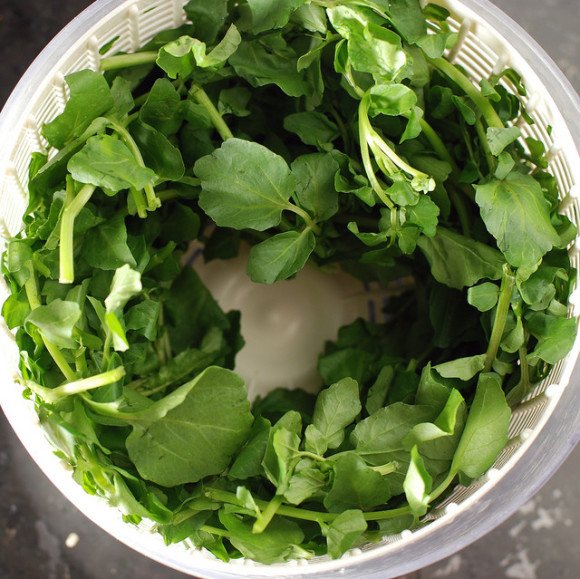
Watercress: Ready for the smoothie! http://www.flickr.com/photos/anjuli_ayer/3102132111/sizes/z/in/photostream
Watercress Pear Raw Soup Recipe
The difference between a soup and a smoothie is really insignificant: a soup is a thick smoothie, that you eat with a spoon from a bowl!
2 cups of watercress
1 Pear
1 cup of water – depending on desired consistency
Place all fresh ingredients in the blender and blend.
For more creamy consistency add 1/2 an avocado. Also, you can play with the flavor by either adding a few nuts, such as walnuts or almonds, or add a sprinkle of cinnamon or nutmeg.
If you fancy a warm soup there are two ways to heat the soup without cooking:
1. Use warm water and serve in a warm bowl.
2. If you have a high speed blender, such as a Vitamix, you can leave it running on high for a few minutes.
3. Heat it up on the stove top, but be careful not to boil it!

Watercress soup: Just blend it! I have found this beautiful picture on http://www.flickr.com/photos/hills_alive/2752734262/
For all my blending recipes I use Vitamix. If you don’t already own a VitaMix, I strongly encourage you to check out what this machine is capable of! For more information about VitaMix you can go directly to the VitaMix website. You may also want to read my post about the Best Blender.
I LOVE my Vitamix blender and highly recommend investing in one if you are ready to make serious changes to your diet. I have had mine for almost 5 years and use it daily!
If you decide to purchase Vitamix – be sure to use Promotional Code 06-004554 to get free shipping.
Questions? Comments? Suggestions?
If you have a favorite recipe, why not submit it here in the comment section of this smoothie recipes blog for others to enjoy too!
I also welcome any comments, questions and suggestions. Thanks!
