Whales are among the largest and most remarkable animals on Earth. These marine mammals live in oceans around the world, from warm tropical waters to the cold seas surrounding the poles.
Life Beneath the Surface
Although whales spend their lives in water, they breathe air through blowholes located on top of their heads. They must regularly return to the surface to breathe before diving again in search of food or traveling through the ocean.
Whales are warm-blooded, give birth to live young, and nurse their calves with milk. A thick layer of fat called blubber helps protect them from cold water and stores energy during long migrations.
Two Main Groups
Whales are generally divided into baleen whales and toothed whales. Baleen whales filter small animals from the water using flexible plates inside their mouths. This group includes blue whales, humpback whales, and gray whales.
Toothed whales use teeth to catch fish, squid, and other prey. Many of them also use echolocation, producing sounds and listening for returning echoes to understand their surroundings. Sperm whales, belugas, and orcas belong to this group.
The Blue Whale
The blue whale is the largest known animal to have ever lived. An adult can grow longer than a city bus and weigh well over one hundred tonnes. Despite its enormous size, it feeds mainly on tiny crustaceans called krill.
Communication and Migration
Whales communicate using clicks, whistles, pulses, and complex songs. Some sounds can travel across great distances underwater. Humpback whales are especially famous for their long, patterned songs.
Many species migrate thousands of kilometres each year. They often feed in cold, nutrient-rich waters before traveling to warmer regions where they mate and give birth.
Protecting Whales
Commercial hunting once caused severe declines in many whale populations. Today, whales also face threats from fishing gear, ship collisions, underwater noise, pollution, and changes to ocean ecosystems.
Conservation programs, safer fishing practices, protected habitats, and international cooperation can help whale populations recover. Protecting whales also supports healthier oceans because these animals play an important role in marine food webs and nutrient cycles.
Lorem ipsum dolor sit amet consectetur adipiscing elit. Quisque faucibus ex sapien vitae pellentesque sem placerat. In id cursus mi pretium tellus duis convallis. Tempus leo eu aenean sed diam urna tempor. Pulvinar vivamus fringilla lacus nec metus bibendum egestas. Iaculis massa nisl malesuada lacinia integer nunc posuere. Ut hendrerit semper vel class aptent taciti sociosqu. Ad litora torquent per conubia nostra inceptos himenaeos.
Lorem ipsum dolor sit amet consectetur adipiscing elit. Quisque faucibus ex sapien vitae pellentesque sem placerat. In id cursus mi pretium tellus duis convallis. Tempus leo eu aenean sed diam urna tempor. Pulvinar vivamus fringilla lacus nec metus bibendum egestas. Iaculis massa nisl malesuada lacinia integer nunc posuere. Ut hendrerit semper vel class aptent taciti sociosqu. Ad litora torquent per conubia nostra inceptos himenaeos.
Lorem ipsum dolor sit Non Existing amet consectetur adipiscing elit. Quisque faucibus ex sapien vitae pellentesque sem placerat. In id cursus mi pretium tellus duis convallis. Tempus leo eu aenean sed diam urna tempor. Pulvinar vivamus fringilla lacus nec metus bibendum egestas. Iaculis massa nisl malesuada lacinia integer nunc posuere. Ut hendrerit semper vel class aptent taciti sociosqu. Ad litora torquent per conubia nostra inceptos himenaeos.
Lorem ipsum dolor sit amet consectetur adipiscing elit. Quisque faucibus ex sapien vitae pellentesque sem placerat. In id cursus mi pretium tellus duis convallis. Tempus leo eu aenean sed diam urna tempor. Pulvinar vivamus fringilla lacus nec metus bibendum egestas. Iaculis massa nisl malesuada lacinia integer nunc posuere. Ut hendrerit semper vel class aptent taciti sociosqu. Ad litora torquent per conubia nostra inceptos himenaeos.
Lorem ipsum dolor sit amet consectetur adipiscing elit. Quisque faucibus ex sapien vitae pellentesque sem placerat. In id cursus mi pretium tellus duis convallis. Tempus leo eu aenean sed diam urna tempor. Pulvinar vivamus fringilla lacus nec metus bibendum egestas. Iaculis massa nisl malesuada lacinia integer nunc posuere. Ut hendrerit semper vel class aptent taciti sociosqu. Ad litora torquent per conubia nostra inceptos himenaeos.
Lorem ipsum dolor sit amet consectetur adipiscing elit. Quisque faucibus ex sapien vitae pellentesque sem placerat. In id cursus mi pretium tellus duis convallis. Tempus leo eu aenean sed diam urna tempor. Pulvinar vivamus fringilla lacus nec metus bibendum egestas. Iaculis massa nisl malesuada lacinia integer nunc posuere. Ut hendrerit semper vel class aptent taciti sociosqu. Ad litora torquent per conubia nostra inceptos himenaeos.
Lorem ipsum dolor sit amet consectetur adipiscing elit. Quisque faucibus ex sapien vitae pellentesque sem placerat. In id cursus mi pretium tellus duis convallis. Tempus leo eu aenean sed diam urna tempor. Pulvinar vivamus fringilla lacus nec metus bibendum egestas. Iaculis massa nisl malesuada lacinia integer nunc posuere. Ut hendrerit semper vel class aptent taciti sociosqu. Ad litora torquent per conubia nostra inceptos himenaeos.
Lorem ipsum dolor sit amet consectetur adipiscing elit. Quisque faucibus ex sapien vitae pellentesque sem placerat. In id cursus mi pretium tellus duis convallis. Tempus leo eu aenean sed diam urna tempor. Pulvinar vivamus fringilla lacus nec metus bibendum egestas. Iaculis massa nisl malesuada lacinia integer nunc posuere. Ut hendrerit semper vel class aptent taciti sociosqu. Ad litora torquent per conubia nostra inceptos himenaeos.
Lorem ipsum dolor sit amet consectetur adipiscing elit. Quisque faucibus ex sapien vitae pellentesque sem placerat. In id cursus mi pretium tellus duis convallis. Tempus leo eu aenean sed diam urna tempor. Pulvinar vivamus fringilla lacus nec metus bibendum egestas. Iaculis massa nisl malesuada lacinia integer nunc posuere. Ut hendrerit semper vel class aptent taciti sociosqu. Ad litora torquent per conubia nostra inceptos himenaeos.
Lorem ipsum dolor sit amet consectetur adipiscing elit. Quisque faucibus ex sapien vitae pellentesque sem placerat. In id cursus mi pretium tellus duis convallis. Tempus leo eu aenean sed diam urna tempor. Pulvinar vivamus fringilla lacus nec metus bibendum egestas. Iaculis massa nisl malesuada lacinia integer nunc posuere. Ut hendrerit semper vel class aptent taciti sociosqu. Ad litora torquent per conubia nostra inceptos himenaeos.
Lorem ipsum dolor sit amet consectetur adipiscing elit. Quisque faucibus ex sapien vitae pellentesque sem placerat. In id cursus mi pretium tellus duis convallis. Tempus leo eu aenean sed diam urna tempor. Pulvinar vivamus fringilla lacus nec metus bibendum egestas. Iaculis massa nisl malesuada lacinia integer nunc posuere. Ut hendrerit semper vel class aptent taciti sociosqu. Ad litora torquent per conubia nostra inceptos himenaeos.
Lorem ipsum dolor sit amet consectetur adipiscing elit. Quisque faucibus ex sapien vitae pellentesque sem placerat. In id cursus mi pretium tellus duis convallis. Tempus leo eu aenean sed diam urna tempor. Pulvinar vivamus fringilla lacus nec metus bibendum egestas. Iaculis massa nisl malesuada lacinia integer nunc posuere. Ut hendrerit semper vel class aptent taciti sociosqu. Ad litora torquent per conubia nostra inceptos himenaeos.
Lorem ipsum dolor sit amet consectetur adipiscing elit. Quisque faucibus ex sapien vitae pellentesque sem placerat. In id cursus mi pretium tellus duis convallis. Tempus leo eu aenean sed diam urna tempor. Pulvinar vivamus fringilla lacus nec metus bibendum egestas. Iaculis massa nisl malesuada lacinia integer nunc posuere. Ut hendrerit semper vel class aptent taciti sociosqu. Ad litora torquent per conubia nostra inceptos himenaeos.
Lorem ipsum dolor sit amet consectetur adipiscing elit. Quisque faucibus ex sapien vitae pellentesque sem placerat. In id cursus mi pretium tellus duis convallis. Tempus leo eu aenean sed diam urna tempor. Pulvinar vivamus fringilla lacus nec metus bibendum egestas. Iaculis massa nisl malesuada lacinia integer nunc posuere. Ut hendrerit semper vel class aptent taciti sociosqu. Ad litora torquent per conubia nostra inceptos himenaeos.
Lorem ipsum dolor sit amet consectetur adipiscing elit. Quisque faucibus ex sapien vitae pellentesque sem placerat. In id cursus mi pretium tellus duis convallis. Tempus leo eu aenean sed diam urna tempor. Pulvinar vivamus fringilla lacus nec metus bibendum egestas. Iaculis massa nisl malesuada lacinia integer nunc posuere. Ut hendrerit semper vel class aptent taciti sociosqu. Ad litora torquent per conubia nostra inceptos himenaeos.
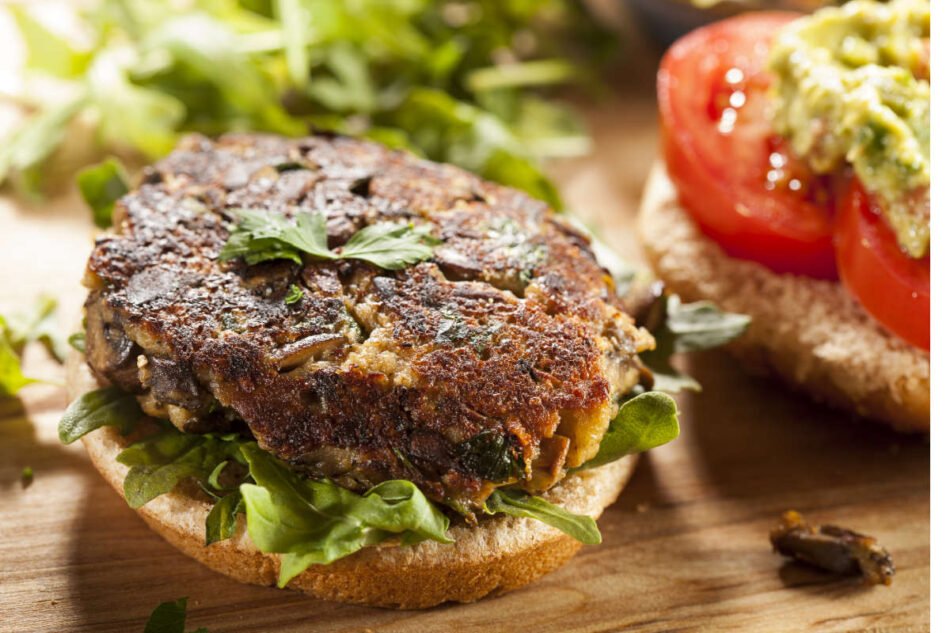
If you’ve ever tried making veggie burgers at home and ended up with a crumbly, mushy mess… I get it. Been there. For years, I skipped the homemade route and just bought store-bought patties. They were easy, they didn’t fall apart, and they did the job.
But after a while, those packaged burgers all started to taste the same — overly processed, overly salty, and frankly a little boring. And I realized something important: I was missing out on the creative, satisfying world of making my own burgers at home.
And here’s the kicker: it’s so much easier than I thought.
Why Bother Making Veggie Burgers at Home?
You might be wondering: Why should I make my own burgers when there are so many options in the store? Here’s why:
Healthier: You control the ingredients — no fillers, preservatives, or mystery oils.
Cheaper: A few pantry staples (beans, grains, spices) cost a fraction of a frozen box.
Infinitely creative: You’re not stuck with “black bean” or “quinoa kale” over and over. At home, you can make falafel-inspired burgers, smoky BBQ patties, lentil-walnut cutlets, curry-spiced nuggets… the options are endless.
Surprisingly fast: If you can make a smoothie or a bean dip, you can make burgers. The method is the same — blend your base, season it, shape it, and cook. Done.
And unlike a salad or a bowl of beans, a burger actually feels like a meal. It’s dense, chewy, and satisfying — the kind of food that keeps you full and happy.
The Secret Ingredient That Changed Everything
Here’s where my story gets interesting. I always thought veggie burgers were too tricky, until I discovered one magic ingredient: vital wheat gluten.
If you’ve never heard of it, vital wheat gluten (sometimes called seitan flour) is the protein from wheat, ground into flour. When you add it to beans, veggies, or grains, it works like edible glue. Suddenly, your burgers:
Hold together instead of falling apart.
Get that “meaty” chew you’ve been missing.
Feel hearty and filling, not mushy or flimsy.
It’s like a miracle fix for veggie burgers. Once I tried it, everything changed — and even my husband (a tough food critic) said, “Wow, these are perfect.”
How Easy Is It, Really?
Think about it this way:
Stop blending early → you’ve got hummus or a spread.
Add more liquid → it’s soup.
Add gluten, oats, or breadcrumbs → it’s burger mix.
That’s all. One fork in the road, one or two added steps, and you’ve got dinner.
You don’t even need a fancy machine. A food processor makes it faster, but you can mash beans with a fork, chop veggies with a knife, and stir it all together in a bowl. Burgers are forgiving — unlike baking cakes, you don’t need exact measurements. Too wet? Add oats. Too dry? Add mashed potato. Too bland? More spices. Almost every “mistake” can be fixed on the fly.
A Sample Recipe: Smoky Chickpea–Potato Cutlets
Here’s a simple one to get you started:
Ingredients (makes 6 patties):
1 cup cooked chickpeas
1 medium cooked potato, mashed
½ cup walnuts or pumpkin seeds (chopped)
½ small onion, grated
2 cloves garlic, minced
1 tsp cumin
1 tsp smoked paprika
Salt & pepper to taste
½ cup vital wheat gluten (add more if mixture is too wet)
Oil for frying (or bake/air-fry)
Instructions:
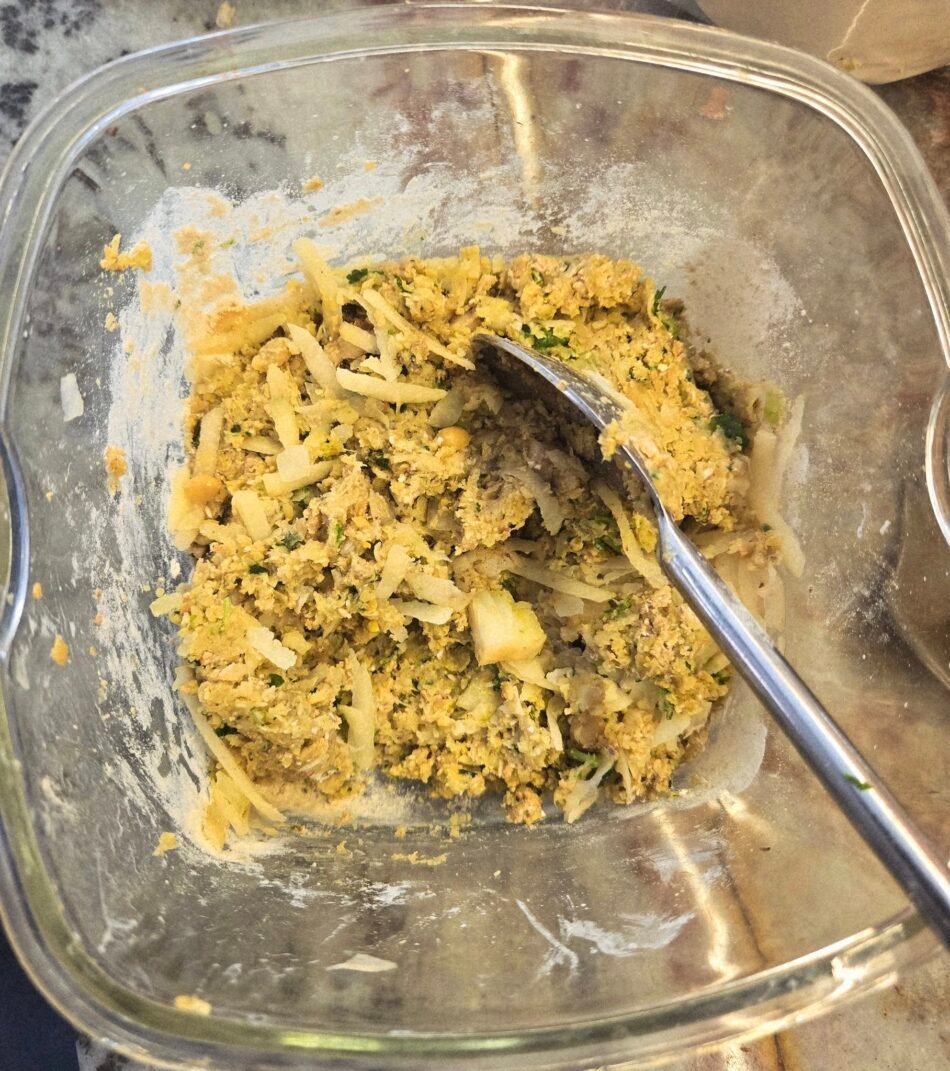
Mash or blend chickpeas, potato, onion, garlic, and spices until fairly smooth.
Stir in walnuts and vital wheat gluten. Mix gently until dough comes together.
Shape into 6 patties.
Pan-fry (3–4 minutes per side), bake at 190°C / 375°F for ~25 minutes, or air-fry at 200°C / 400°F for 15–18 minutes.
Result: Hearty, chewy cutlets with a smoky falafel vibe — perfect in a bun or on top of a salad.
Variations to Try
BBQ Black Bean Burgers: Black beans + quinoa + gluten + smoked paprika + BBQ sauce.
Once you’ve got the formula, you’ll realize: this isn’t just a recipe — it’s a system. You can take whatever you have in your fridge, throw it in the blender, add gluten to hold it, and call it dinner.
The Veggie Burger Playground
Making your own burgers isn’t about following one perfect recipe. It’s about stepping into the playground of endless possibilities. Some nights you’ll go smoky, other nights herby, other nights spicy. Each batch is unique.
And the best part? Every burger you make at home is healthier, fresher, and more satisfying than anything that comes in a box. Once you taste your own chewy, meaty, plant-based burger — one that doesn’t crumble, one that sticks together perfectly — you’ll never go back.
So go ahead. Open the fridge, grab what you’ve got, and start experimenting. Your burger playground is waiting. 🌱🍔
PS. Meaty Plant-Based Burgers book is coming! Check it out here:
Can you imagine seeing that headline? A TV commercial or glossy magazine ad—just like the ones for meat—except this time starring… broccoli. Or cauliflower. Maybe even Brussels sprouts or cabbage, growing in idyllic fields with sunshine and birdsong.
Ha! I’d be thrilled. Just picture it—those ads appearing nationally, everywhere: on billboards, blogs, Google Ads, YouTube pre-rolls, even during the Super Bowl.
But let’s be real. Who would pay for such a commercial? Who could realistically afford it? Certainly not broccoli growers. They don’t have the kind of money that animal agriculture has—heavily subsidized and backed by a massive marketing machine that’s convinced most of society that “protein = meat.” These industries not only dominate ad space but also fight aggressively to protect their turf—remember when Oprah got sued for criticizing beef? Or the legal battles over Just Mayo and the word “milk”?
They’d probably even object to using the word “steak” to describe a broccoli dish. Because heaven forbid broccoli isn’t just a side dish—but the main event.
And yet, it should be. These simple, whole plant foods? They’re the healthiest for people. The most sustainable for the planet. And the kindest to animals. So yes, broccoli steaks.
And Here is a Fun Fact for all Language Purists (You Know Who You Are!)
“Steak” originally referred more to how food was cooked or served than what it was made of. So calling something like broccoli a “steak” isn’t a misnomer—it’s a return to form.
That’s right! The word “steak” comes from the Old Norse word “steik”, which means “roast” or “meat cooked on a stick.” It entered the English language in the 15th century, likely through the influence of Viking invasions in northern England and Scotland.
Old Norse “steik” → “roast on a spit”
Adopted into Middle English as stek(e), referring to a slice of meat for roasting or broiling.
Over time, “steak” came to mean a thick slice of meat (especially beef), cut across the muscle grain. Eventually expanded to fish (tuna steak, salmon steak), and now—deliciously—to plant-based foods (like cauliflower or broccoli steaks), which mimic the shape, thickness, or centrality of the dish.
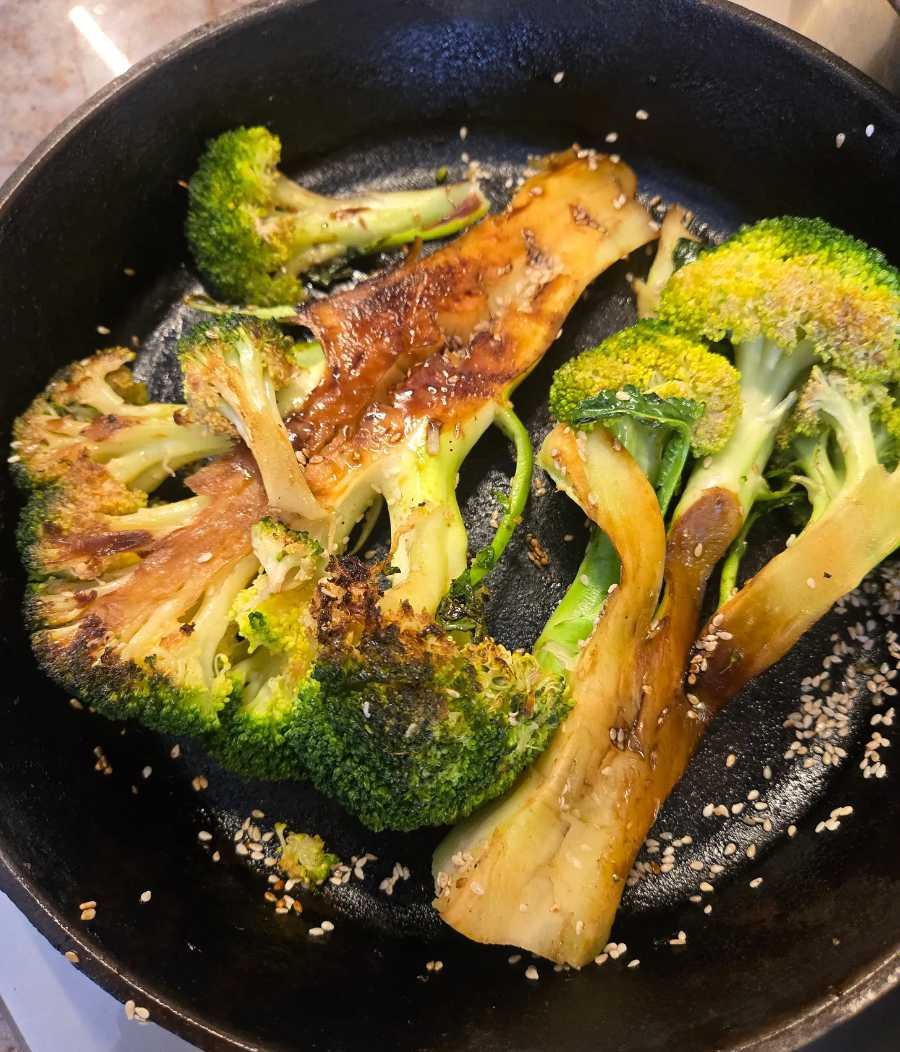
Anyway… I came across the idea in a cookbook I flipped through at a bookstore by an author completely unknown to me. But the recipe—charred broccoli “steaks”—completely blew me away.
🌿 Why Char the Broccoli?
As the author, Michał Korkosz explains:
“In plant-based cooking, we have to lean on technique to make vegetables exciting. Charring mimics the savory depth of grilled meat—it’s not a 1:1 replica, but it brings smoky, rich flavor while keeping the veggies firm and satisfying.”
Even a simple squeeze of lemon can do the trick—but this layered version? It’s got depth, brightness, and crunch. A celebration of plant-based boldness on a plate.
Now, I know what some meat lovers would think. They won’t even give this a proper eye roll. Broccoli steak? Seriously? Yup. Totally outrageous. Totally surprising. And totally delicious.
It’s unexpected. Innovative. And honestly? As simple and easy as it gets.
🥦 The Secret Behind That Broccoli Satisfaction
Here’s why broccoli—when cooked just right—is weirdly filling and satisfying:
• Fiber structure: That firm, al dente crunch slows digestion and helps you feel full longer. • Water content: Light cooking keeps it juicy and satisfying, without extra calories. • Micronutrients: Gentle heat preserves powerful compounds like sulforaphane, which support metabolism, immunity, and even cancer protection.
Mushy broccoli? It collapses in your mouth—and your stomach. Firm, golden, seared broccoli? It says, “You’re eating something real.”
Quick & Easy Roasted Broccoli Steak Recipe
Inspired by Michał Korkosz, author of the blog Rozkoszny
Ingredients (Serves 4)
1 large or 2 small heads of broccoli (about 1.1 lbs / 500 g), cut into florets or thick slices
4 tbsp extra-virgin olive oil
fine sea salt to taste
½ cup water (for steaming in the pan)
For the umami soy dressing:
3 tbsp dark soy sauce
1 tbsp apple cider vinegar
1 tbsp powdered sugar
3 tbsp water
For the lemon mayo:
⅓ cup plant-based mayonnaise
1 tbsp lemon juice
a pinch of salt to taste
Finishing touches:
2–3 tbsp poppy seeds or sesame seeds
Freshly ground black pepper
Method: Step-by-Step
1. Start with the sauces. In a small bowl, combine the soy sauce, apple cider vinegar, powdered sugar, and water. Whisk until smooth and the sugar is fully dissolved. Set aside. In a separate bowl, stir together the mayonnaise, lemon juice, and a pinch of salt. Taste and adjust for acidity—it should be bright and creamy.
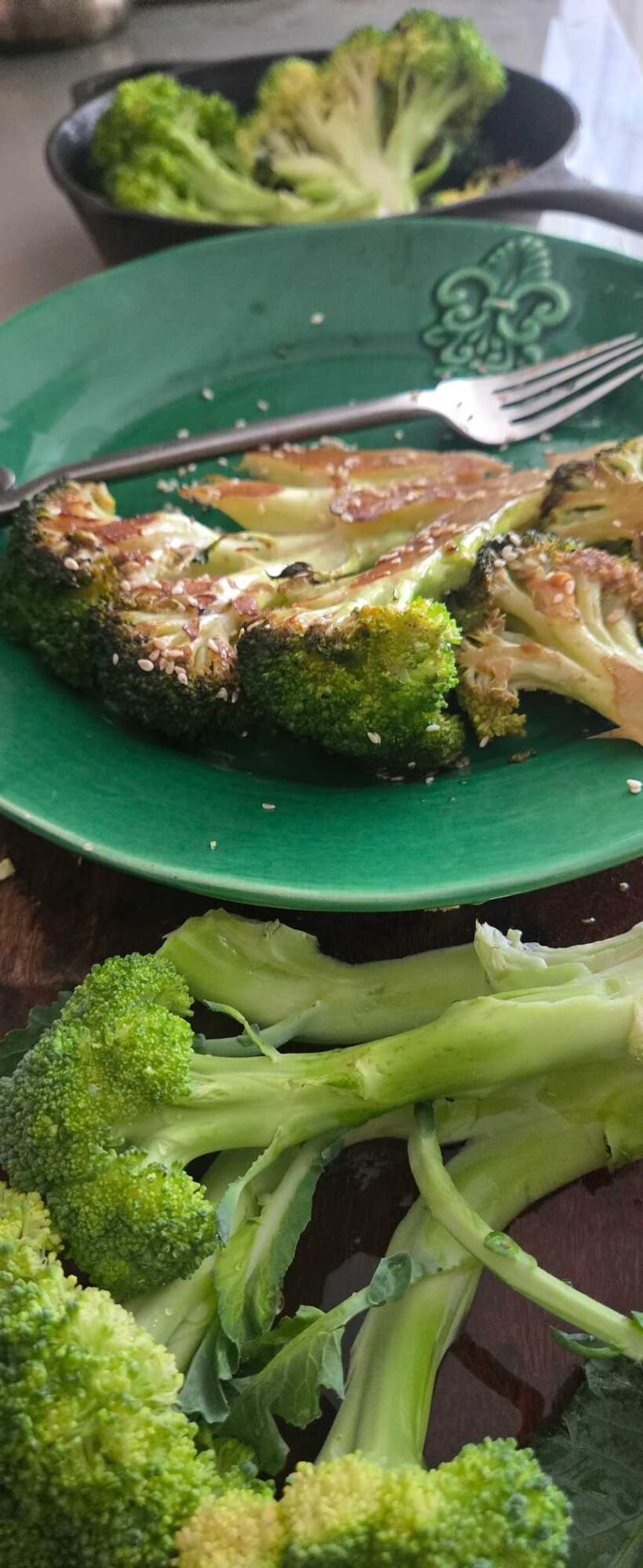
2. Prepare and char the broccoli. Trim the ends of the broccoli and slice any thick stalks in half lengthwise to create flat surfaces. Heat the olive oil in a large skillet or cast iron pan over medium to medium-high heat until shimmering but not smoking. Place the broccoli florets cut side down in a single layer. Press lightly to get good contact with the pan. Let them cook, undisturbed, for 2–4 minutes, or until visibly charred and golden-brown on the bottom. Add ½ cup (120 ml) of water to the pan and immediately cover with a lid to steam. Let cook for another 4–5 minutes, until the water evaporates and the broccoli is crisp-tender—not mushy. Remove from heat.
3. Assemble the dish. Transfer the broccoli to a serving plate. Drizzle generously with the soy dressing. Add a few dollops of the lemon mayo or serve it on the side. Sprinkle with poppy seeds and finish with freshly ground black pepper. Serve warm as a main course or hearty side dish.
Now Go and Have Fun with Endless Variations!
You can play with flavors—think sesame and soy for an Asian twist, curry spices with a side of dal or chickpeas, Italian-style with breadcrumbs and tomato sauce, or go bold with a classic steak-style marinade. Cook it how you like: oven-roasted, pan-seared on your favorite cast iron skillet, or grilled. And pair it with what you love: quinoa (for extra protein), golden breadcrumb-coated potatoes (for that cozy meal vibe), pasta, polenta, lentils, black beans, tofu, or salad. It works. Every. Time.
So, after years of eating plant-based, I’m happy to say that I’m still surprised by new recipes. And in recent years? I’m surprised even more often. Because more and more people—especially chefs—are entering the plant-based space, experimenting and elevating plants to their true potential.
Gone are the days when the only “vegan meal” was boiled carrots and bland steamed vegetables. (Yes, I remember this. It was three decades ago, when I didn’t even know veganism existed.)
Now we’re living in a golden age of flavor—from global dishes to cutting-edge plant-based products. And the pace is only accelerating.
I can’t wait to see what the next 10, 20 years will bring. It gives me hope. And motivation.
Because when you think about it, traditional cuisines took generations to evolve. So the innovation we’re seeing now? It’s just the beginning. And in the meantime, I’m more than happy living off the incredible plant-based bounty we already have.
This isn’t your average stir-fry—this is a bold, bitey, broccoli-powered bowl of plant-based bliss. Imagine big, pan-seared slabs of broccoli—charred just enough to give them attitude, but still crunchy enough to fight back.
Paired with silky bok choy and crispy golden tofu cubes, this dish is drenched in umami flavor with just the right hint of sweet onion caramel and nutty sesame. Topped with a sprinkle of seeds or cashews, and nestled on a cloud of quinoa or brown rice, it’s the kind of meal that fills you up without weighing you down.
✨ It’s clean. It’s bold. It’s got protein punch, fiber flair, and green glory all in one skillet.
Your tastebuds? Thrilled. Your stomach? Satisfied. Your body? Saying, “Yes, more of that, please!”
The Secret Behind Broccoli Satisfaction
Surprise! Broccoli can be incredibly filling—leaving you full, content, and strangely smug—as long as it’s not overcooked.
It’s one of my favorite go-to ingredients, ideal for preparing quick meals, that are also super nutritious, satisfying, and all-around just plain delicious.
And here’s why.
When broccoli is lightly cooked—think sautéed, roasted, or seared—it holds onto its best assets. The fiber structure stays intact, giving it that satisfying “bite” that slows down digestion and helps you feel fuller, longer. No limp mush here—just real texture that tells your body, “You’re eating something substantial.”
It also keeps its natural water content, which adds juicy volume without adding calories. That means you can load up your plate without feeling weighed down.
And then there’s the nutritional edge. Overcooking broccoli doesn’t just kill texture—it kills nutrients too. Key compounds like sulforaphane (a potent antioxidant linked to cancer prevention and detoxification) break down with excessive heat. A quick sear or steam keeps them alive and kicking, and makes them easier to digest than raw.
So yes, mushy broccoli collapses in your mouth—and in your stomach. But firm, lightly cooked broccoli? That stuff stands its ground. It fills you up. It’s what satisfying food should feel like.
“What does 25 grams of protein look like?”
So you’re scrolling through the internet looking for “high-protein foods,” and bam—there it is again… A smug little graphics showing 3 ounces of beef sitting next to 1.5 cups of beans or a small mountain of quinoa, and a long row of spoonfuls of peanut butter with about million calories.
The message?
“See? Beef is superior. Fewer calories. More protein. And complete protein at that. Filling and satisfying. Game over.”
But here’s what they’re not showing you:
The fiber content: Zero in meat
The antioxidants: Zero
The phytonutrients, gut-supporting compounds, and disease-fighting benefits: Zero
The cost to your heart, your colon, and the climate? …well, let’s not get started.
The suffering of animals… beyond measure…
Those graphics aren’t nutrition education. They’re marketing dressed up in charts!
Enter the Green Goddess of Satiety: Broccoli
Here’s the truth: a big bowl of stir-fried broccoli, bok choy, and tofu can leave you feeling more full, energized, and nourished than any sad little slice of meat. Why?
Because when you don’t boil the life out of it, broccoli has everything going for it:
Crunch and texture → tells your body “I’m eating real food.”
Micronutrients and antioxidants → fuel your cells, not just your macros.
And yes, protein too. The healthy, kind, and sustainable kind.
🌱 Broccoli & Bok Choy Stir Fry with Tofu Recipe
A complete meal made from actual food—plant-powered protein (protein 5.0!), fiber, crunch, color, and comfort in every bite.
Ingredients:
1 block firm tofu, ~400g (📦 ~36g protein)
2 cups broccoli florets or “steaks” (🥦 ~6g protein)
2 cups bok choy, chopped (🥬 ~3g protein)
1 small onion, sliced
1 tbsp sesame oil (or water for low-fat version)
1 tbsp soy sauce or tamari
1 garlic clove, minced
1 tsp grated ginger (optional)
1 tbsp sesame seeds (optional, ~2g protein)
2 tbsp roasted cashews (optional, ~3g protein)
1 cup cooked quinoa or brown rice per serving (🍚 quinoa: ~8g protein, rice: ~5g)
Method:
Crisp the tofu: Cube and pan-fry the tofu until golden. Set aside. Sear the broccoli: Begin by cutting the broccoli into diagonal pieces, like steaks, before searing. In a hot cast iron pan (or a regular pan), sear big broccoli chunks until browned but still firm. No mush allowed! Set aside with tofu. Sauté the aromatics: Add onion to the pan and let it caramelize. Toss in garlic and ginger for a hit of flavor. Add bok choy: Stir in the chopped greens, cook just until tender and still vibrant. Sprinkle with sesame seeds, allowing them to brown slightly. Mix it all up: Return tofu and broccoli to the pan, splash with soy sauce, and stir to coat. Serve: Serve over quinoa or brown rice.
Makes 2 generous servings: perfect for sharing or save some for later.
Total per serving (w/ quinoa, no cashews): ~25–27g of protein, 100% plants, fiber-rich, full of antioxidants
Why This Meal Crushes That 3-Ounce Steak
You know those graphics showing 25g of protein from beef at just 173 calories? Sure. It’s low calorie… but also low everything else. Compare that to this meal:
Protein? Check.
Fiber? Loads.
Micronutrients? From magnesium to vitamin C to calcium.
Antioxidants? Oh yeah.
Phytonutrients and anti-inflammatory compounds? You bet.
That beef? It’s a component. High in environmental cost and animal suffering.
This bowl? It’s a meal—complete in the way your body actually needs. Full of nutrients, goodness, and kindness—to the planet, animals, and people.
So, the next time you see one of those “What does 25 grams of protein look like?” infographics, ask yourself: Where’s the fiber? Where’s the color? Where’s the life? Don’t fall for protein tunnel vision. Eat like your health—and the planet—depends on more than just macros. Because it does.
This Curried Cauliflower & Split-Pea Soup is a cozy, flavorful bowl of plant-powered goodness—with a seriously impressive sustainability score to match! Packed with protein-rich split peas and colorful veggies, it’s super budget-friendly, low-waste, and cooks up in a flash thanks to the magic of a pressure cooker. No soaking, no fuss—just a creamy, comforting soup that’s kind to your body, your wallet, and the planet. Whip up a big batch and feel like a kitchen wizard making the world better one spoonful at a time!
This soup is the ultimate comfort food that’s so quick to prepare it’s shocking! It literally takes me about 20 minutes from decision to the steaming bowl.
Don’t believe me? Suspect me of cheating or exaggerating? Having some dark superpowers? No, I just use the right equipment.
Namely, a pressure cooker. An essential kitchen tool for anyone who eats a plant-powered diet.
A pressure cooker is an incredibly useful kitchen appliance, especially when it comes to easily and quickly preparing all sorts of legumes, from lentils to beans. It dramatically cuts down on cooking time, producing tender beans and chickpeas that are otherwise difficult to achieve, even after hours of cooking, thus saving time and energy.
This soup is very filling, rich in plant protein, and cheap to make.
It’s also incredibly smooth and creamy, even without a blender! The problem with cooking veggies in a pressure cooker is that they easily get too soft and turn mushy, but this soup actually benefits from that effect. This And I don’t even bother chopping the veggies finely—they get soft enough on their own. to smooth consistency or served as is.
Split peas don’t require soaking, so that speeds up the process even more.
Creamy Split Pea Soup with Veggies—Ready in Just 5 Minutes (Pressure Cooker Recipe)
Ingredients:
2 cups yellow split peas, rinsed
4 cups water
Vegetables: add what you like or have, for example:
½ head of cauliflower, and/or broccoli, 2 leaves of kale, ½ bunch spinach
1 large carrot, 1 sweet potato, 1 potato
2 celery stalks, 1 parsley root, 1 small piece of celery root
Spices: 1 teaspoon curry powder
1 teaspoon marjoram (optional)
A pinch of dry ginger (optional)
Salt and black pepper, to taste
Method
Add everything to the pressure cooker and start cooking on high until it seals. Continue cooking for about 4-5 minutes. Let it simmer for a few more minutes, allowing the pressure to be released naturally. Open the lid, adjust the seasoning, and enjoy the thick, creamy texture.
Storage:
The soup can be refrigerated for up to 5 days or frozen in smaller portions for future meals. Add a bit of water or vegetable broth when reheating if it’s too thick.
Nutritional Breakdown: Servings: 6-8, Calories per Serving: 250-300 calories, Carbohydrates: 45-55 grams, Proteins: 15-20 grams, Fats: 1-2 grams, Fiber: 15-20 grams. These values are approximations, and actual nutritional content can vary based on specific ingredient types and amounts.
Cooking Beans: Pressure Cooker vs. Thermomix vs. Slow Cooker
I’m kicking myself for not using a pressure cooker sooner, or an electric cooker, like Instant Pot. Beans were such a struggle before! Don’t make the same mistake. Seriously, unless you only use canned beans, or maybe have some other fancy equipment that cooks the food for you – like a Thermomix or some slow cooker — you should seriously consider investing in a pressure cooker. And even if you have those, from what I know, pressure cookers are still superior. Here’s why:
Cooking Beans: Pressure Cooker vs. Instant Pot vs. Thermomix vs. Slow Cooker
Pressure Cooker: Fast and energy-efficient, perfect for cooking beans and legumes quickly without pre-soaking. Ideal for preparing meals in a fraction of the usual time while maintaining most nutrients due to reduced cooking duration. Especially great for split peas, which cook in just 5–10 minutes.
Instant Pot: A modern, electric version of the pressure cooker with added convenience. It features programmable settings, a delay timer, and keep-warm functions. It’s excellent for hands-off cooking of legumes like split peas (5–7 minutes on high pressure), lentils, or even soaked beans. Super beginner-friendly and widely used in plant-based kitchens.
Thermomix: A multifunctional appliance, capable of cooking beans with precise temperature control and built-in stirring. No high-pressure function needed for faster legume cooking, so it’s slower than a pressure cooker or Instant Pot. Best used when your recipe involves blending or multi-stage cooking (e.g., soups or sauces).
Slow Cooker: Ideal for a “set it and forget it” approach. Cooking beans takes longer (6–8 hours), but the result is tender, deeply flavorful legumes. It’s less energy-efficient and not ideal if you need your food fast, but perfect for prepping overnight or during the workday.
Using a pressure cooker for this recipe not only speeds up the process but also helps retain the nutritional value of the ingredients, making it a superb choice for healthy, quick meals.
🌱 My Overall Sustainability Rating of this Recipe: 9.5/10!
✅ 1. Ingredient Footprint – Very Low
Split peas are one of the most sustainable protein sources available. They require little water to grow, enrich the soil with nitrogen (which reduces the need for synthetic fertilizers), and have a low carbon footprint.
The other vegetables (cauliflower, carrots, potatoes, celery, etc.) are seasonal, local-friendly, and low-impact compared to animal products or exotic produce.
✅ 2. Protein Content – Excellent
Split peas are high in plant protein (~16g per cooked cup) and rich in fiber, making this soup a nutrient-dense alternative to meat-based soups without the environmental burden of animal agriculture.
✅ 3. Cooking Method – Efficient
Using a pressure cooker or Instant Pot dramatically reduces cooking time and energy use compared to stove-top simmering for hours or baking.
Compared to slow cookers or ovens, a pressure cooker uses up to 70% less energy and helps retain more nutrients.
✅ 4. Cost – Very Low
Split peas and root vegetables are some of the most affordable whole-food ingredients.
A big batch of soup can feed 6–8 people for the cost of a couple of store-bought meals or even less, especially if bought in bulk.
✅ 5. Waste & Packaging – Minimal
You can buy most ingredients (split peas, spices, veggies) loose or in bulk, which minimizes packaging waste.
Leftovers store and freeze well, reducing food waste.
🔄 Suggested Improvements for a Perfect 10:
Use home-composted veggie scraps if possible, or make broth from peelings before adding them to compost.
If using store-bought spices, choose recyclable glass jars or refill from bulk bins.
Cook with renewable energy (e.g., induction stove, solar panels) if available.
🌟 Overall Verdict: This soup is a model plant-based, low-waste, low-cost, high-protein, eco-friendly comfort meal. A regular in any sustainable kitchen!