As the temperatures are rising, are you hungry for a delicious frozen treat that is healthy and nutritious?
I know my family is.
Everyone in our home loves ice cream, so I’ve decided to experiment with home-made frozen desserts that are actually good for you AND for the planet, and here are the results.
(Why do I bother with making ice-cream at home, when perfectly delicious concoctions can be bought at any convenience store and grocery store? The answer is coming up soon….but for now – here are the recipes).
How to Make Ice Cream Without an Ice Cream Maker?
Ice cream makers are a fun and easy way to churn up frozen treats at home, however, most people don’t own it (I don’t), and I would never deem it a kitchen necessity. Single-tasking kitchen tools are a major pet peeve of mine, as they take up precious kitchen space, and usually get little usage.
So what’s an ice-cream-lover to do (other than running to the nearest store)?
There are several methods to make ice cream at home, and the easiest one in my opinion is to use your Vitamix (or other high power blender) or food processor.
It’s easy, it’s simple and it only takes a few minutes and your frozen treat is ready.
Tips For Making Delicious Homemade Ice Cream
That ingredient that I use most often in homemade ice cream recipes, is banana! Ripe bananas, when frozen and blended up, turn creamy instead of crumbly, with a smooth texture any home ice cream chef would love to have in their frozen treats.
The major tips can be summed up as:
- Peel your bananas first.
- Cut them into small pieces.
- Freeze for a few hours on a plate.
- Blend, blend, blend – scraping down the bowl when they stick.
- Add other ingredients – frozen fruits, nut butters, nuts, chocolate powder, vanilla, cinnamon, etc. , and blend some more.
- Scoop into bowls and top with sliced fruit or your favorite sauce.
- Enjoy the magic moment!
Almond Butter-Banana Ice Cream
- 4 frozen very ripe bananas, cut into pieces
- 1/4 cup of almond butter
- 2 tablespoons agave nectar (or any other liquid sweetener)
- 1/2 teaspoon vanilla extract
- pinch of sea salt
Combine all ingredients in a food processor or Vitamix and blend until smooth and creamy. Serves 4.
Make this dairy-free dessert tonight – it is amazing! It takes just 5 minutes to prepare and delivers tons of satisfaction for a little over 200 calories per serving!
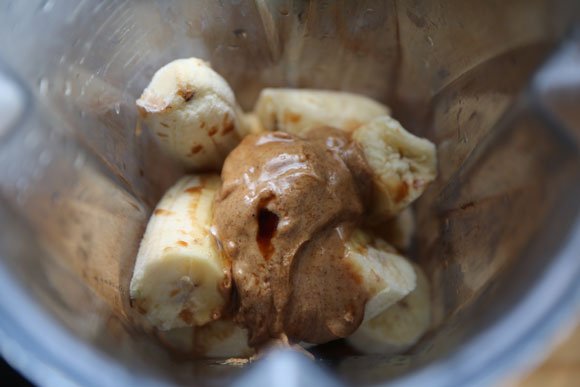
How to Make Ice Cream in under 5 minutes (some preparation – like freezing bananas – required)
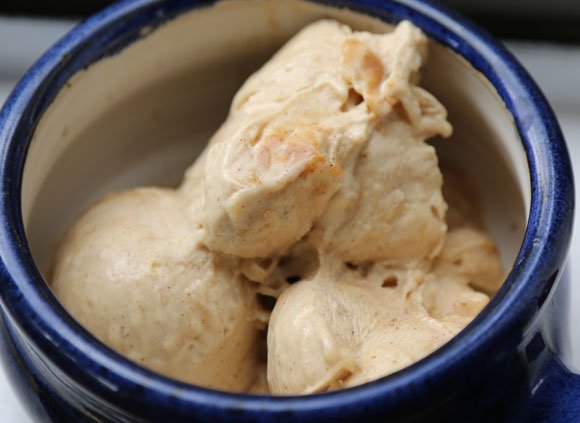
Homemade Almond-Butter – Banana Ice Cream: Dairy-Free, Cruelty-Free and Simply Delicious!
Banana Chocolate Cherry Ice Cream
- 3 frozen medium bananas
- 1 cup frozen organic cherries
- 5 dates, pitted
- 2 tablespoons organic virgin coconut oil
- 1 tablespoon vanilla extract
- 2 tablespoons raw cacao
- pinch sea salt
In a food processor or blender (Vitamix or other), pulse dates, coconut oil, vanilla, and a pinch of salt into a thick paste. Add in cherries and bananas and blend until smooth. Eat immediately or freeze in covered container until firm, 2-4 hours. Serves 4.
It’s best to consume all ice cream immediately. If you’d like to store some for later, I’d recommend to give it a good stir after the first 30 minutes in the freezer.
You can also freeze leftovers in an ice cube tray, transferring the cubes to a zip-top bag when frozen solid. To prepare the leftover ice cream, place the frozen ice cream cubes in a food processor, let them sit for a couple of minutes to soften slightly, and pulse until smooth and creamy.
For all my blending recipes I use Vitamix. If you don’t already own a VitaMix, I strongly encourage you to check out what this machine is capable of! For more information about VitaMix you can go directly to the VitaMix website. You may also want to read my post about the Best Blender.
I LOVE my VitaMix and highly recommend investing in one if you are ready to make serious changes to your diet. I have had mine for almost 5 years and use it daily!
If you decide to purchase Vitamix – be sure to use Promotional Code 06-004554 to get free shipping.
Questions? Comments? Suggestions?
If you have a favorite recipe, why not submit it here in the comment section of this smoothie recipes blog for others to enjoy too!
I also welcome any comments, questions and suggestions. Thanks!
As long as I keep drinking green smoothies regularly, I never suffer from constipation. The only times I do get constipated is when I travel and am unable to consume my usual diet rich in green smoothies and other whole foods.
Consuming lots of fresh, raw fruits, vegetables, and greens, definitely helps to “keep things moving” in this department. These foods provide such abundance of fiber and liquids that they virtually swipe your intestines like a broom, and are the best remedy for constipation relief.
Green smoothies act like a broom, cleaning up your many, many feet of intestinal tract, and helping elimination of all the unnecessary stuff and garbage from your body.
However, if you are just beginning to drink green smoothies (or switching to a more natural-fiber-rich diet), you may feel surprisingly bloated and constipated initially. This will come as an unpleasant surprise, especially, if one of your motives has been better digestion and better elimination.
You may be asking yourself: “Why am I constipated after drinking green smoothies?”
Constipation can be a surprising side effect of increasing the amount of fiber in the diet for some people. Usually, this is a result of a sudden increase of fiber coupled with dehydration.
Let’s say that you’ve been eating a diet rich in animal protein (no fiber) and white flour breads and pastas (very little fiber), which is common for many people eating a Standard American Diet (SAD). Then you suddenly flood your body with green smoothies and whole foods and your fiber intake jumps to 2 or 3 times (or more). All of that soluble fiber in fruits and vegetables is now absorbing moisture in your intestines and slowly trudging through your bowels. This will cause problems especially if you have not increased your water intake.
Many people give up at this point, assuming that this type of diet is not for them. They will be blaming raw fruits and vegetables for their problem, and vow to avoid them at all cost.
BIG MISTAKE!
Fact is your body needs time to adjust to the new healthier regimen, and if you are experiencing difficulties, you’ll just need to slow down a bit and give your body some time get used to the new diet.
If you are not used to eating loads of fresh fruits and vegetables, then increase your water consumption and make sure you increase your fiber intake GRADUALLY over a week or two.
Avoid taking fiber supplements if you are getting adequate fiber in the diet through green smoothies and fresh fruits and vegetables. Reduce your consumption of dried or powdered foods (even the super-foods).
If you are still feeling a bit “backed-up” and bloated, try out one of the prune smoothie recipes below as a natural and nutritious way to get things moving. It’s great for digestion and boosting energy. This smoothie is full of beta-carotene, folate, vitamins B1, B3, and B6.
Do prunes really work as a laxative?
There are many old wives’ tales out there regarding our health, however, in this case, your grandma was right.
Prunes are especially high in fiber and contain sorbitol, a stool-loosening sugar that naturally helps relieve constipation. Sorbitol is a mild colonic stimulant that helps reduce transit time of stool and thus decrease the risk of constipation. That is why prunes are often recommended for fast constipation relief.
Fresh plums are filled with minerals and also have a mild laxative effect. They can relieve gas and have a cleansing effect on your intestines.
However, prunes are generally considered more effective than plums for constipation relief.
How To Use Prunes In A Green Smoothie
The prune smoothie recipe requires a bit of advance preparation to plump up the prunes by putting them in a cup of hot water for about ten to twenty minutes but the results are well worth it.
“Keeping things Moving” Prune Smoothie
- 9 prunes, pitted and soaked
- 1 pear
- 1 cup water or organic apple juice
- 1/2 tsp vanilla essence
Apple Prune Smoothie
- 6 prunes, pitted and pre-soaked until plump
- 1 1/2 cup apple juice
- 2 stalks of celery
- one handful of organic spinach
- 1/4 tsp cinnamon
- pinch of nutmeg
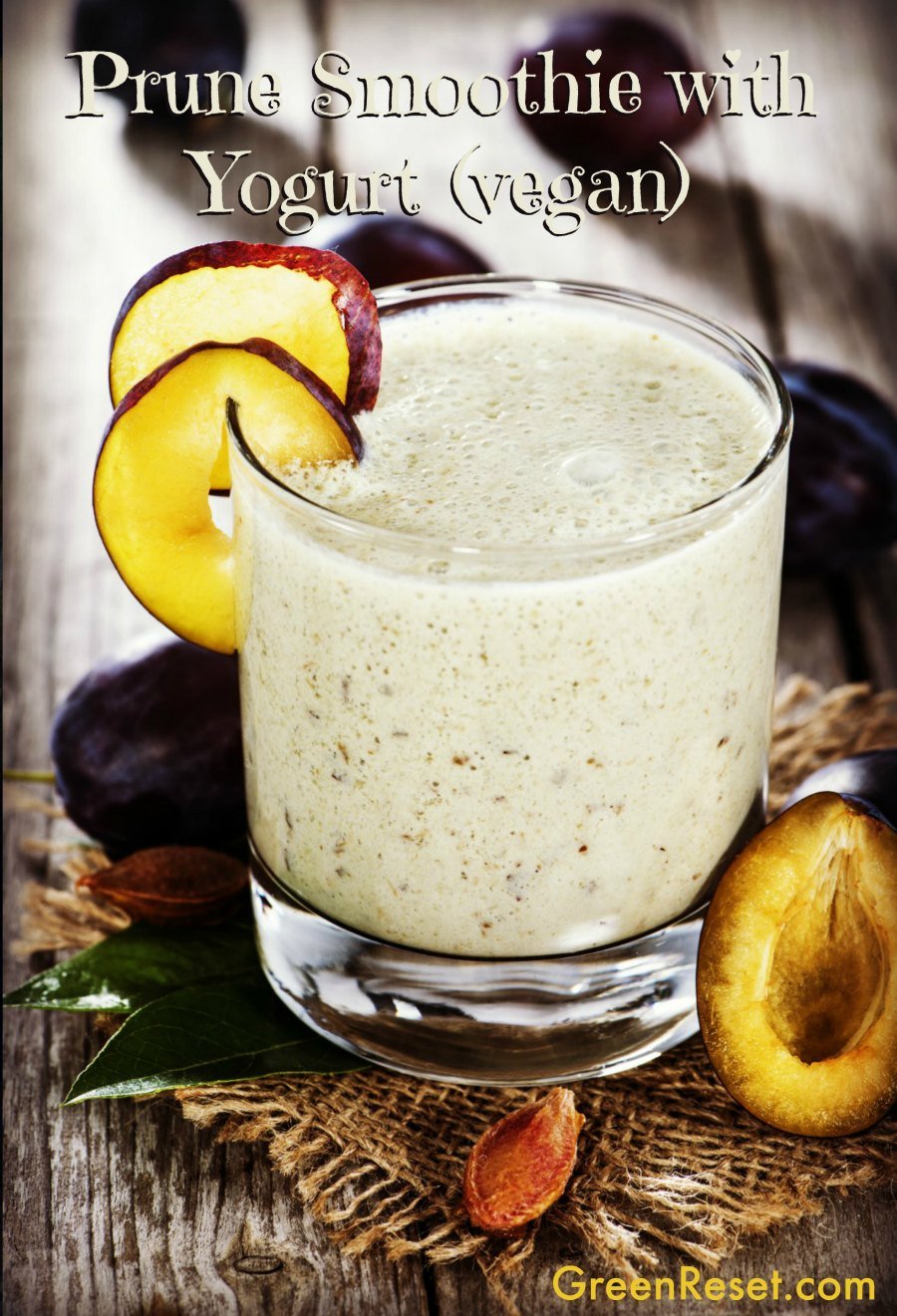
PRUNE POWER Smoothie With Yogurt
- Pitted prunes, 6 pieces
- Apple juice, 1 cup
- Crushed ice, 1 cup
- Non-dairy vanilla yogurt (such as soy), 1 cup
- Cinnamon powder, 1/4 teaspoon
- Grated nutmeg, 1 pinch
First, submerge the prunes in warm water for 15 minutes. Then drain the prunes. Let it cool down. Blend in the prunes, apple juice, ice and yogurt. Add cinnamon and nutmeg to taste.
Blend to desired consistency. Serve and enjoy!
If you drink green smoothies every day, your elimination will become effortless, almost odorless and quick – you will not be able to catch up on your reading while sitting on the toilet, because you’ll be done by the end of the first paragraph ;-).
Note: If constipation continues to be a problem, or if it is a common problem for you no matter what diet you are on, then consult a qualified health practitioner who can help rule out any health issues.
For all my blending recipes I use Vitamix. If you don’t already own a VitaMix, I strongly encourage you to check out what this machine is capable of! For more information about VitaMix you can go directly to the VitaMix website. You may also want to read my post about the Best Blender.
I LOVE my VitaMix and highly recommend investing in one if you are ready to make serious changes to your diet. I have had mine for almost 5 years and use it daily!
If you decide to purchase Vitamix – be sure to use Promotional Code 06-004554 to get free shipping.
Questions? Comments? Suggestions?
If you have a favorite recipe, why not submit it here in the comment section of this smoothie recipes blog for others to enjoy too!
I also welcome any comments, questions and suggestions. Thanks!
I want to share with you today an example of the dangers of the isolated thinking that is so common today. I’m talking about the prevalent belief that we can compensate for our bad eating and living habits by popping a pill or a supplement to make all problems disappear.
The problem with this approach is that it just doesn’t work.
As I learn more and more about various aspects of human health and nutrition, I come across more and more examples of the potential dangers that this fragmented thinking can cause.
I want to illustrate it with the folate vs folic acid debate.
(Plus, I want to give you one more reason to keep drinking green smoothies!)
What is Folic Acid?
Every woman in child-bearing age knows about folic acid.
Women who are pregnant or might become pregnant are urged to take folic acid during pregnancy to prevent miscarriage and neural birth defects such as spina bifida that occur when the fetus’s spine and back don’t close during development. Health authorities emphasize the critical importance of taking folic acid supplements during pregnancy and women follow that misguided advice.
When I was pregnant (and even prior to that, when I was trying to conceive) I was taking folic acid religiously. Surely, no woman wants their child to be at risk for birth defects!.
Is it the right approach?
Well, needless to say I was shocked to learn that I may have increased my own and my son’s risk for certain cancers by taking these supplements. I learned about this as I was reading “Super Immunity” by doctor Joel Fuhrman. Here is what I learned.
Folate Versus Folic Acid
Most people don’t know the difference between folate versus folic acid, as the terms are often used interchangeably.
*Did you know that folic acid is not found in natural foods at all?!!*
It is the synthetic form of folate that is used as an ingredient in vitamin supplements. Basically it’s a cheap counterfeit isolate of the naturally occurring nutrient, folate.
Folate is a member of the B vitamin family and is found naturally in plant foods, especially green vegetables. It is involved with DNA methilation, which essentially turns genes on and off. This critical role makes folate essential in fetal development and nerve tissue health, as well as cancer progression.
Folate is needed for the proper development of the human body. It is involved in producing the genetic material called DNA and in numerous other bodily functions.
Foods that are naturally high in folate include leafy vegetables (such as spinach, broccoli, turnip greens, and lettuce), okra, asparagus, fruits (such as bananas, melons, and lemons), legumes, yeast, mushrooms, orange juice, sunflower seeds, and tomato juice.
Folic acid has been added to cold cereals, flour, breads, pasta, bakery items, cookies, and crackers, as required by federal law.
The term folate (NOT folic acid) really encompasses a multitude of naturally occurring chemical cousins – chemists call them isomers – that have a wide range of health benefits. Without full-spectrum natural folate, our body becomes a breeding ground for various diseases, including Alzheimer’s, coronary heart disease, osteoporosis, neural tube defects, poor cognitive performance, depression, hearing loss and many types of cancer.
The liver can convert the isolate folic acid into the complete spectrum of isomers that constitute folate. But as we age, that ability declines. Then no matter how much folic acid you take, your folate blood levels decline.
The result is a folate deficiency, which invites all those diseases associated with old age mentioned earlier. Folic acid has also been suspected of shuffling DNA around a bit, producing unpredictable results. It is not worth gambling with your health!
What is Wrong With Taking Folic Acid Supplements
The problem with folic acid is what you just learned: that it’s not the same as the folate found in whole foods.
Maybe folic acid is not too bad all the time. But it is certainly very risky over the long term. Recent studies have demonstrated significant concerns about folic acid.
While eating too much folate-rich foods is not a concern, consuming too much folic acid has been implicated in increasing the occurrence of certain cancers.
In patients with ischemic heart disease in Norway, where there is no folic acid fortification of foods, treatment with folic acid plus vitamin B12 was associated with increased cancer outcomes and all-cause mortality. In the United States, Canada, and Chile, the institution of a folic acid supplementation program was associated with an increased prevalence of colon cancer. A random control trial found that that daily supplementation with 1 mg of folic acid was associated with an increased risk of prostate cancer.
“The present system, where women rely on a pill and not on real foods, leads to a plethora of serious health problems in children- childhood asthma, infant respiratory tract infections, and cardiac birth defect. On the other hand, the children of women who consumed more food folate during pregnancy were less likely to develop attention deficit hyperactivity disorder (ADHD). Even more startling is the reduction of childhood cancers seen in the children of women who consumed folate-containing green foods during pregnancy and did NOT take folic acid supplements.”
The reliance on folic acid during pregnancy, instead of educating women about the importance of consuming natural food for their folate needs, is indeed dangerous. Many researchers believe supplementation in this way can never work effectively, since about half of all pregnancies in the U.S. are unplanned, and not all women will comply with the recommendation.
And even pregnant women should NOT be supplementing with synthetic folic acid, as it appears to lead to increased risks for cancer.
“Getting enough folate from natural foods can keep cancers from starting, by repairing errors in DNA, but folic acid appears to feed tumor development and promote carcinogenesis. In light of the existing research, I do not recommend that pregnant women take a prenatal that contains folic acid. I do recommend a blood test for folate sufficiency before even contemplating pregnancy, and I do recommend a high-folate diet rich in green vegetables. A diet that includes the regular consumption of green vegetables is the safest way to protect your offspring and achieve protection from cancer, heart disease, and all cause mortality.” Says dr. Joel Fuhrman.
Sources of Folate: Nature knows best when it comes to healthy nutrition
Fortunately, there is no need to take folic acid, as folate is abundant in many foods, especially dark green vegetables. Spinach, kale, broccoli, and other veggies are well bestowed with folate. It’s also available in whole grains and legumes that you purchase dry. You can even get it from citrus fruits, melons, and bananas. An excellent folate source that can be used as a supplement is unfortified brewer’s yeast.
| Spinach, raw |
843 μg
|
|
Edamame |
225 μg
|
| Endive |
835 μg
|
Tomatoes, yellow |
200 μg
|
| Romaine lettuce |
800 μg
|
Tomatoes, orange |
180 μg
|
| Asparagus, cooked |
750 μg
|
Chickpeas |
150 μg
|
| Mustard greens, raw |
700 μg
|
Red peppers, raw |
150 μg
|
| Collards, raw |
550 μg
|
Papaya |
90 μg
|
| Okra, cooked |
520 μg
|
Snow/Snap peas, raw |
100 μg
|
| Bok choy, raw |
500 μg
|
Summer squash |
100 μg
|
| Brocolli Rabe, raw |
375 μg
|
Tomatoes, red |
85 μg
|
| Arugula, raw |
340 μg
|
Strawberries |
75 μg
|
| Artichokes, cooked |
330 μg
|
Oranges |
70 μg
|
| Brussels sprouts, cooked |
300 μg
|
Beets, cooked |
50 μg
|
| Broccoli, cooked |
300 μg
|
Blackberries |
55 μg
|
| Cauliflower, raw |
225 μg
|
Avocado |
50 μg
|
| Red leaf lettuce |
225 μg
|
Sunflower seeds |
40 μg
|
| Celery, raw |
225 μg
|
Quinoa, cooked |
35 μg
|
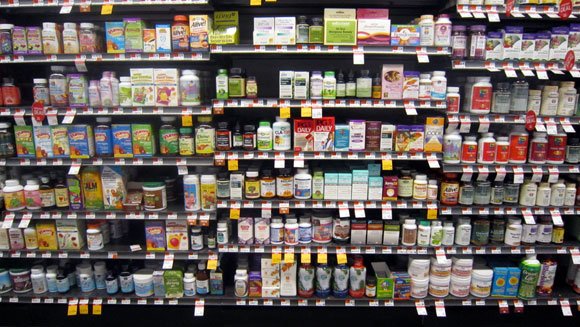
Beware of Hidden Dangers of Synthetic Supplements: What you don't know can hurt you!
Another reason to eat your greens & drink your green smoothies every day!
Nature knows best when it comes to nutrition. Whole foods are best! Eat your greens and drink your smoothies!
More Resources
“Super Immunity” by Joel Fuhrman, MD
If you are pregnant, DO NOT take prenatal vitamins that contain folic acid!
The little known (but crucial) difference between folate and folic acid
Is the mainstream still cheating you out of the best health possible—with folic acid?!
The Folic Acid Fallacy: How Your Multi-vitamin Might be Killing You
Questions? Comments? Suggestions?
If you have a favorite recipe, why not submit it here in the comment section of this smoothie recipes blog for others to enjoy too!
I also welcome any comments, questions and suggestions. Thanks!
If you love milkshakes, then you will not believe how much this this delicious MILK-FREE recipe will taste like a dairy-rich, sugar-sweetened, artery-clogging shake!
Serve this to your milkshake-loving friends and they’ll not believe it doesn’t have any dairy in it.
When I was a child, milkshakes were special treats in my family. Oftentimes, we don’t crave a food because of the taste; we’re really just longing for a familiar emotion that once comforted us. Well, this milkshake recipe definitely fulfills the emotional memory I have from childhood. But, it tastes even better (no kidding, you’ve just got to try this!).
Basic Shake Recipe
Ingredients:
- 4 large bananas, frozen
- 1/2 cup raw almonds
- 2 tablespoons agave nectar (or other sweetener)
- 1 cup ice (more or less)
- 1 cup water (or more, if too thick)
- a pinch of sea salt
Variations:
- For a CHOCOLATE shake, add 2 tablespoons raw cacao powder (or carob powder)
- For a STRAWBERRY shake, add 3/4 cup fresh or frozen strawberries (use less ice if berries are frozen)
- Other fruits that will work great include: peaches, raspberries, blueberries, and other — whichever is your favorite!
- Use any plant-based milk instead of almonds and water.
- Toppings: pieces of fruits, crushed nuts, vegan cookies, etc.
Directions:
- Make sure your bananas are well frozen (for a minimum of 24 hours!!!). This is really a key factor in achieving the perfect ice-creamy texture.
- Place all ingredients in your blender container (Vitamix or other high speed blender is best) and mix on high until a smooth, milkshake consistency is reached.
- If you’re on a low-fat diet, you may skip the almonds or only use a few to taste.
Milkshakes are the ultimate drink when it comes to comforting, refreshing treats. What could be better than a thick, creamy shake in a frosty glass? There are many non-dairy alternatives to make your vegan shake as rich and satisfying as ever. Let’s look at some of the delicious options…
Ingredients for Plant-Based (Vegan) Milkshakes
Plant milks. Almond, rice and soy milk does not have as high a fat content as coconut milk, which is nice if you’re trying to cut down on fat grams. And there are a number of flavor options, such as vanilla, chocolate, sweetened and unsweetened, so you can play with your favorites.
Nut butters. Peanut butter, cashew butter and almond butter taste terrific in shakes and both go particularly well with the malt powder flavor. Nut butters thicken a shake, adding protein and nutrients such as calcium, iron and magnesium.
Flavor extracts. Vanilla, maple, almond, lemon, peppermint, cinnamon, cocoa powder… there are many flavor extracts you can use to add tantalizing twists to a shake. Purchase flavor extracts that are all natural with no synthetic or imitation flavors or mysterious ingredients.
Malt powder. This tip I found on EarthBalance website. Malt powder is a germinated grain (usually barley). It has no added sugar but the sugar or syrup from your other shake ingredients should be enough. You can order malt powder online or buy at some specialty stores. Lookout for malted milk, which is not vegan.

add your favorite fruit, and top with your favorite topping
Please, pretty please, only use plant-based, cruelty-free milks in your milkshakes – check them out here:
 Please use only non dairy milk in your smoothies! Even this doctor and doctors at PCRM.org will tell you so!
For all my blending recipes I use Vitamix. If you don’t already own a VitaMix, I strongly encourage you to check out what this machine is capable of! For more information about VitaMix you can go directly to the VitaMix website. You may also want to read my post about the Best Blender.
I LOVE my VitaMix and highly recommend investing in one if you are ready to make serious changes to your diet. I have had mine for almost 5 years and use it daily!
If you decide to purchase Vitamix – be sure to use Promotional Code 06-004554 to get free shipping.
Questions? Comments? Suggestions?
If you have a favorite recipe, why not submit it here in the comment section of this smoothie recipes blog for others to enjoy too!
I also welcome any comments, questions and suggestions. Thanks!
Many people have no problem replacing snacks and desserts with green smoothies and other raw dishes. However, when it comes to lunch and dinner, most of us crave something much more substantial and filling.
Although I live mostly on green smoothies during the day, at evening, when the whole family gets home, I’m usually having a cooked dish that I prepared for them.
Still, as the hot summer weather approaches, I’m experimenting more and more with raw main dishes, such as this raw vegan chili.
Unlike the cooked chili recipe that I posted earlier this week, other than having to pre-soak a couple of ingredients, it only takes about five minutes to make!
Un-Cooked Vegan Chili Recipe
Ingredients:
- 2 large juicy tomatoes
- 1/2 cup sun dried tomatoes soaked and rinsed
- 1 -2 large avocado
- 1 tbsp chili powder
- 1 tsp cumin powder
- 1 clove garlic
- 1 large bell pepper – red, green or yellow (diced)
- 1/2 zucchini (diced)
- 1/4 red or yellow onion (diced)
- 1 cup fresh cilantro
- juice from half a fresh lime
- 1/2-1 cup fresh peas, frozen or fresh from the pod (optional)
If you like spicy, add more garlic cloves, or jalapeño pepper, minced.
Place all ingredients, except for peppers, onions, and peas, in the Vitamix or food processor and blend for 30 seconds or so. It may take more or less time depending on the type of food processor you have.
When you’re done, you will have a pureed, chunky mixture!
Mix in your sliced bell pepper, peas and onion.
If you are not following a pure raw diet, then you might toss into the mix some pre-cooked beans.
Serve on a large piece or green or purple cabbage, garnish with freshly chopped green onion!
Optional Topping: Fresh not sour ‘Cashew Kreme’:
- 1/2 cup cashews soaked and rinsed
- 1 tsp salt
- dash of nutritional yeast
- squeeze of 1/2 lemon
Add water as you blend until you reach desired consistency. Pour over the chili when you’re serving. Recipe inspired by RAW Chili Sans Carne.
Questions? Comments? Suggestions?
If you have a favorite recipe, why not submit it here in the comment section of this smoothie recipes blog for others to enjoy too!
I also welcome any comments, questions and suggestions. Thanks!
Many people love chili, and this is a healthy, vegan version of this dish.
Chili is always a great idea to bring to a potluck, since it’s easy to whip up a large batch, plus you can freeze any leftovers. You can make batches of this chili recipe and take it to work for lunch for the week. It’s even better the next day!
If you own a slow cooker (I don’t), then this is a great recipe to use. Slow cookers and chili making just go hand in hand :-).
But even if you don’t have one, it’s easy enough to prepare; although it’s going to take much longer, compared to most recipes you find on this site. It also has a long list of ingredients.
Don’t let that discourage you!
This chili is SO easy to make. You can pretty much throw whatever you have into the pot and it’ll be great. It’s very colorful, filling, not to mention delicious and good-for-you.
Easy Vegetarian Chili Recipe
Makes 6-8 servings
- 1 cup chopped onions
- 4 garlic cloves, finely minced
- 1 cup chopped carrots
- 1 cup chopped celery
- 3 cups cooked beans: e.g, lentils, kidney, lima
- 1 28-ounce can crushed Italian plum tomatoes
- 2 tablespoons chili powder
- 2 teaspoons ground cumin
- 1 teaspoon ground coriander
- 1 teaspoon ground cinnamon
- salt and freshly ground black pepper to taste
- 1 cup water
Optional Ingredients:
- 1 cup chopped fresh mushrooms
- 1/2 cup bulgur wheat
- 1 cup corn kernel
- 1 red pepper, diced
- 1 yellow pepper, diced
- 1 zucchini, diced
- 2 tablespoons cilantro, chopped
- 1 14 oz package of firm or extra firm tofu, crumbled
- If you like sipcy, add 5 garlic cloves, 3 chipotle chiles, a habanero chile, and/or jalapeño, minced
Preparing the beans
For color and variety, add a couple of cans of different beans – chickpea, garbanzo, red kidney, black, adzuki, white cannellini, etc.
You may use canned or precooked beans, or simply prepare the beans the day before.
If using dried beans, rinse all the beans and remove any grit. Place them in a large pot and add enough cold water to cover by 2 inches. Let stand for 6-8 hours. Drain, return the beans to the pan, and cover them with fresh water. Bring to a boil, reduce the heat to a simmer, and cook until the beans are tender but not falling apart, 45-60 minutes. Drain.
Putting It Together
In a thick-bottomed pot, saute the vegetables and garlic with 2-3 tablespoons of water (or a splash of olive oil) over medium heat. Add the chili powder, cumin, coriander, cinnamon, and cayenne pepper. Cook the vegetables in the spices, about 5 minutes. Season with salt and pepper. Add the tomatoes, water, corn, bulgur wheat (if using), and beans. Bring to a simmer and cook until the bulgur is tender—about 10 minutes.
If using slow cooker, you still need to pre-cook the beans. The only drawback with a slow cooker for me is that I don’t get to taste the dish while it’s cooking for seasoning. But, it’s easy enough to check your seasonings after the first hour of cooking and adjust as needed.
Ladle chili into bowls. Top with chopped cilantro, green onions, or diced avocado or whatever else you enjoy.
Why Meat-Less Chili?
Why bother to change a perfectly tasty meat chili recipe to a vegan version?
Better for health is one reason. Eating a diet rich in plant-foods and low in animal products has been proven time and time again to help prevent many diseases, including heart disease and cancer. Throughout the world, consistently, people who eat a vegetarian diet, or a diet with only minimal amount of animal protein, live the longest and are the healthiest.
Better for environment and my conscience. Aside from our own health, there are also other reasons to eat less meat: reducing environmental destruction, using fewer resources, and compassion for sentient creatures that are living and dying in terrible suffering.
Read what finally convinced me – at almost 47, to make the switch to vegan diet, and how much protein do we really need.
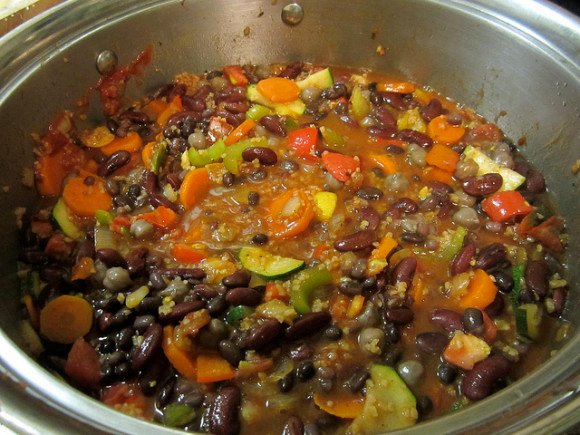
Vegan Chili Recipe: photo http://www.flickr.com/photos/meganpru/6086513398/sizes/z/in/photostream/
Questions? Comments? Suggestions?
If you have a favorite recipe, why not submit it here in the comment section of this smoothie recipes blog for others to enjoy too!
I also welcome any comments, questions and suggestions. Thanks!
Brussels sprouts are related to cabbage, broccoli and kale, and they even look like miniature cabbages. Brussels sprouts, as other brassicas, contains sulforaphane, a chemical believed to have potent anticancer properties.
You might find that you have a certain feeling about Brussels sprouts. In fact, for most of you that feeling might be Ewwwwww!
If so, you may want to reconsider once you try these Brussel sprouts recipes.
Brussels sprouts are rich in many valuable nutrients. They are an excellent source of vitamin C and vitamin K. They are also loaded with vitamin A, folacin, potassium, calcium. They have 3-5 grams of fiber per cup, and at 25 calories per 1/2 cup cooked, they give us a reason to eat them more often. Brussels sprouts are one of those foods that will fill you up, without providing excessive calories.
Brussels sprouts are very high in fiber. They are also rather high in protein, accounting for more than a quarter of their calories.
Although hey are available year round; they are at their best from autumn through early spring when they are at the peak of their growing season.
Brussels Sprout Recipes
I don’t really love Brussels sprouts in green smoothies. You can try tossing one or two into the mix, but anything more than that, is too “cabbagy” to my taste.
Generally, vegetables such as Brussels sprouts, carrots, beets, broccoli, zucchini, daikon radish, cauliflower, cabbage, eggplant, pumpkin, squash, okra, peas, corn, green beans, and others do not combine well with fruit due to their high starch content.
Fortunately, Brussels sprouts are delicious as a raw salad or lightly cooked side dish.
Brussels Sprout Salad Recipe
You can make this salad any way you wish. Try pecans or pine nuts or almonds. You’ll be wanting to eat your sprouts. No kidding.
- 1 pound Brussels sprouts
- 4 ounces walnuts (or hazelnuts), broken into small pieces
- 2 apples, shredded
- 3-4 tablespoons fresh lemon juice
- 2 tablespoons of dried cranberries
- 1 tablespoon of maple syrup, agave or honey
- 2-3 big pinches of salt
- 2 medium cloves garlic, minced
Slice the Brussels sprouts on the slicing disc of the food processor. Alternatively, use a mandoline, or a knife. Ideally, you want the sprouts to be really thin.
In a large mixing bowl and toss gently with the maple syrup, lemon juice, salt, cranberries and nuts. Taste and adjust the seasoning, adding more lemon juice if needed. Add the cheese and toss once or twice to distribute it evenly throughout the salad.
Here is a delicious cooked dish with Brussels sprouts and mushrooms. I just had this dish last night with buckwheat (in the photo below), and it was delicious and very filling.
Brussels Sprouts and Mushrooms
The secret to tasty Brussels sprouts is to not overcook them. Overcooked Brussels sprouts have a pungent, sulfurous odor. Brussels sprouts that have been cooked “just right” have a crisp, dense texture and a slightly nutty taste.
Ingredients:
- 1 pound Brussels sprouts
- 1 small onion, quartered and thinly sliced
- 2-3 cloves garlic, thinly sliced
- 8 ounces mushrooms (baby bella, button, shitake, or portobello), sliced
- 3/4 cup water or vegetable broth
- 1 tablespoon of maple syrup, agave or honey
- a tablespoon of olive oil (optional)
- salt and pepper to taste
Wash the Brussels sprouts well. Cut off the brown ends and pull off any yellow outer leaves. Cut each sprout in half. Prepare the remaining vegetables and heat a non-stick skillet. You may use a tablespoon of olive oil, but for fat-free recipe we’ll use broth or water for cooking.
Put the onions and garlic into the hot non stick skillet. Stirring constantly, add a teaspoon or two of water or broth to the skillet if the onions stick, cook until the onions begin to brown, about 2-3 minutes. Remove onions and garlic to a plate and return the skillet to the heat.
Put the sprouts into the skillet, cut side down. Add maple syrup and cook until they begin to brown. Toss in the mushrooms and cook for another minute or two, stirring frequently. Add about 1/2 cup liquid and the reserved onions, stir, turn down the heat, and cover tightly. Cook until the sprouts are tender and easily pierced with a fork, 3-5 minutes, adding more broth if necessary. Season with salt and pepper to taste and serve immediately.
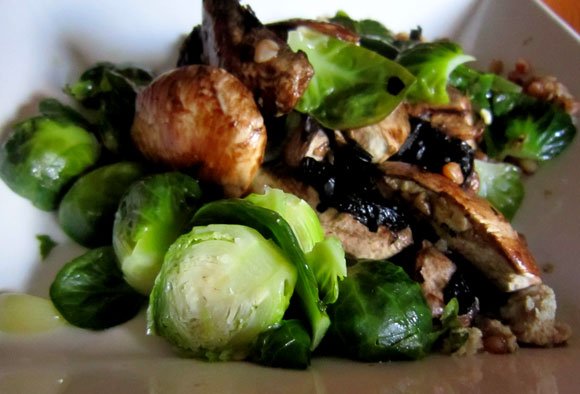
Brussels sprouts, mushrooms with buckwheat. The secret to tasty Brussels sprouts is to not overcook them.
Questions? Comments? Suggestions?
If you have a favorite recipe, why not submit it here in the comment section of this smoothie recipes blog for others to enjoy too!
I also welcome any comments, questions and suggestions. Thanks!
Do you love shrimp? If you do, you are certainly not alone.
I used to love eating them too.
Until I learned about the environmental impact of catching and farming shrimp.
Truth is the impact of bringing shrimp to our tables to satisfy our taste can be horrific.
But most Americans don’t know where their shrimp comes from or what’s in it.
Read this, and your appetite for shrimp (and other seafood) will dwindle.
“Americans love their shrimp. It’s the most popular seafood in the country, but unfortunately much of the shrimp we eat are a cocktail of chemicals, harvested at the expense of one of the world’s productive ecosystems. Worse, guidelines for finding some kind of “sustainable shrimp” are so far nonexistent.
In his book, Bottomfeeder: How to Eat Ethically in a World of Vanishing Seafood, Taras Grescoe paints a repulsive picture of how shrimp are farmed in one region of India. The shrimp pond preparation begins with urea, superphosphate, and diesel, then progresses to the use of piscicides (fish-killing chemicals like chlorine and rotenone), pesticides and antibiotics (including some that are banned in the U.S.), and ends by treating the shrimp with sodium tripolyphosphate (a suspected neurotoxicant), Borax, and occasionally caustic soda.
Upon arrival in the U.S., few if any, are inspected by the FDA, and when researchers have examined imported ready-to-eat shrimp, they found 162 separate species of bacteria with resistance to 10 different antibiotics. And yet, as of 2008, Americans are eating 4.1 pounds of shrimp apiece each year — significantly more than the 2.8 pounds per year we each ate of the second most popular seafood, canned tuna. But what are we actually eating without knowing it? And is it worth the price — both to our health and the environment?
Understanding the shrimp that supplies our nation’s voracious appetite is quite complex. Overall, the shrimp industry represents a dismantling of the marine ecosystem, piece by piece. Farming methods range from those described above to some that are more benign.
Problems with irresponsible methods of farming don’t end at the “yuck,” factor as shrimp farming is credited with destroying 38 percent of the world’s mangroves, some of the most diverse and productive ecosystems on earth. Some compare shrimp farming methods that demolish mangroves to slash-and-burn agriculture. A shrimp farmer will clear a section of mangroves and close it off to ensure that the shrimp cannot escape. Then the farmer relies on the tides to refresh the water, carrying shrimp excrement and disease out to sea. In this scenario, the entire mangrove ecosystem is destroyed and turned into a small dead zone for short-term gain. Even after the shrimp farm leaves, the mangroves do not come back.
A more responsible farming system involves closed, inland ponds that use their wastewater for agricultural irrigation instead of allowing it to pollute oceans or other waterways. According to the Monterey Bay Aquarium’s Seafood Watch program, when a farm has good disease management protocols, it does not need to use so many antibiotics or other chemicals.
One more consideration, even in these cleaner systems, is the wild fish used to feed farmed shrimp. An estimated average of 1.4 pounds of wild fish are used to produce every pound of farmed shrimp. Sometimes the wild fish used is bycatch — fish that would be dumped into the ocean to rot if they weren’t fed to shrimp — but other times farmed shrimp dine on species like anchovies, herring, sardines and menhaden. These fish are important foods for seabirds, big commercial fish and whales, so removing them from the ecosystem to feed farmed shrimp is problematic.
Additionally, some shrimp are wild-caught, and while they aren’t raised in a chemical cocktail, the vast majority is caught using trawling, a highly destructive fishing method. Football field-sized nets are dragged along the ocean floor, scooping up and killing several pounds of marine life for every pound of shrimp they catch and demolishing the ocean floor ecosystem as they go. Where they don’t clear-cut coral reefs or other rich ocean floor habitats, they drag their nets through the mud, leaving plumes of sediment so large they are visible from outer space.
After trawling destroys an ocean floor, the ecosystem often cannot recover for decades, if not centuries or millennia. This is particularly significant because 98 percent of ocean life lives on or around the seabed. Depending on the fishery, the amount of bycatch (the term used for unwanted species scooped up and killed by trawlers) ranges from five to 20 pounds per pound of shrimp. These include sharks, rays, starfish, juvenile red snapper, sea turtles and more. While shrimp trawl fisheries only represent 2 percent of the global fish catch, they are responsible for over one-third of the world’s bycatch.
Trawling is comparable to bulldozing an entire section of rainforest in order to catch one species of bird.”
Via Alternet by Jill Richardson
The article fails to mention shrimp produced in the New Orleans Delta. In addition to the recent oil spill, the whole area is an ecological disaster due to the dead zone. The dead zone is caused primarily by herbicide & fertilizer run off from the Mississippi watershed.
Here is what one fisherman says about fishing in the delta:
“Years ago, to raise money for repairs to my sailboat, I took a job as a deck hand on a shrimp trawler, a North Carolina boat operating out of Key West. Along with about 50 other boats based there, we trawled in the Gulf of Mexico for roughly two week trip periods and two of those trips were all I could stand in realizing the incredible environmental damage being done.
The ratio of what’s euphemistically called “trash” to shrimp when dumped on deck, representing the full spectrum of other marine life, is more like 50 lbs. to 1. Heavy chains weigh the nets to the bottom and drag clearing everything but heavy obstructions. A large following of sharks accompany every trawler lured by a seeping wake of fish oil and feed voraciously when the catch is culled by hand and the “trash” pushed overboard. (One does not want to lose one’s footing on a pitching deck.) This process continues repeatedly all night, every night.
I could go on about how many other environmental abuses occur in this one fishery. Like the hate for sea turtles that foul nets which are frequently killed when extracted if they’re not drowned by the trawl itself, and the bored captains that shoot anything that moves for sport with the automatic armory that each vessel carries in defense of piracy threats, and the violations of trawling through designated fish nurseries, and the dumping of chemicals used in boat maintenance, and more.
It’s a nasty, exploitative, destructive stomach turning process like so many other short sighted, greed driven and poorly regulated industries. Pound of destruction for pound of product it’s about as bad as it gets.”
At one point in the article Jill Richardson asks the question:
“Given this disturbing picture, how can an American know how to find responsibly farmed or fished shrimp?” and responds “Currently, it’s near impossible.”
I disagree.
Just don’t eat shrimp. It’s really that simple.
Read My New Ebook: Truth About Eating Fish and Fish Oil
You may be rolling your eyes at another “truth” being exposed, but I challenge you to read my new ebook and tell me you did not learn something new.

Read the entire book: The Truth About Eating Fish and Fish Oil
Coming soon to Amazon Kindle!
Questions? Comments? Suggestions?
If you have a favorite recipe, why not submit it here in the comment section of this smoothie recipes blog for others to enjoy too!
I also welcome any comments, questions and suggestions. Thanks!
The octopus is an intriguing creature of the seas that derives its name from a Greek word which means eight-footed.
They are found in various parts of the oceans, most commonly in the coral reefs. Octopuses, some 300 species of which inhabit tropical waters around the world, can change colors, squirt out poison, and exert a force greater than their own body weight.
We like to believe that we’re the smartest creatures on the planet. But the more we understand octopuses, the more it seems that we may not be alone in our ability to solve problems, make complex connections between ideas, and survive by wits alone.
Scientists have found that octopuses can navigate their way through mazes, solve problems quickly and remember those solutions, at least for the short term. A growing body of evidence suggests that octopuses show elements of human-like intelligence. But their intelligence has evolved for very different reasons than ours did, which makes them particularly difficult to understand.
Octopuses are preyed upon by sharks, dolphins, morays and conger eels.
But by far the biggest threat to octopuses (as well as other sea creatures) are humans.
All octopus species are suffering from overfishing, with no fishery management and dwindling numbers. They are also caught in large numbers as bykill with long line and other fishing methods.
Bizarre Foods Featuring Octopus
In case you don’t know, Bizarre Foods with Andrew Zimmern is a documentary-styled travel and cuisine television show hosted by Andrew Zimmern on the Travel Channel.
I don’t watch the show, but it does present some truly bizarre food choices “Bizarre Foods focuses on regional cuisine from around the world which is typically perceived by Americans as being disgusting, exotic, or bizarre.
In each episode, Zimmern focuses on the cuisine of a particular country or region. He typically shows how the food is procured, where it is served, and, usually without hesitation, eats it. You can find a whole list of the episodes and foods on wikipedia.
While the chef is enjoying celebrity status and a highly-coveted spot on prime-time television, here is a point of view that describes it for what his show really is: mindless, heartless entertainment “essentially sensationalizing the gruesome, medieval act of torturing, slaughtering, and eating creatures that, if they had a choice, would certainly run, fly, or swim in the other direction—away from this predator.”
Here is the excerpt from the Comfortably Unaware blog:
Andrew begins by walking into a crowded, noisy restaurant in Japan sitting down between two people on a stool at a counter—behind which, the cooking is accomplished for all to see. Zimmern states that this is why he “loves restaurants in Japan” because of “their noise and also freshness of seafood.” The camera then, on cue from the “freshness” comment, turns to capture the chef pulling an octopus out of a pan on the floor.
The octopus was, of course, very “fresh” and very alive as it gracefully and purposefully moved the tips of its eight legs, gently up and down the chef’s hands and arms as the animal tried to assimilate textures, colors, and temperatures, attempting to make sense out of its new surroundings. That’s what octopuses (or octopi) do.
They are quite intelligent beings with a large cognitive brain and complex sensory input mechanisms that researchers have recently found to be able to problem solve. They can gather information, process it, and then implement well thought out functions. Female octopuses are very sensitive with a strong maternal instinct—so strong that they mandatorily give up their life in the process of having offspring and protecting them after birth.
The Bizarre Foods’ camera crew then moved back to Zimmern. The person sitting in the next stool put her hand on his baldhead and said “the octopus has a head like yours”, referring to Zimmern’s shiny, hairless scalp. A good laugh ensued while the camera focused on the chef pushing the octopus down with both his hands into a pot of boiling oil over a red-hot burner in order to kill and cook the poor unsuspecting octopus.
We weren’t allowed to see how the octopus reacted to being held in oil as it was being boiled to death—portions to be then later served for Zimmern to eat. Imagine, for just a moment, what that octopus must have experienced as it went from attempting to carefully feel, see, interpret, and adapt to the chef’s hands with the thousands of sensory receptors on its legs—sending those inputs to an intelligent and quickly processing brain—to the next moment of being forcefully held in boiling oil, scalded to death. Actually, you can’t really imagine it, because you are not an octopus.
Although we are still learning about octopuses, (while killing 2.5 million tons of them and other cephalopods such as squid each year) it is has been quite well established that they are very sentient beings that feel and think in ways we do not understand. It can also be said that like all animals, octopuses only eat what they need to in order to survive. They kill only because they NEED to and without knowing that they are inflicting pain or suffering on any other living thing—quite unlike Andrew Zimmern and 98% of all other humans on this planet who kill because they WANT to kill, and then eat whatever it was that they just killed. All this, for no nutritional reason (there are many plant based foods that are infinitely healthier for us to consume). So, no, the person sitting next to Zimmern was not correct with her comment to him. The octopus does NOT have a “head” like his.
Bizarre Foods, Andrew Zimmern, and the Head of an Octopus

Questions? Comments? Suggestions?
If you have a favorite recipe, why not submit it here in the comment section of this smoothie recipes blog for others to enjoy too!
I also welcome any comments, questions and suggestions. Thanks!
A simple miso soup recipe for greens and garlic lovers!
I love miso soup because it takes just a few minutes to prepare and it’s a great for times when I’m in the mood for an Asian-inspired taste.
Plus, it’s good for you. According to some studies, soy bean products like tofu, and miso are supposed to help to prevent breast cancer.
What is Miso Soup?
Miso soup is a Japanese soup that is made with miso paste (fermented soybean paste) and seaweed.
There are two major types of miso: red and white. Red is a dark reddish brown, and white is actually a sort of yellow-brown. Red is supposed to be saltier and stronger in flavor, though not all red miso is. White is more popular, and more versatile. There are as many kinds of miso in Japan as there are cheeses in Switzerland, though outside of Japan we only tend to see the major brands.
Miso paste can be purchased in any Asian supermarket, or even a regular grocery store. It is delicious and refreshing, whether served hot, warm or even chilled.
You can use seaweeds (such as wakame or kelp) for authentic flavor, but I usually just load it with land-grown greens, such as spinach, bok choy, or broccoli.
It’s the perfect side for veggie sushi and other Asian inspired dishes.
How to Make Miso Soup Unconventional Way
Miso Soup
Ingredients:
- 2 1/4 cups water
- 2 ounces firm tofu, cut into 1/4 inch cubes
- 1 tablespoon light miso paste (adjust the quantity to your taste)
- 1/2 cup fresh shiitake mushrooms (or button, or white), sliced
- 1/2 cup green veggies, such as spinach, bok choy, broccoli or kale, washed and chopped
- 1 scallion (green onion), thinly sliced, for garnish (optional)
- 1/2 carrot, grated (optional), for garnish
- 3 cloves garlic, minced
Directions
- In a medium saucepan, bring the water to a boil. Save about 1/2 cup of the boiling water in a cup. Add tofu. Reduce the heat to medium, cover, and cook for 1 to 2 minutes. Add spinach or bok choy, garlic and shiitake; simmer about 1 to 2 minutes, or until the greens are tender. Remove soup from heat.
- Blend miso and with reserved hot water and pour into soup. Pour into into bowls, garnish with scallion and/or carrot. Serve and enjoy.
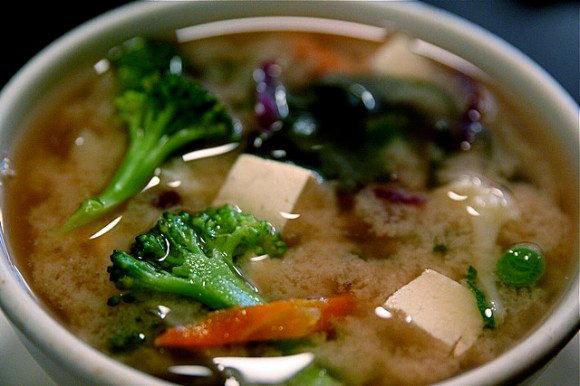
Miso soup recipe: Let's add some unconventional ingredients!
Questions? Comments? Suggestions?
If you have a favorite recipe, why not submit it here in the comment section of this smoothie recipes blog for others to enjoy too!
I also welcome any comments, questions and suggestions. Thanks!
Bok choy (also known as pak choi or Brassica chinensis) is a relative of cabbage and kale, and belongs to cruciferous vegetables, a family of especially nutrient-dense vegetables that contain unique anti-cancer compounds.
It is a common ingredient in many Asian-inspired recipes. You should have no trouble finding bok choy at the market as it is available almost year-round. Look for a plant with firm stalks that is free of brown spots.
Bok choy has crisp, white stalks and dark green leaves, and in Chinese its name means “white vegetable.” There are 20+ different varieties of bok choy – the two most often found in the U.S. are the traditional and “baby” or “Shanghai” bok choy. If you take a trip to your local Asian market, you may find some other varieties.
Bok Choy Health Benefits
Bok choy is one of the most nutrient-dense foods in the world, providing lots of vitamins A, C, and K as well as folate, calcium, and other nutrients.
It is highly beneficial for its calcium availability – bok choy is lower in oxalate, a substance that binds up calcium and prevents it from being absorbed, than most other leafy greens. 54% of the calcium in bok choy can be absorbed by the human body – compare this to 5% in spinach, a high oxalate vegetable, and 32% in milk. We can much more readily absorb calcium from bok choy than from dairy products.
Bok Choy Recipes
Bok choy has a distinctive, slightly bitter flavor. It’s less bitter than kale, and certainly a lot less bitter than dandelion or watercress. It can be eaten raw in salads, green smoothies, or vegetable juices, or cooked in stir-fries, soups, or other vegetable dishes.
In a green smoothie, its taste is easily masked by just about any fruit you add to it. You can substitute bok choy in any recipe that includes spinach. Be sure to use the entire white stalk too!
Baby Bok Choy Smoothie Recipe
- 2 apples, cored
- 2 oranges or tangerines, peeled and deseeded
- 2 heads of baby bok choy (about two cups)
- 1/4 avocado
- 1 teaspoon of ground cinnamon
- 1 or 2 cups of water
Blend well in your blender and enjoy!
Baby Bok Choy in Tangy-Sweet Vinaigrette Dressing
If you’ve only had these babies sauteed, fried, or cooked in some other way, try them raw in this salad recipe.
Salad Ingredients (serves 2-4, depending on your portion size :-))
- 6 heads baby bok choy, thinly sliced
- 1 carrot, thinly shredded
- 1 tablespoon toasted sesame seeds, for garnish
Dressing ingredients:
- 2 cloves fresh garlic, pressed through garlic press
- 1 tablespoon toasted sesame oil
- 1 teaspoon toasted sesame seeds
- 1 teaspoon honey
- 1 tablespoon low sodium soy sauce
- 2 tablespoons rice wine vinegar
- 1 tablespoon olive oil
Combine dressing ingredients and mix together until well combined.
In a mixing bowl, pour the vinaigrette over bok choy and carrot, and toss together well to coat. Sprinkle with sesame seeds and enjoy!
Braised Bok Choy
Ingredients (serves 2)
- 8 baby bok choy or 3 regular bok choy
- 1 teaspoon low sodium soy sauce
- 2 cups shiitake mushrooms, chopped
- 2 large cloves garlic, chopped, optional
- 1 tablespoon toasted sesame oil
- 1 tablespoon sesame seeds, lightly toasted
- Toast sesame seeds in a pan over medium heat for 3 minutes, shaking pan frequently.
- Cover bottom of large skillet with 1/2 inch water. Add bok choy cut into pieces.
- Drizzle with soy sauce and sesame oil. Cover and cook until bok choy is tender, about 5 minutes.
- Remove bok choy and add mushrooms and garlic to the liquid in the pan.
- Simmer until reduced to a glaze, pour over bok choy and sprinkle with sesame seeds.
- Serve with a side of whole grains, quinoa, or basmati rice.
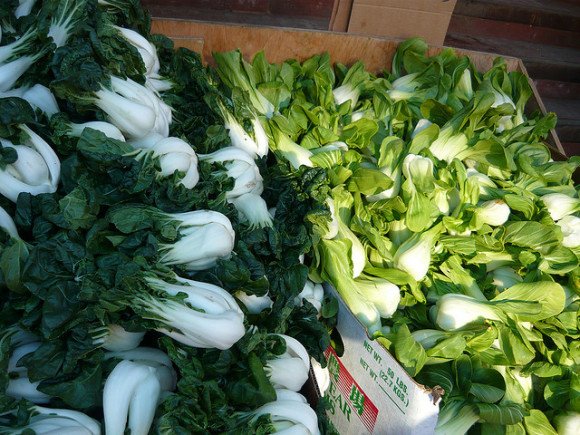
Substitute bok choy in any recipe that includes spinach. Be sure to use the entire white stalk too!
For all my blending recipes I use Vitamix. If you don’t already own a VitaMix, I strongly encourage you to check out what this machine is capable of! For more information about VitaMix you can go directly to the VitaMix website. You may also want to read my post about the Best Blender.
I LOVE my VitaMix and highly recommend investing in one if you are ready to make serious changes to your diet. I have had mine for almost 5 years and use it daily!
If you decide to purchase Vitamix – be sure to use Promotional Code 06-004554 to get free shipping.
Questions? Comments? Suggestions?
If you have a favorite recipe, why not submit it here in the comment section of this smoothie recipes blog for others to enjoy too!
I also welcome any comments, questions and suggestions. Thanks!
Whenever you hear someone say one thing about health and nutrition, you can always find someone else saying an exact opposite. No wonder most people are confused about what to eat! It’s hard to make sense from all that noise.
For example, Is there a hidden danger lurking in green smoothies? There have been articles appearing on the Internet recently about dangers of oxalic acid and how it can have devastating effect on your health.
The authors’ advice has been to limit or completely avoid greens and stop making green smoothies! (What should we be eating instead? Butter, milk, meat and sausages – according to one author, whom I will not cite here).
Even though 2/3 of our population is currently considered obese; diabetes, high blood pressure, cancer and other ailments reached epidemic proportions; as people load up on high fructose, genetically modified corn syrup-filled sodas, french fries and fried chicken, pizza and super-sized meals…we need to limit green smoothies as they can “devastate” your health?
Wow, really??
The incidence of kidney stones is high in the US. However, it’s extremely unlikely that greens are the reason why we have lots of kidney stones, since most Americans eat very little greens.

It is estimated that about a million people in the United States are treated for kidney stones each year. About 80% of kidney stones formed by adults in the U.S. are calcium oxalate stones – surely these people aren’t all obsessive green smoothie drinkers (or even spinach-salad-fanatics, for that matter).
Most of the foods that contain oxalates are powerful healing superfoods that can have a profound POSITIVE effect on your health and well-being, and should not be eliminated from the diet!
There is plenty of research that confirms the benefits of leafy greens, fruits and vegetables. A diet rich in alkaline foods (vegetables, fruit) is associated with a lower risk of stone formation, as well as lowered risk for most chronic diseases.
These are the natural foods for humans – foods that our bodies have been designed to thrive on.
Instead of limiting greens, how about eliminating the true contributors to kidney stones (as well as obesity, diabetes, high blood pressure, and cancer) – for optimal health:
Soft drinks
Sugar
Animal proteins
Bad fats
Salty foods (or any refined salt)
Coffee, tea and alcoholic beverages
How come no one is screaming about the dangers of consuming excessive animal protein, sugar or sugar substitutes? Is it because they are safe? Or perhaps there is too much money at stake, with big industries protecting their profits?
Multiple studies in different countries have demonstrated that the over-consumption of animal protein is a major risk factor in kidney stones formation. Sodas and other highly processed high-fat, high-sugar foods have been implicated in obesity and diabetes epidemic. Yet, we see them everywhere around us – advertised on TV, online, and even in school cafeterias.
Noone is campaigning for more spinach or broccoli.
And now spinach is being under attack, accused of causing serious health consequences.
So, What About Oxalix Acid
Oxalic acid (also referred to as oxalates) is found in many foods, including spinach, swiss chard, strawberries, soy, almonds, and many other foods. Oxalate content of a single food group varies based on the time of year, the type of soil it is grown in and a host of other factors specific to the growing conditions of the plant.
Our bodies produce oxalic acid, often synthesizing other substances such as vitamin C into oxalic acid, so whether you eat foods that contain it or not, your body maintains a naturally-occurring level of oxalic acid.
Oxalic acid has been shown to bind with calcium (and magnesium, iron, sodium and potassium) in the intestine, thus interfering with the absorption of these. ‘Typically, foods that have high oxalic acid also have high calcium, so they buffer each other.
Oxalic acid seems to be a controversial subject among nutritionists and health experts. Finding a clear answer regarding the potential safety or dangers of this substance can make your head spin. Victoria Boutenko did an excellent job addressing this issue, so if you want detailed research, read this blog post.
If You Are Concerned About Oxalates
Even though oxalic acid is not believed to be a health concern for most people, it can be difficult to digest for a certain percentage of the population. The most common cause of a toxic build-up of oxalate in the system is poor intestinal health or function, including an unhealthy of unbalanced intestinal flora (often from overuse of antibiotics), irritable bowel syndrome, leaky gut, celiac disease or fat malabsorption.
If you have a history of kidney stones or a medical condition that is complicated by the consumption of oxalate-rich foods, consult your doctor or health practitioner for advice.
In general, replacing oxalate-rich greens such as spinach and parsley with Romaine lettuce or other lettuces will lower exposure, but also lower overall nutrient density of your smoothies. Mixing spinach with lower-level oxalate-containing greens will help lower oxalate content.
HIGH OXALIC ACID CONTENT:
Beet leaves, purslane leaves, spinach, swiss chard (leaves & stalks), rhubarb, parsley, amaranth leaves, sorrel.
LOW OXALIC ACID CONTENT FOODS:
Dandelion greens, most fruits, bok choy, kale, watercress, escarole, mustard greens, turnip greens, broccoli, tomatoes, asparagus, and cabbage.
Rotating greens and other foods regularly is important as it helps to limit over-consumption of any one nutrient (or toxin) and provides more health-promoting benefits.
Also, listen to your body and learn to pick up on the subtle cues it’s giving you.
Green Smoothies with Low Oxalic Acid Content
For those of you, who would rather not consume high amount of oxalic acid, here are some recipes of green smoothies with very low oxalic acid content (from Victoria’s blog).
Sweet Sprouts
1 bunch green leaf lettuce
1 handful alfalfa sprouts
2 ripe apples, peeled, pits and stems removed
2 ripe bananas, peeled
2-3 cups water
Blend well.
Yields 2 quarts
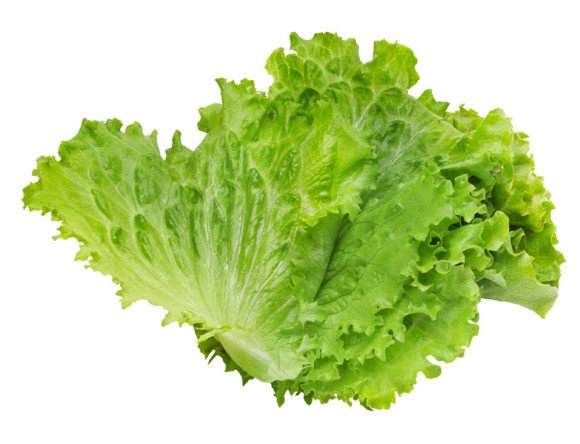
Romaine Green Smoothie
1 head romaine lettuce
2 ripe apples, peeled, pits and stems removed
1 ripe mango, peeled, pit removed
3 cups water
Yields 2 quarts
Green Freshness
1 head red leaf lettuce
1 ripe cantaloupe, peeled, seeds removed
1 cup fresh apple juice
2 cups water
Yields 2 quarts
Lettuce Drink to Your Health
1 handful red leaf lettuce
1 handful green leaf lettuce
1 cup cherries, pits removed
2 ripe bananas, peeled
2 cups water
Yields 2 quarts
Enjoy Your Green Smoothies!
Green smoothies provide tons of nutrients that our bodies need to function optimally, many of these from the potent antioxidants found in spinach, kale, chard, watercress, blueberries, strawberries, carrots, oranges, peppers, tomatoes and other – all of which have oxalic acid.
I certainly wouldn’t avoid spinach or other leafy greens because of the oxalic acid effect. Spinach has a lot to offer nutritionally: it’s an excellent source of folic acid, potassium and magnesium, as well as vitamin K, carotenes, vitamin C and lutein, important for healthy eyes.
So go ahead and enjoy your green smoothies and the health benefits they provide!
More reading on this issue:
Oxalic Acid and Green Smoothies
Can green smoothies “DEVASTATE” your health?
More Meat, More Disease
