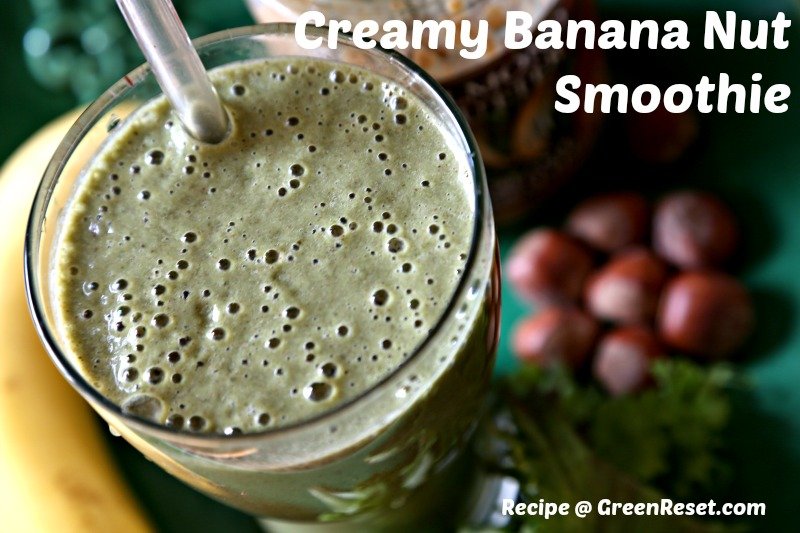
Simple banana smoothie recipes are great, but wait till you try this banana-almond butter smoothie! I started adding nut butters to my son’s smoothies, and now I’m getting addicted to them.
If you never tried adding almond butter, or peanut butter or other nut butter to a smoothie, you are in for a treat!
The banana-peanut butter smoothie combination may be the most popular variation of this recipe, but don’t stop there. Hazelnut, macadamia, cashew butter, tahini, sunflower, pumpkin, etc. – adding any of this will make your smoothie deliciously rich, creamy and distinctly buttery.
Plus, the fats in these butters will help with absorption of nutrients, and slow down the release of the fruit sugar into your bloodstream (great for people with high blood-sugar level issues).
They will also increase calories in the smoothie – something I’m looking for when making smoothies for my very active nine-year-old son. He is not a big eater in the morning, so a smoothie with nut butter, with some oats, is a good option. (If you are trying to lose weight, make sure you don’t drink too much of these rich smoothies, or cut back some in other areas.)
You may simply buy nut butter for your smoothies – and if you do – be sure to check the label before purchasing. Not all commercially made nut butters contain healthful ingredients. Many brands contain only ground-up nuts, but some contain added salt and sugar. Some use partially hydrogenated oil—a source of unhealthy trans fats. (You can also try making your own. It’s actually quite easy and you have full control over the ingredients, i.e. what oil and sweetener you add, etc.)
Banana Almond Butter Smoothie
Banana Almond Butter Smoothie
Ingredients
- 1 cup almond milk, or any other dairy free milk
- 3 bananas
- 1 cup peaches or other fruit, fresh or frozen
- 2 cups mild greens, such as spinach or mixed greens
- 2 tablespoons almond butter (or nut butter of your choice, such as peanut, hazelnut, macadamia or cashew)
- 1/2 teaspoon vanilla butter or extract
Instructions
- Blend all ingredients until very smooth, pour and enjoy!
3.1
https://greenreset.com/banana-almond-butter-smoothie/
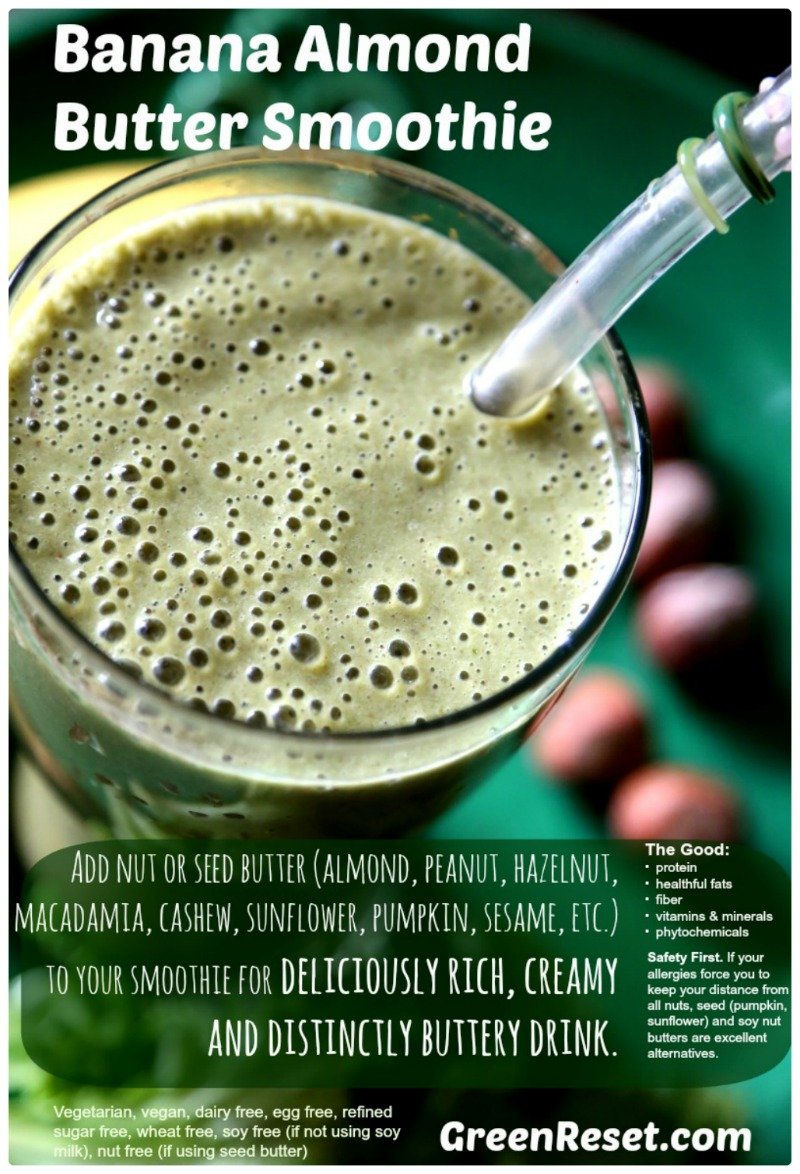
It’s easy. Simply add 2-3 tablespoons of seed or nut butter to your other ingredients and blend! What could be better than a smoothie like this to kick off your morning?
- Vegetarian, vegan, dairy free, egg free, refined sugar free, wheat free, soy free (if not using soy milk)
- Nut free (replace nut butter with 1/2 cup of sunflower, or pumpkin seed butter.)
- Gluten free (use gluten-free oats or quinoa)
- Salt free (don’t add salt and make sure the butter you use doesn’t have any salt added)
- Raw (use raw oats/quinoa)
Variations
To make the smoothie into even more filling meal-replacement drink, add:
- 1/2 cup oats, quinoa, or chia seeds (makes a thicker smoothie)
- 1 tablespoon of ground flax seeds
- 1 cup water, or to desired consistency
If using dry ingredients, blend them with liquid first until smooth. Then add the rest of ingredients and blend on high until smooth and creamy. (High speed blenders may need 2 minutes, less powerful blenders may need a lot more, sometimes 5-10 minutes).
More tips
- Add more liquid if required to thin it out.
- Substitute any of the ingredients for whatever you already have, for example, add berries instead of peaches; add one more banana, and skip other fruit – for a banana only smoothie; add chia or quinoa (cooked or raw), instead of oats.
- If you want a cold smoothie, add frozen fruit (you can freeze your bananas before use), or add ice instead of water.
The Benefits. Nut butters contain a number of important nutrients, including:
- protein
- healthful fats
- calcium (see the note below)!
- fiber
- vitamins and minerals
- phytochemicals (which according to the American Cancer Society may help prevent cancer)
Check the Label. Be sure to check the label before selecting a nut butter. While all nut butters contain around 100 calories per tablespoon, not all nut butters contain healthful ingredients. Many brands contain only ground-up nuts, but some contain added salt and sugar. Some use partially hydrogenated oil—a source of unhealthy trans fats.
Watch the Calories. While nuts are considered to be “nutritional powerhouses,” they’re also high in calories. Therefore, if you eat a lot of nuts or nut butters, cut back in other areas. Don’t let fear of fat keep you away from trying nut butters, however. Eating just two ounces of nuts weekly can lower your risk of heart disease.
Safety First. If your allergies force you to keep your distance from all nuts, seed and soy nut butters are excellent alternatives. Sunflower seed butter is high in heart-healthy poly-unsaturated fats. Soy nut butter (which tastes similar to peanut butter) is higher in protein and lower in fat than the average nut butter. If your nut allergies are severe, ask your doctor to test for potential soy or seed intolerances before trying these options. If you have a family history of nut allergies, play it safe. It’s important to check with your doctor if you or your child has even a minor allergic reaction to nuts. A mild past reaction may indicate a risk of a more severe future reaction. While nut allergies can be a burden, you can prepare your favorite recipes with one of the many nut butter alternatives.
The Surprising Benefits of Almond Butter
Nut butter is a great source of healthy fats, which are important for regulating your energy, mood, and even your weight.
However, some nut butters also deliver a more unexpected benefit: They’re great for your bones!
Let’s take a look at two of the most popular nut butters–almond butter and peanut butter. Between the two, which one should you choose for better bone health?
Almond butter wins hands down in this one. Compared with peanut butter, it contains more calcium, magnesium, manganese and phosphorus, which are all important minerals for building and maintaining strong bones.
Check out the comparison below (per two tablespoons of both almond and peanut butter):
| Mineral |
Almond Butter |
Peanut Butter |
| Calcium |
86.4 mg (8% DV) |
13.8 mg (1% DV) |
| Magnesium |
97 mg (24% DV) |
49.3 mg (12% DV) |
| Manganese |
0.8 mg (38% DV) |
0.5 mg (23% DV) |
| Phosphorus |
167.4 mg (16% DV) |
115 mg (11% DV) |
Plus, if you add calcium fortified almond milk, you’ll get even more of that bone building ingredient!
Making Nut Butters
You can easily make your own nut butters—from a variety of raw and roasted nuts—for a fraction of the cost of store-bought. Once you’ve tried the basic Peanut Butter recipe, your own creativity becomes a main ingredient. Combinations of various nuts and added natural flavorings will produce a range of delicious spreads.
Try these tips and ideas for creating your own, customized nut butters at home:
- Experiment with various combinations of nuts, including almonds, cashews, pecans, walnuts, pistachios, macadamia, or Brazil nuts.
- Add seeds and fruits, like pumpkin or sunflower seeds, raisins, and other dried fruits to the recipe.
- Add sweetness & flavor with maple syrup, vanilla, cocoa, cinnamon, or cardamom.
- Even creamier consistencies can be created with a teaspoon of coconut oil for a subtle tropical flavor, or flaxseed oil for an omega 3 boost.
- Roasting nuts on a baking sheet at 350 degrees for 10-15 minutes will give nut butters a deeper flavor and creamier texture, and release oils more easily in processing. Walnuts will mellow from roasting if a less sharp flavor is desired.
For all my blending recipes – including smoothies, soups, nut butters and milks, I use Vitamix. If you don’t already own a VitaMix, I strongly encourage you to check out what this machine is capable of! For more information about VitaMix you can go directly to the VitaMix website. You may also want to read my post about the Best Blender.
I LOVE my VitaMix and highly recommend investing in one if you are ready to make serious changes to your diet. I have had mine for almost 5 years and use it daily!
If you decide to purchase Vitamix – be sure to use Promotional Code 06-004554 to get free shipping.
Questions? Comments? Suggestions?
If you have a favorite recipe, why not submit it here in the comment section of this smoothie recipes blog for others to enjoy too!
I also welcome any comments, questions and suggestions. Thanks!
As the summer is ending, I want to welcome all of you back again, hoping to be able to inspire you and maybe challenge you in various ways in the upcoming months.
Although the summer is almost gone, and most of you have probably already forgotten about it, I’m just getting back into the rhythm of my regular work-school-home routine. Most of you have not heard from me the whole summer. My father passed away this summer and I spent a couple of months back home; not working, but doing lots of thinking. It was a really sad time; I had never before experienced death of anyone so close to me. It may sound trite, but the moments like this really make you examine your life, your motives and why you are on this planet.
High Protein Blueberry Smoothie
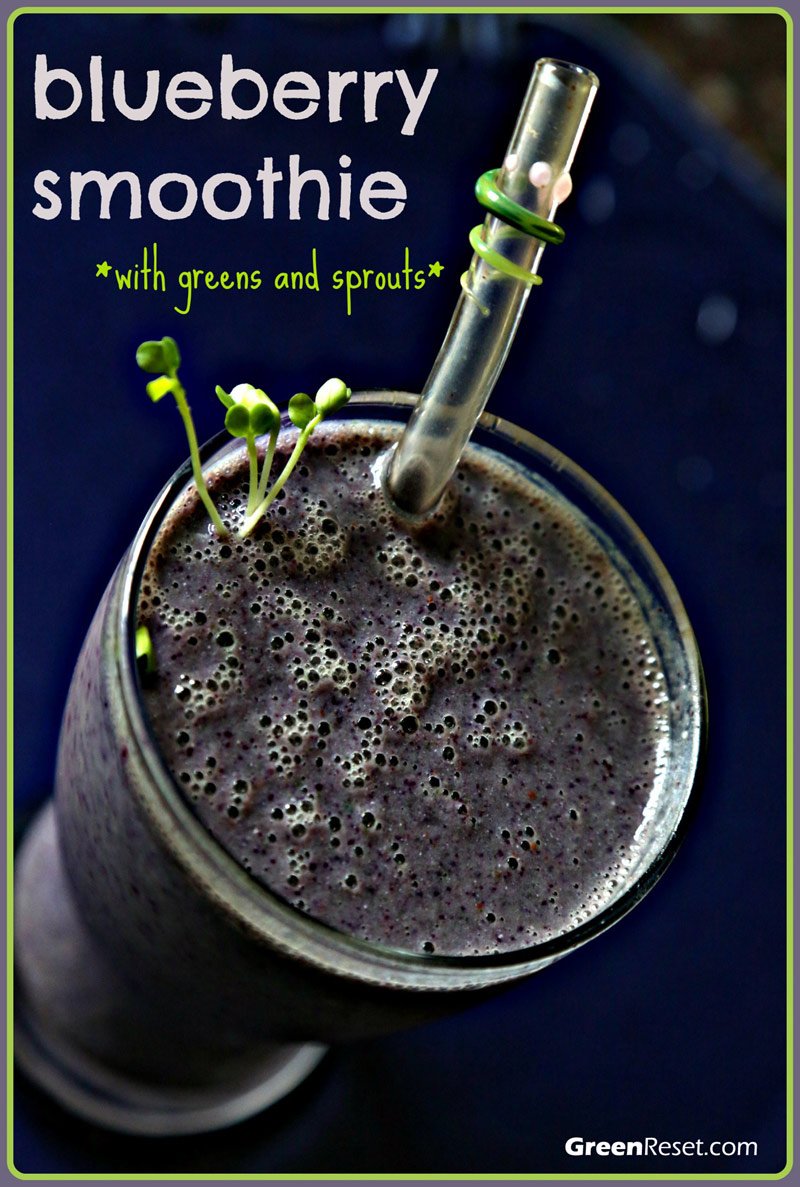
This blueberry smoothie has additional protein added to the mix – I used tofu, but you may use chia seeds or hemp seeds, a tablespoon or two of nut butter, or a handful of nuts. I usually don’t add anything other than fruits and greens to the smoothie, but adding this will make the smoothie more filling.
Ingredients
1 banana
1/2 cup tofu
1 cup wild blueberries
1 cup greens
1 cup sprouts (optional, add more greens if not using sprouts)
1 cup water
Instructions
Blend all ingredients, pour into a glass, sip and smile!
Variations:
* You may substitute tofu with vegan protein powder, 1/cup of chia seeds, or hemp seeds.
(Now, I noticed that soy can elicit extreme reactions in some health-conscious people. If you have concerns about soy or tofu, I encourage you to read or listen to any of the Resources at the end of this post.)
Day’s Menu
Some readers have been asking me for menu suggestions.
Here is a sample day’s menu that is loaded with healthy foods:
Morning/Breakfast: Protein Blueberry Smoothie, Oatmeal (if still hungry)
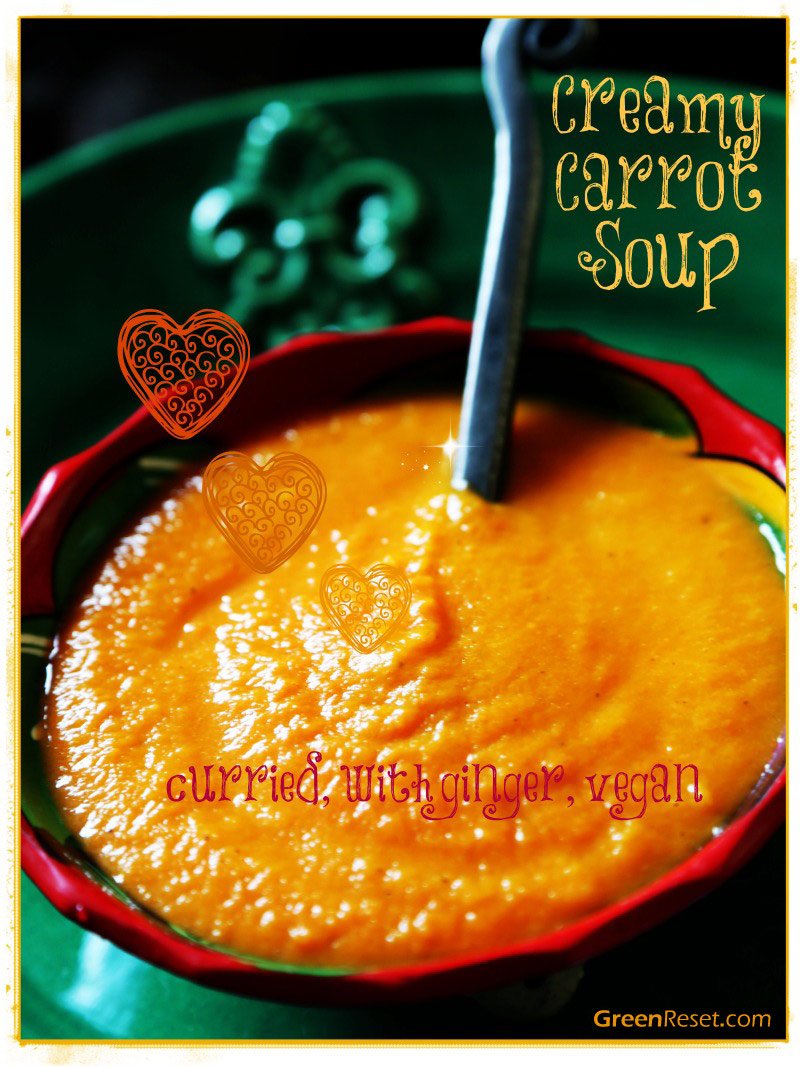
Lunch/Snack: Curried Carrot Soup (with a side salad or a slice of whole wheat bread)
Dinner: Veggie burger (store bought or home made), potatoes, salad
Dessert: Home-made banana ice-cream
This recipe is uncooked (raw), low-fat, low-calorie, GMO-free, gluten-free, dairy-free, cholesterol free, vegetarian and vegan.
Questions? Comments? Suggestions?
If you have a favorite recipe, why not submit it here in the comment section of this this blog for others to enjoy too!
I also welcome any comments, questions and suggestions. Thanks!
Delightfully bright, this carrot soup recipe is packed with goodness. I like to add freshly made carrot juice, but it’s an extra step (and more cleanup), so feel free to skip it and just add a bit more water or non-dairy milk.
Freshly grated ginger gives this sweet carrot puree an extra kick of flavor and takes up the heat a notch (my 9-year-old didn’t appreciate that, so next time I’ll skip it for a milder taste). Another option is to add a few strips of orange zest. For some crunch, add a garnish of toasted pumpkin seeds, sunflower seeds, or pine nuts.
Creamy Curried Carrot Soup Recipe
Ingredients
- 1 onion, chopped
- 2 teaspoons curry powder
- 2 tablespoons spelt or rice flour
- 4 carrots, tops removed, washed and chopped
- 4 cups water or vegetable stock
- 1 cup carrot juice (juice 2-3 carrots)
- 1 cup non-dairy milk (soymilk, almond milk, etc.)
- 1 tablespoon agave or other sweetener (use less if using sweetened milk)
- a slice of fresh ginger root, grated (optional)
- fresh pepper and salt, to taste
Instructions
- In a large pot, saute the onions with curry powder in 2-3 tablespoons of water for 3-5 minutes, until the onion turns translucid (cover the pot to prevent water from evaporating and onion from burning). Stir in flour, carrots and water or stock. Bring to boil and simmer for 20-30 minutes, until carrots are tender.
- Juice carrots for 1 cup juice. This step is optional. If you'd rather skip juicing, just add a little more stock or milk, or water.
- Using a hand-blender blend the contents of the pot; or if using counter top blender or food processor, transfer the contents into the container and blend well. If using ginger, add it to the mixture and blend well.
- Add carrot juice, non-dairy milk, agave. Season with salt & pepper to taste.
3.1
https://greenreset.com/curried-carrot-soup/
Variations:
* Add a sweet potato instead of 2 carrots.
* Add a few strips of orange zest to the soup when cooking. (Remove the strips of orange zest before blending and discard.)
* Garnish with toasted pumpkin seeds, sunflower seeds, almonds or pine nuts. Or use chopped chives, parsley, or fennel fronds.
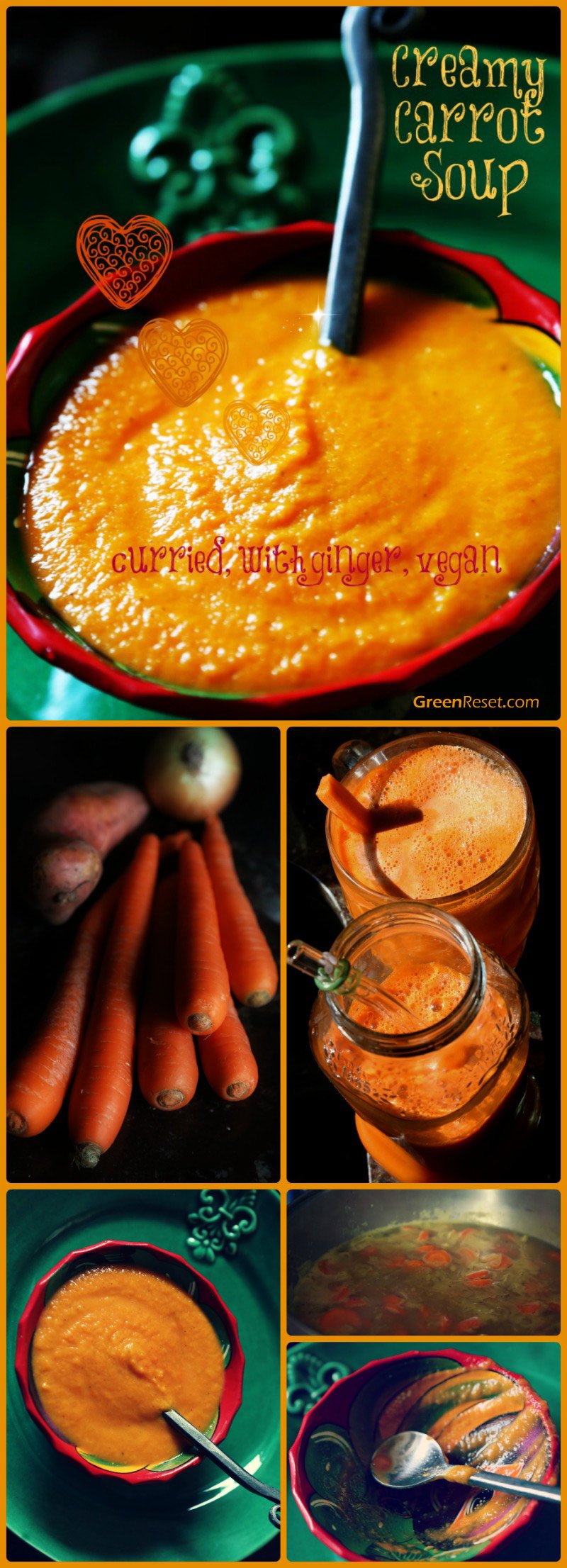
This soup is an elegant and tasty accompaniment to any meal. Enjoy!
Special Diets:
Dairy Free
Gluten Free
Vegan
Vegetarian
Fat Free
High Fiber
Questions? Comments? Suggestions?
If you have a favorite recipe, why not submit it here in the comment section of this Green Reset blog for others to enjoy too!
I also welcome any comments, questions and suggestions. Thanks!
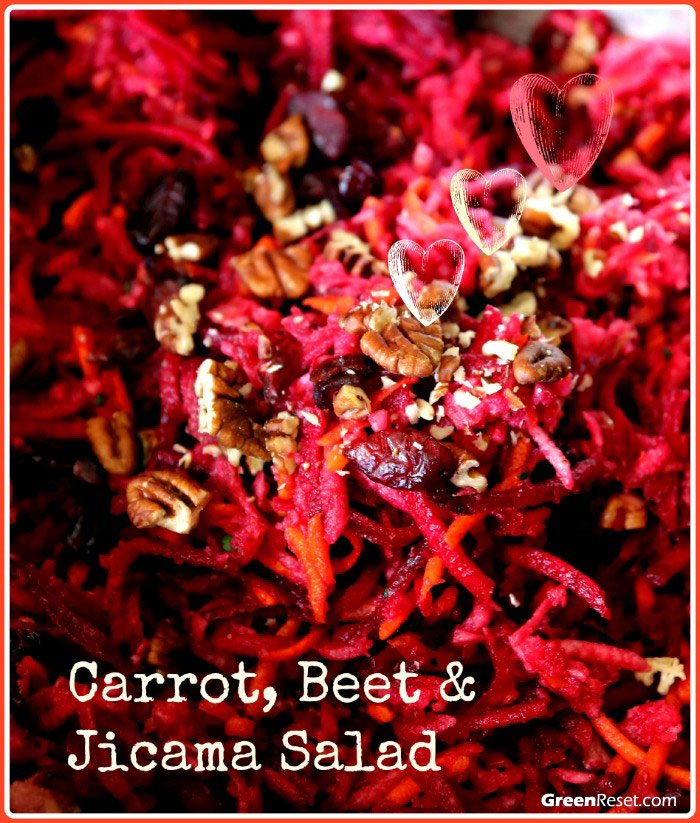
Three colorful root vegetables – carrots, beets and jicama – combine to make this delightful, crunchy, and nutritious salad.
Raw beets taste similar to raw carrots in that they’re sweet, juicy, and crisp. Jicama, a Mexican root vegetable that looks like a large, pale, round potato (you can see it on one of the photos below), is crunchy and mild when peeled and eaten raw. If you can’t find jicama, skip it or substitute cubed cucumber in this salad.
This beautiful combination also happens to be extremely rich in antioxidants, making it a terrific choice for preventing a wide variety of diseases. Do your best to find a fresh jicama, as it adds a refreshing taste and crunchy texture to this recipe.
Carrot, Beet, and Jicama Salad
2 medium beets, grated (I use raw, but some people prefer to steam them first)
1 small jicama, peeled and grated, or cut in thin strips
2 carrots, peeled and cut in thin strips or grated
3 tablespoons lemon juice or orange juice, freshly squeezed
2 tablespoons seasoned rice vinegar
2 teaspoons stone-ground mustard
Simply combine shredded red beets, jicama, and carrots with wet ingredients in a large bowl and give it a good toss. Add sea salt, to taste.
Mix juice, vinegar, mustard, and dill. Pour over salad. Toss to mix. Chill before serving if time permits.
If you don’t have a good shredder that can process the beets, jicama, and carrots, into neat, thin strips, you can use a good knife to julienne these vegetables into matchstick-like strips.
1. Place beets in medium bowl along with jicama, avocado, orange, and cilantro.
2. Whisk together orange juice concentrate, lime juice, cumin, and coriander. Whisk in oil. Pour over beet mixture, and toss to mix. Season with salt and pepper, if desired. Sprinkle each serving with toasted pumpkin seeds.
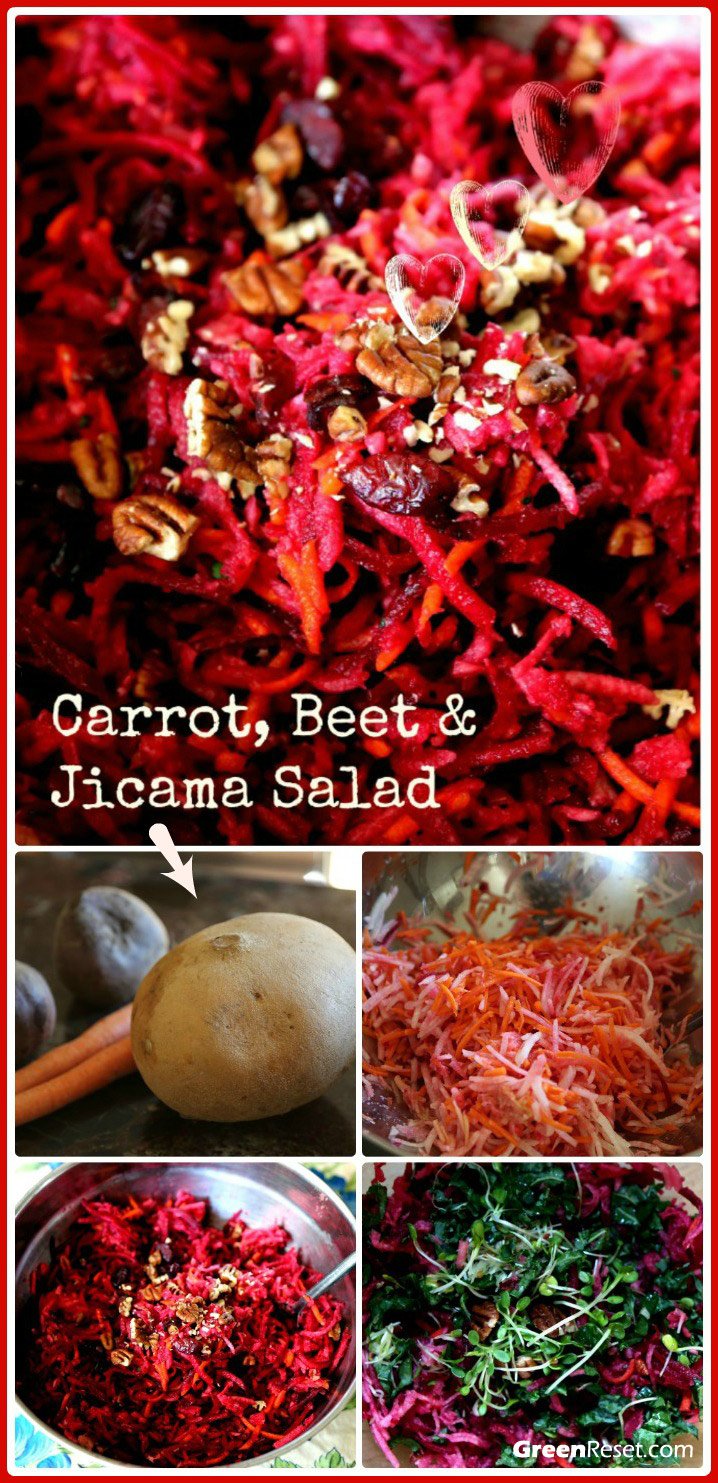
Variations
- Go nuts: I love pecans with this salad, but you can add 1/2 cup of walnuts, or other nuts that you like.
- Sunflower seeds, toasted pumpkin seeds will also be delicious with this salad.
- Add 1/2 cup of dried cranberries or raisins.
- For even more striking colors (and amazing nutrients), add 1 cup of shredded kale and/or 1 cup of sprouts.
- Add a small piece of raw ginger root to the dressing and blend.
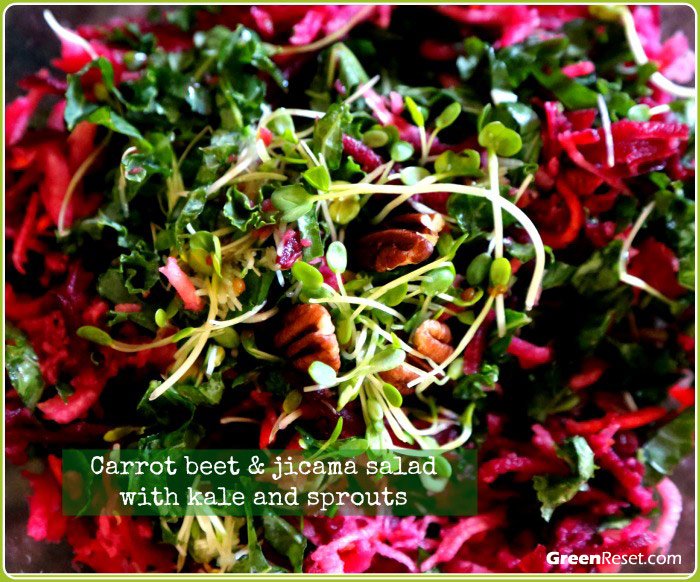
A salad is a perfect accompaniment to any meal. Enjoy!
Questions? Comments? Suggestions?
If you have a favorite recipe, why not submit it here in the comment section of this green smoothie recipes blog for others to enjoy too!
I also welcome any comments, questions and suggestions. Thanks!
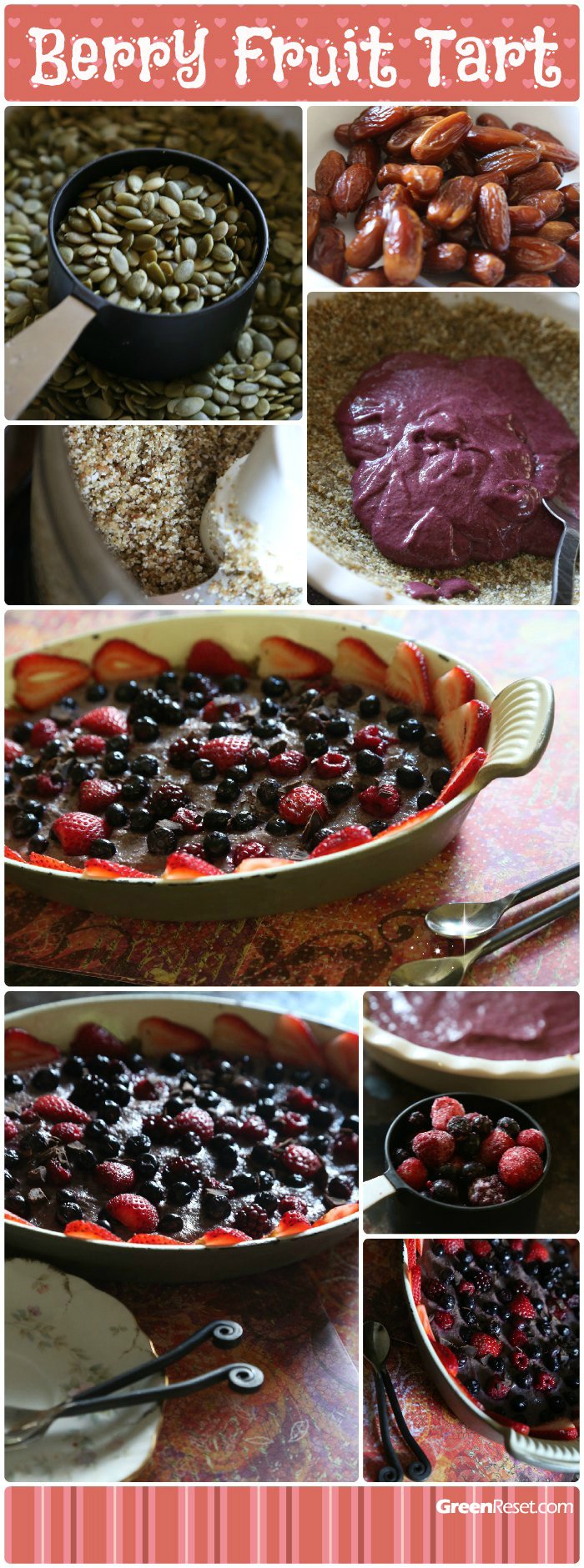
This weekend, I was looking for an easy recipe to make a fruit pie. I searched online and in my recipe books, looking at various traditional recipes, but then I came across this no-bake version made with berries, nuts and seeds, chia seed pudding and vanilla.
Since chia seed recipes have been on my radar lately, as well as I was looking for more ways to use my vanilla bean paste from Tahiti, I decided to give it a try.
It’s a quick and easy dessert, as no baking is required! This is nice, especially on a hot summer day (who wants to spend time in hot kitchen!)
No-Bake Berry Chia Pudding Pie
gluten-free, wheat-free, cholesterol-free, soy-free
(recipe inspired by Simple Chia pudding Pie)
This Tart needs time to ‘cook’ in the fridge, so you may start it the night before or in the morning for dinner.
Easy Fruit Tart (No Bake Dessert)
Ingredients
For the crust
-
- 1 cup of pitted dates (use less for less sweet pie)
- 1 cup of nuts or seeds (I used pumpkin seeds for nut-free pie. You can use pecans, walnuts, macadamias, Brazil, sunflower seeds, etc)
- 1/2 cup shredded coconut
- 1/4 teaspoon vanilla bean paste or real Vanilla (the black seeds from a pod)
- a pinch of salt (optional)
-
-
For the filling
- 1 cup mixed berries or berries of your choice
- 1 ripe banana
- 3 teaspoons of Agave nectar or 3 dates (pre-soaked)
- 2 tablespoons of chia seeds
- 1/4 teaspoon real Vanilla
- 1 cup berries for decoration
-
-
Instructions
- For the crust: Soak the dates for 5 minutes. In your blender or food processor (I used my Kitchen Aid for this job), grind the nuts and/or seeds into a flour. Add the remaining ingredients and process until dough starts to form. Press the dough down firmly until it forms a crust on a 8-10 inches baking form (20 cm).
- For the filling: Add all of the ingredients to your blender. Pour the filling over the base and spread evenly. Decorate with berries and other toppings (nuts, shredded chocolate pieces, etc.)
- Keep in the fridge to chill a couple of hours before serving or overnight.
3.1
https://greenreset.com/fruit-tart/
I only had frozen berries and some fresh strawberries, but it will also be wonderful with fresh fruit.
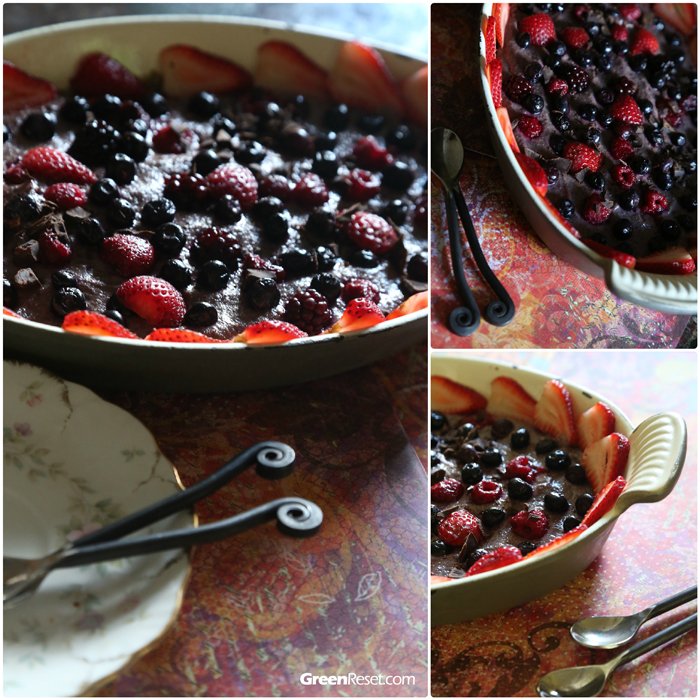
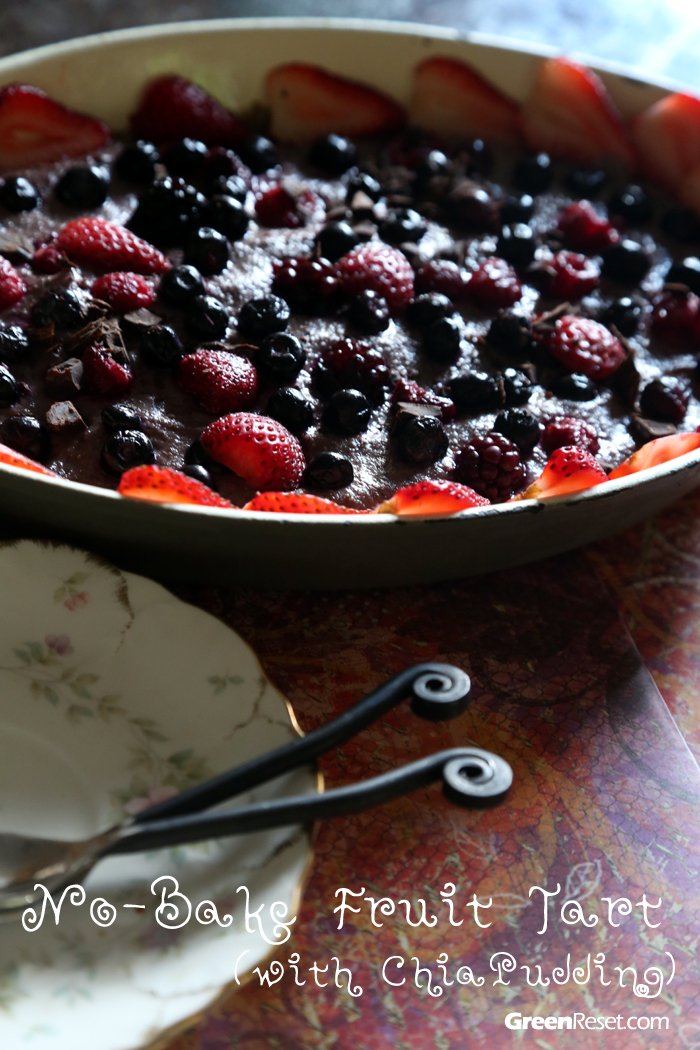
Variation of the filling
You can skip the banana and add 1 cup tofu to the filling, plus one orange (peeled) or some orange juice. Or add both banana and tofu.
Questions? Comments? Suggestions?
If you have a favorite recipe, why not submit it here in the comment section of this green smoothie recipes blog for others to enjoy too!
I also welcome any comments, questions and suggestions. Thanks!
I love vanilla flavor. Even though it’s not an essential ingredient in smoothies or other recipes (and I don’t think it has any significant health benefits), it’s certainly one of the most delicious additions.
Vanilla extract is an ingredient in so many cooking and baking recipes that it’s almost automatic to add it in when you’re making cookies or pancakes, so when you see the words “vanilla extract” replaced with “vanilla bean paste” you might have to do a double take before you realize that these are quite the same thing.
So what’s the difference between the two?
What is Vanilla Bean Paste?
I often use vanilla extract in my recipes, but I was not familiar with vanilla paste until a couple of weeks ago. The first time I heard and saw vanilla paste was a couple of weeks ago, when my husband brought me a jar of vanilla paste from his sailing trip in Tahiti.
It turns out that vanilla bean paste is delicious! It is much thicker than vanilla extract; it’s actually a like thick syrup. While the taste is probably a bit strong (not to mention expensive) to, for example, pour on your pancakes, but it’s delicious when added to baked goods or pancakes. You can use the paste in place of vanilla extract in any recipe where you want the beans to shine.
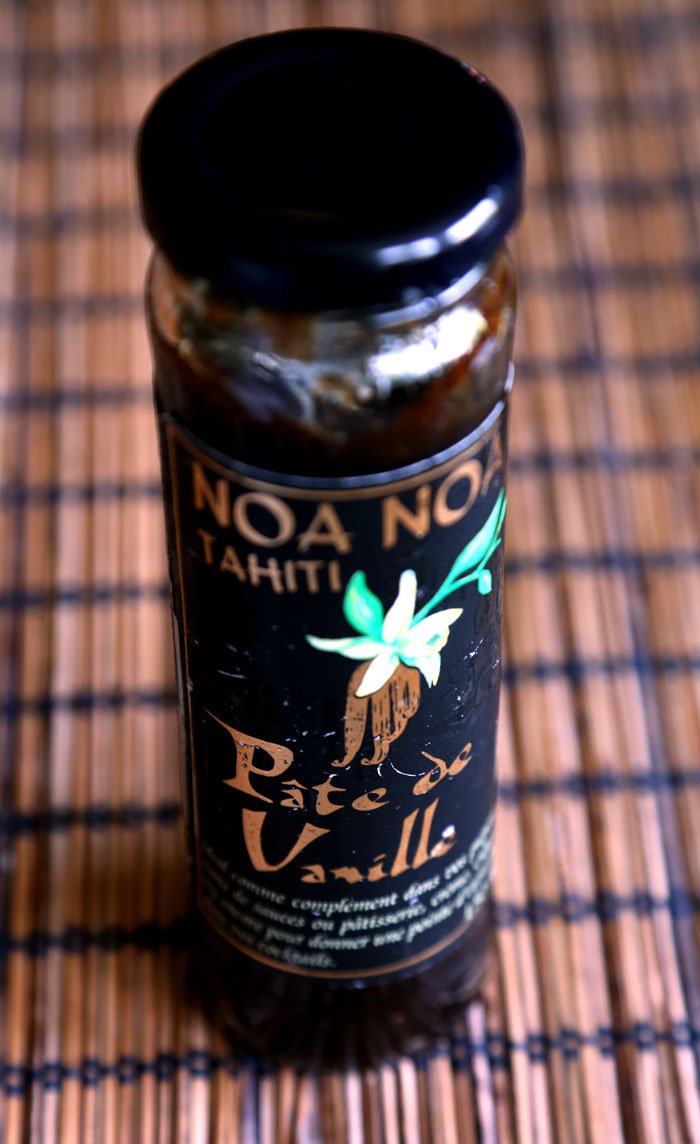
Vanilla extract is made by infusing vanilla into alcohol, which bakes off leaving the vanilla flavor behind. Vanilla bean paste is made by infusing vanilla beans into a thick, sweet syrup made with sugar, water and some sort of thickener. The main distinction is is that the vanilla beans are scraped into the paste, so you get all of those lovely little vanilla bean specks in whatever you’re baking along with the vanilla flavor!
Vanilla bean paste can often be found at specialty stores, and you can find it online easily, as well. It can be used in place of vanilla extract in any recipe. I particularly like to use it in things like banana smoothie with vanilla, vanilla pudding (like this chia seed pudding) and vanilla ice cream.

The Story of Vanilla
There is actually quite an interesting story behind vanilla. It’s one of the few crops that need to be hand-pollinated to produce fruit.
The flowers can be naturally pollinated only by a specific Melipone bee that is only found in Mexico. Thanks to this bee, Mexico enjoyed for a long time a with a monopoly on vanilla production, until a substitute was found for them. The vines would grow, but would not fruit outside of Mexico. Growers tried to bring this bee into other growing locales, to no avail.
The only way to produce fruits without the bees is artificial pollination. And today, even in Mexico, hand pollination is used extensively.
In 1836, botanist Charles François Antoine Morren was drinking coffee on a patio in Papantla (in Veracruz, Mexico) and noticed black bees flying around the vanilla flowers next to his table. He watched their actions closely as they would land and work their way under a flap inside the flower, transferring pollen in the process. Within hours, the flowers closed and several days later, Morren noticed vanilla pods beginning to form. Morren immediately began experimenting with hand pollination. A few years later in 1841, a simple and efficient artificial hand-pollination method was developed by a 12-year-old slave named Edmond Albius on Réunion, a method still used today. Using a beveled sliver of bamboo,[18] an agricultural worker lifts the membrane separating the anther and the stigma, then, using the thumb, transfers the pollinia from the anther to the stigma. The flower, self-pollinated, will then produce a fruit. The vanilla flower lasts about one day, sometimes less, so growers have to inspect their plantations every day for open flowers, a labor-intensive task. (via http://en.wikipedia.org/wiki/Vanilla)
Types of Vanilla
Bourbon vanilla or Bourbon-Madagascar vanilla, produced from V. planifolia plants introduced from the Americas, is the term used for vanilla from Indian Ocean islands such as Madagascar, the Comoros, and Réunion, formerly the Île Bourbon. It is also used to describe the distinctive vanilla flavor derived from V. planifolia grown successfully in tropical countries such as India.
Mexican vanilla, made from the native V. planifolia, is produced in much less quantity and marketed as the vanilla from the land of its origin. Vanilla sold in tourist markets around Mexico is sometimes not actual vanilla extract, but is mixed with an extract of the tonka bean, which contains coumarin. Tonka bean extract smells and tastes like vanilla, but coumarin has been shown to cause liver damage in lab animals and is banned in food in the US by the FDA.
Tahitian vanilla is the name for vanilla from French Polynesia, made with the V. tahitiensis strain. Genetic analysis shows this species is possibly a cultivar from a hybrid-cross of V. planifolia and V. odorata. The species was introduced by French Admiral François Alphonse Hamelin to French Polynesia from the Philippines, where it was introduced from Guatemala by the Manila Galleon trade.
West Indian vanilla is made from the V. pompona strain grown in the Caribbean and Central and South America.
The term French vanilla is often used to designate preparations with a strong vanilla aroma, contain vanilla grains and may also contain eggs (especially egg yolks).
Questions? Comments? Suggestions?
If you have a favorite recipe, why not submit it here in the comment section of this smoothie recipes blog for others to enjoy too!
I also welcome any comments, questions and suggestions. Thanks!
Soups, besides smoothies, are some of my favorite meals to prepare. I’m making them almost every other day, so I can say I learned a few useful tricks to make the process super-easy while keeping the results super-healthy. Here is one example: I’m super excited to have one of my soups featured on CookingQuinoa.net website. Check out my recipe for cream of broccoli soup (with quinoa).
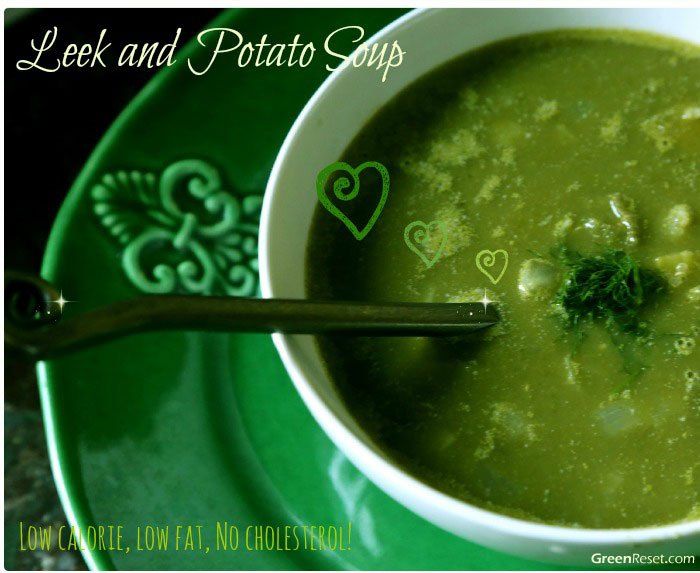
Leek and Potato Soup Recipe
The leek and potato soup that I want to share with you today is among the greatest classics of French homemade soups — an inexpensive, filling, and elegant concoction that is welcome when you’ve been feeling under the otherwise balmy weather.
This modern take on a classic leek and potato soup makes is faster and lighter than traditional potato leek soup – you won’t miss the fat or the extra time!
Some people may find leeks intimidating, but I love their sweet, mellow taste, and use them very often in my cooking, especially in soups. They work great as a more flavorful substitute for onions. The best way to cook leeks is to “sweat” them, which means cooking them with a few tablespoons of water or oil over pretty low heat until they get soft, but not browned.
Note: Make sure to clean the leeks thoroughly before using to avoid a gritty soup. To do that, cut the leek into pieces first, and swirl them in water to remove the grit, then drain them well. Just never pour into a colander because you will pour the heavy dirt over the clean leeks. You may want to do it twice to be sure… like spinach takes 3 washes.
As I don’t like wasting produce, I like to use the whole leeks, white and green parts. I discard only wilted, really tough or damaged outside leaves or top parts.
Ingredients
- 2 onions, chopped
- 2 large leeks, rinsed well and chopped (white and green parts)
- 2 cups spinach or other leafy greens, for deeper green color (optional)
- 4 garlic cloves, chopped
- 2 potatoes (about 2 lbs. total), peeled and chopped
- 4 cups water or vegetable broth
- 2 cups non-dairy milk or cashew cream (or substitute with vegetable stock/water)
- a few sprigs of fresh thyme (about 2 teaspoons of chopped fresh thyme) or 1 tsp. dried
- fresh ground pepper and salt (if using) to taste
Instructions
- Preheat a large, non-stick pot over medium heat. Add onions, leeks and garlic, and sauté in 2-3 tablespoons water or broth on medium-low heat for 5-7 minutes, until onions are translucent.
- Keep the heat low enough that the garlic doesn't brown; you just want everything to sweat. Cover the pot to prevent the liquids from evaporating, and stir frequently to time to keep vegetables from sticking to the bottom and burning.
- Add potatoes, thyme and pepper, and broth and bring to a boil. Reduce heat to maintain a steady simmer and cook until potatoes are very tender, about 20 minutes. Purée soup with a hand-held blender or, working in batches, transfer to a standing blender to puree.
- Add non-dairy milk or cashew cream and gently heat, but do not boil. Season to taste. Serve hot. Makes about 6-8 servings.
3.1
https://greenreset.com/leek-and-potato-soup/
Variations:
- Leeks are essential to this soup; there is no replacement for them in this recipe. You can add a little onion, too, but leeks, potatoes, and stock are basically all you need.
- The leek and potato soup is usually pale in color, so for more vibrant color, I like to add two cups of fresh spinach leaves or one cup of frozen spinach to the soup.
- You may blend the soup until very smooth, or leave it slightly chunky.
- I love using cashew cream in my soups. They make soups super creamy, without the added cholesterol. To make cashew cream, blend a handful of raw cashews with a cup of water in a high speed blender until very smooth, and add to the soup.
- The soup can be poured into containers and frozen.

More Creamy Soup Recipes:
Asparagus Soup Recipe
Cream of Celery Root Soup with Granny Smith Apple
For all my blending recipes I use Vitamix. If you don’t already own a VitaMix, I strongly encourage you to check out what this machine is capable of! For more information about VitaMix you can go directly to the VitaMix website. You may also want to read my post about the Best Blender.
I LOVE my VitaMix and highly recommend investing in one if you are ready to make serious changes to your diet. I have had mine for almost 5 years and use it daily!
If you decide to purchase Vitamix – be sure to use Promotional Code 06-004554 to get free shipping.
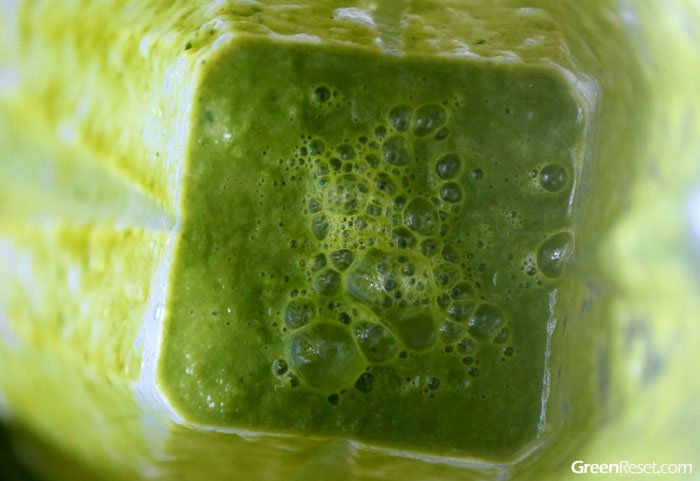
The Making of Leek and Potato Soup: Blending in Vitamix
Questions? Comments? Suggestions?
If you have a favorite recipe, why not submit it here in the comment section of this green smoothie and healthy recipes blog for others to enjoy too!
I also welcome any comments, questions and suggestions. Thanks!
One of the biggest factors that may hinder your efforts when trying to lose weight or eat more healthfully is time management.
Mornings in particular seem to be a challenge as this is the time you may feel the most rushed. As you wake up in the morning and continue to push the snooze button for that additional five minutes of sleep you may be sleeping away the most important meal of the day. Instead, you can start your day off right with super food smoothies as a healthy breakfast.
With the right planning, it is really quick and easy to start your day off right with a breakfast smoothie. Simply keep a supply of fresh greens, vegetables and fruits always available, throw those you want each morning in the blender, and enjoy a quick and simple breakfast at home or on your way out the door. You’ll find that mornings start better with a delicious morning smoothie. Here are some tips to make it easier for yourself:
1. Prepare your ingredients in advance. If you know you are going to be in a rush, prepare the ingredients ahead of time. One way to do it is to use resealable plastic bags or containers to keep the exact ingredients for a smoothie. Put 2-4 cups of greens, the fruits of your choice (pre-cut and de-pitted if necessary), as well as veggies; sprinkle with some lemon juice to prevent browning (especially, when using avocado, apples or pears), and add any grains, nuts and seeds that you want, close the container or seal the bag, and place it in your fridge. You can prepare ingredients for a couple of days of smoothies. Then, when the time comes, you’ll only need to take the bag/container out of the fridge, transfer them to your blender, add liquid, blend, and you’re ready to go.
2. Add some superfoods for extra boost. It is a good idea to have a nice handful of a few of your favorite superfoods on hand for when you want to boost your blends. You do not need ALL the superfoods out there, just a few. I think 3-5 is a good number. Here are a few examples: spirulina powder, maca powder, goji berries, cacao powder, cacao nibs, hemp seeds, flax seeds or oil, chia seeds, acai powder, mesquite powder, lucuma powder, wheatgrass powder, superfood blends, green tea powder (matcha) and more. Choose a few and experiment with boosting the nutritional wellness of your blend.
3. Invest in a portable bottle and super-wide straws. This way you’ll be able to take your smoothie with you. You may choose a translucent bottle, or one that conceals the color of your drink.
Breakfast Smoothies to Start Your Day Right
1 peach (pit removed)
1 banana
2 cups spinach (or other leafy greens or sprouts)
1/2 cup water
Blend all ingredients until smooth and creamy.

How about pina-colada-type smoothie for breakfast? This pineapple smoothie will make you smile all day!
1 cup fresh pineapple, cut into pieces, or frozen pineapple chunks
1 cup strawberries, fresh or frozen
1 ripe banana (optional)
2 leaves of spinach or other leafy greens
1 cucumber, peeled and/or 2 stalks of celery
a piece of fresh ginger (optional, it gives the smoothie nice “zing” that I love)
1 cup water (more or less, to desired consistency)

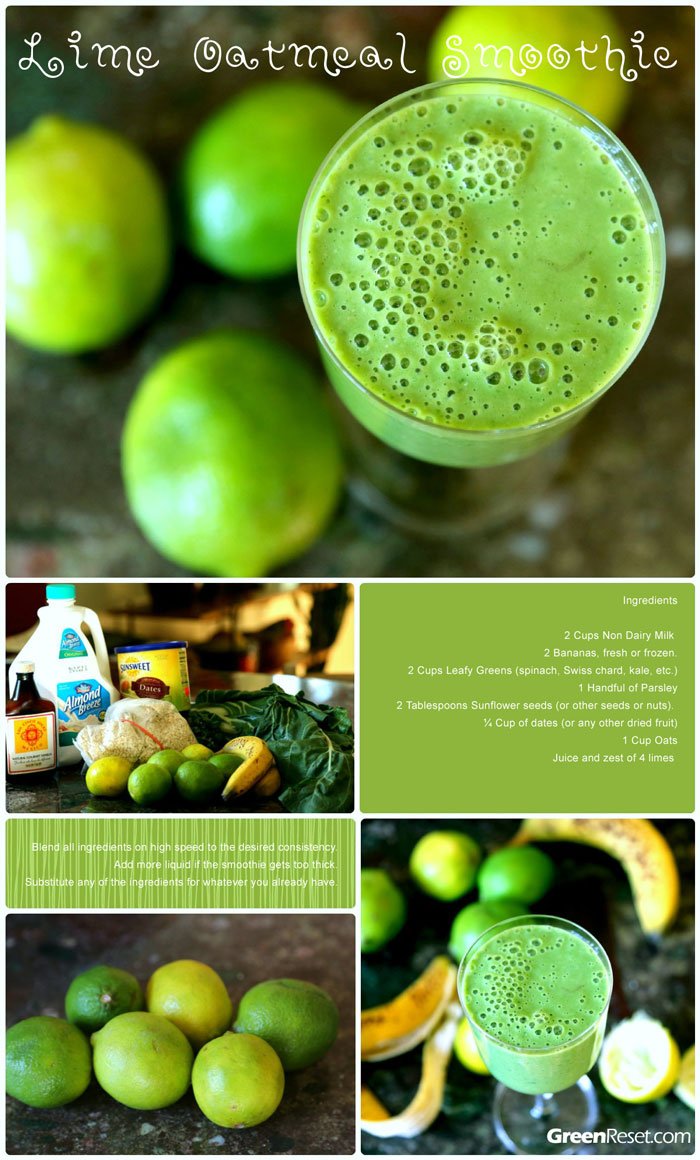
This winning combination of limes and oats creates a smoothie that’s both filling and refreshing.
2 cups non dairy milk (use whatever you like or have in your kitchen: oat, rice, soy, almond, hemp, coconut, etc. )
2 bananas, fresh or frozen.
2 cups leafy greens (spinach, Swiss chard, kale, etc.)
1 handful of parsley
2 tablespoons sunflower seeds (or other seeds or nuts that you have). Pre-soaking your seeds and nuts is recommended, but not required.
¼ cup of dates (or any other dried fruit)
1 cup oats
Juice and zest of 4 limes
1 1/2 cup mixed berries (I use frozen mix of strawberries, raspberries, blueberries and blackberries)
2 or 3 celery stalks
2 bananas (you can use less if you want a less sweet smoothie)
a slice of ginger root (optional, it gives the smoothie a little tangy kick)
1/4 avocado (optional, for more creaminess)
2 cups kale or other leafy greens (optional)
1 cup water (or a little more, depending on how thick or thin you like it)

Spinach-Mango Green Smoothie
1 large banana, ripe
1 cup mangoes
1/2 cup strawberries
5 oz spinach
1 1/2 cups water

4 cups organic baby spinach or other leafy greens (you may use less if you are just starting up with green smoothies)
1 cup pomegranate seeds or juice
1 cup blueberries, frozen
1 cup strawberries, frozen
3 dates, cut in half (optional)
2 tablespoons flaxseeds, ground
1/2 avocado, optional
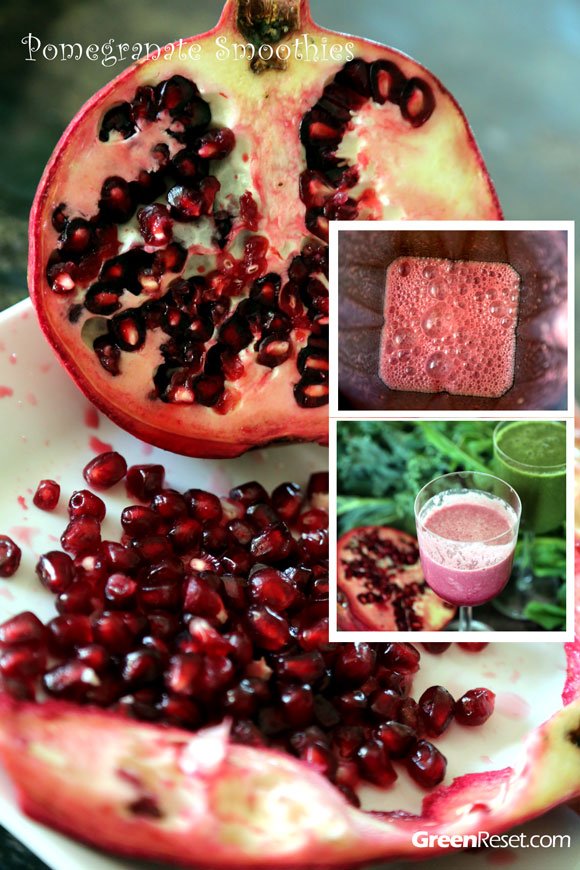
1 large orange, peeled or two small tangerines (seedless)
1 cup kale or spinach (or any variety of greens you have- collards, chard, arugula, parsley)
1/2 small avocado
1/2 cup apple, chopped
1 cup coconut water, grapefruit juice or water, chilled
1/2 cup ice or frozen grapes
1/2 banana (optional, adds creaminess)
1 Tbsp lemon juice

Version #1 with Non-Dairy Milk
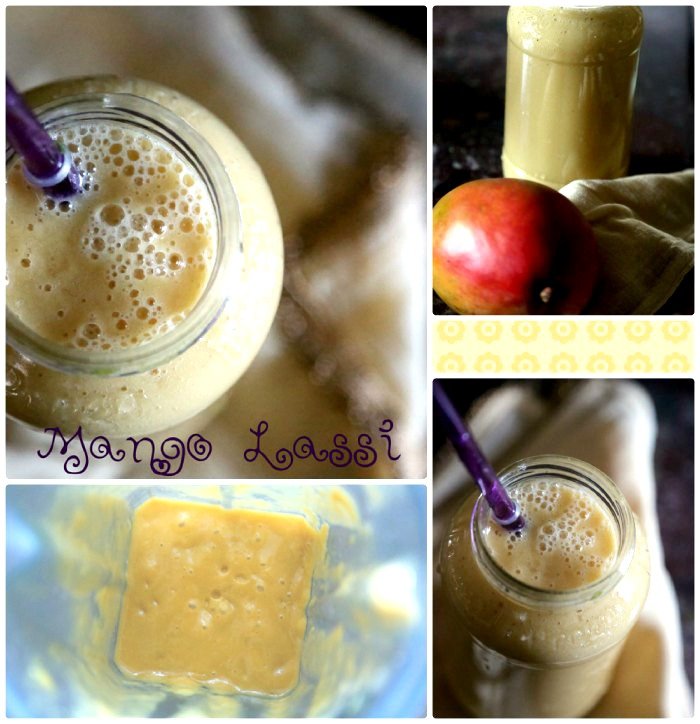
2 ripe mangoes, pitted, peeled and roughly chopped, or 2 cups frozen mango chunks
1 cup vanilla non-dairy milk, such as almond, flax, or soy
1 cup light coconut milk
1/2 cup ice cubes (optional)
1/2 teaspoon ground cardamom (optional, to taste)
Version #2 with Cashews
2 ripe mangoes, pitted, peeled and roughly chopped, or 2 cups frozen mango chunks
1/4 cup cashews
2 cups water
4 small dates, pitted
1/2 teaspoon ground cardamom (optional, to taste)
1/2 cup ice cubes (optional)
If using cashews, start by blending them with water until smooth.
Add all ingredients to your blender, and blend until creamy.
You may need to add a bit more water or milk, depending on how thick you want your lassi to be.
Pour into a glass, sip, and smile!
The benefits of a smoothie in the morning include:
- Super nutrition to jump start your day. For many people, breakfast is the most important meal of the day. Not only does a good breakfast provide needed nutrition for your body, it can actually jump start it by increasing your energy level and increasing your metabolism to encourage it to work more effectively. If you are trying to lose weight, not eating breakfast may sabotage your efforts. Although some people do well on little or no food in the morning, for most of us having meal at breakfast time can actually help to encourage weight loss. A super food smoothie in the morning floods your body with essential vitamins, mineral and phytonutrients that will not only satisfy hunger but provide the fuel for your body’s systems to work at their best.
- Super quick and easy to make. With the needed ingredients on hand you simply need to add them to a blender in the morning and within only a few minutes you’ll have a nutritious smoothie full of essential vitamins and minerals as well as full of flavor.
- Smoothies are very portable. Simply pour the smoothie into a travel save mug or container and drink it on your way to work. For those who spend the last minutes of the morning sleeping you’ll find that smoothies are a great way to reclaim breakfast.
- Smoothies fill you up. Because super food smoothies have high quality ingredients you will find that beginning your morning with one will make you feel fuller longer. You’ll be providing your body with all of the nutrients it needs to have the energy to make it through the morning.
Other Healthy Breakfast Ideas
If you are still hungry after your smoothie, or would like something different than a blended drink, here are some other healthy choices for breakfast:
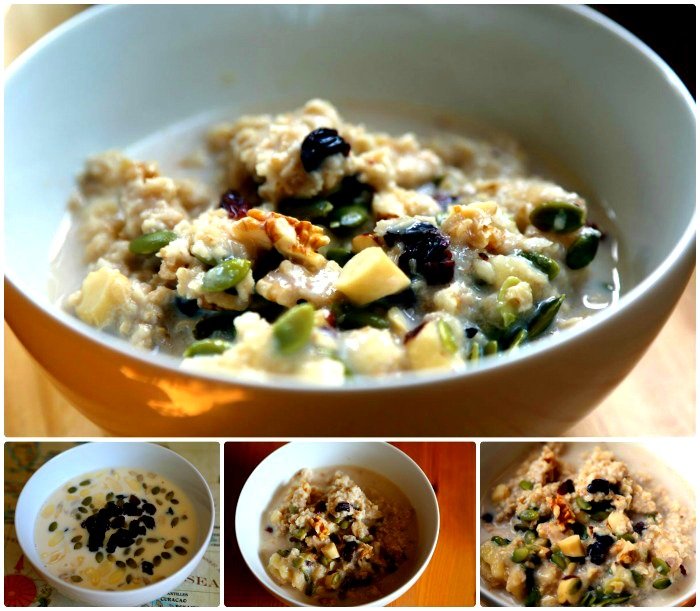
Oatmeal is one of the easiest breakfasts to prepare. It’s also one of the cheapest and healthiest (find out more about health benefits of oatmeal here). I like to use the quick-one-minute rolled oats for a quick, no-cooking-required healthy breakfast. I soak them for a few minutes in almond or soy milk, and toss in some dried fruit, nuts and seeds for even more nutritional benefits.
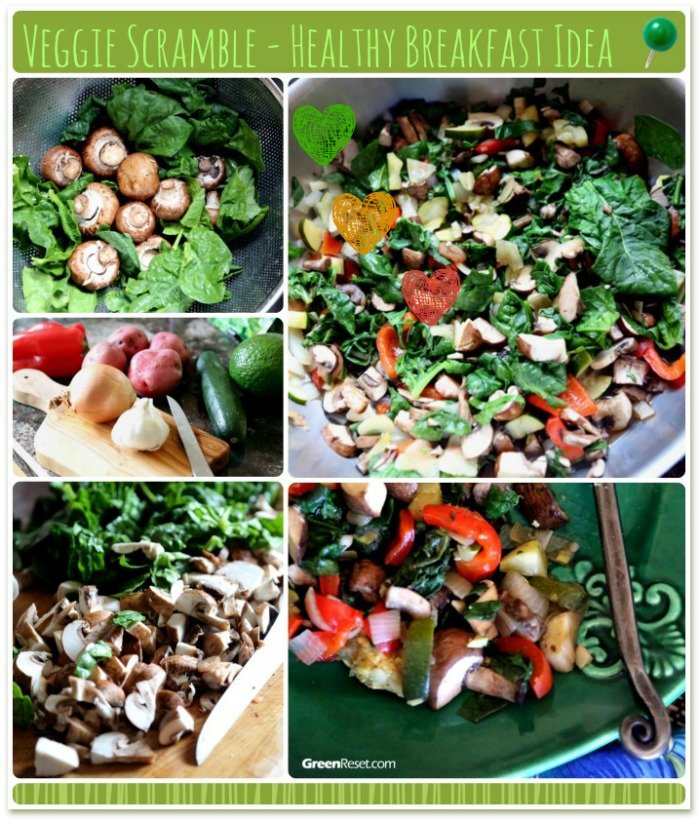
This may not seem like a quick breakfast idea, but it can be – if you prep your veggies in advance. Whenever you are not in a hurry, e.g., when you are cutting vegetables for a soup for dinner, cut some extra veggies and save them in a container in your fridge for later. Then, in the morning, simply heat a thick bottomed pan, add the veggies with a few tablespoons of water, some spices (I like to add a french herb mix – which contains majoram, thyme, and other herbs, as well as some cumin, and tamari sauce), and saute the vegetables for a few minutes. You can even leave them on the stove – on low heat, covered keep water from evaporating and prevent burning, while you are getting dressed.
Here is the recipe for a veggie-tofu scamble. You can skip tofu and simply sautee vegetables, such as onions, mushrooms, zucchini, peppers, tomatoes, spinach and other.
Egg Free Pancake Recipe
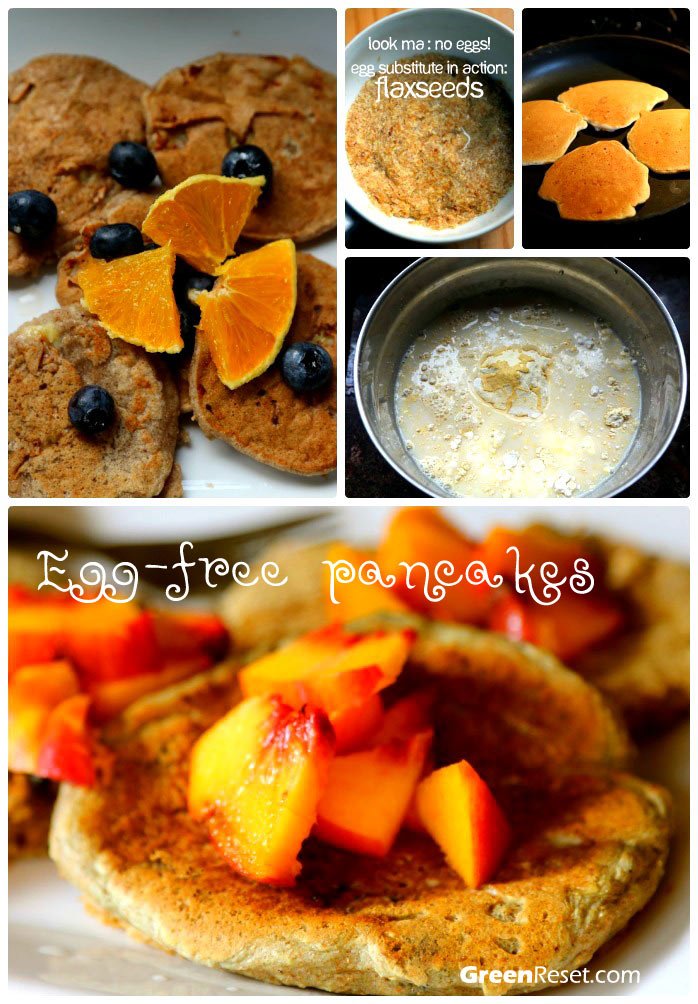
Egg-Free Pancake Recipe
For all my blending recipes I use Vitamix. If you don’t already own a VitaMix, I strongly encourage you to check out what this machine is capable of! For more information about VitaMix you can go directly to the VitaMix website. You may also want to read my post about the Best Blender.
I LOVE my VitaMix and highly recommend investing in one if you are ready to make serious changes to your diet. I have had mine for almost 5 years and use it daily!
If you decide to purchase Vitamix – be sure to use Promotional Code 06-004554 to get free shipping.
Blending in Vitamix
Questions? Comments? Suggestions?
If you have a favorite recipe, why not submit it here in the comment section of this green smoothie and healthy recipes blog for others to enjoy too!
I also welcome any comments, questions and suggestions. Thanks!
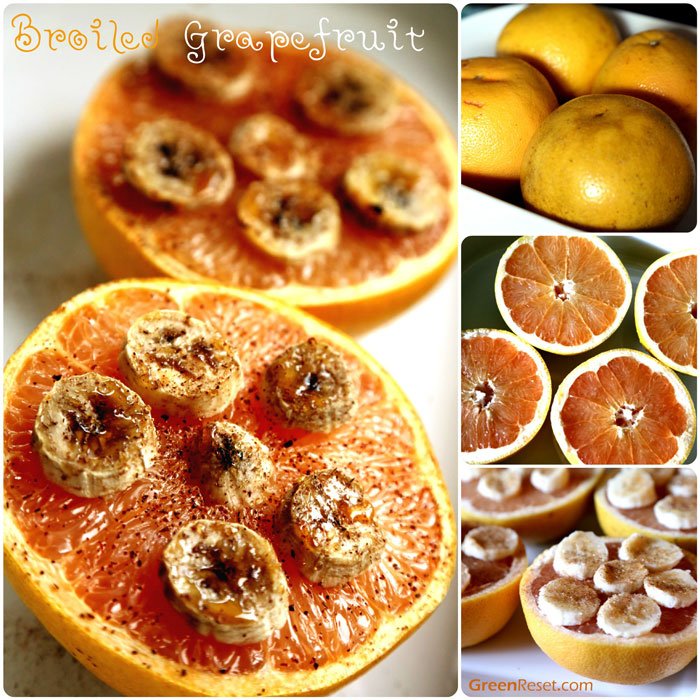
Have you ever tried broiled grapefruit? I have a few days ago.
Up until recently, I’d just cut it and eat it straight from the bowl. Turns out, broiled grapefruit is delightful!
Broiling brings out the sweetness and tampers the acidity of the grapefruit. It’s a wonderfully sweet and delectable addition to any meal or dessert.
It can easily be modified to use many different fruits such as peaches, apricots, or pineapple.
I strongly suggest cutting sections prior to broiling. Otherwise, you’ll have a very sticky mess on your hands!
Broiled Grapefruit Recipe
Broiled Grapefruit: Easy Dessert Recipe
Ingredients
- 2 grapefruit, cut in half
- 1 banana or other sweet fruit (optional)
- 2 teaspoons (or to taste) brown sugar (stevia or agave syrup will work too)
- a dash of cinnamon (pumpkin spice, nutmeg, or ginger powder)
Instructions
- Preheat your oven's broiler.
- Cut the grapefruits in half and place them cut sides up, onto a baking sheet. Use a small serrated knife to cut out the sections in the halves.
- Slice banana and place the slices on top of the grapefruit halves.
- Sprinkle brown sugar over grapefruit sections, using more or less as desired.
- Broil for 4 to 6 minutes, until sugar is starting to turn brown.
- Let cool for a few minutes before eating warm.
3.1
https://greenreset.com/broiled-grapefruit-easy-dessert-recipe/
To make it easy to eat the grapefruit, use a serrated knife to slice the segments and then all around the outside (see instructions here). It will make it easier to eat. They also make grapefruit spoons.
If you aren’t into adding sweetener, then just broil the grapefruits without any sugar. If you’re OK with adding a little sweetener, then use whatever you have in your pantry – regular sugar, brown sugar, agave or maple syrup, or stevia.
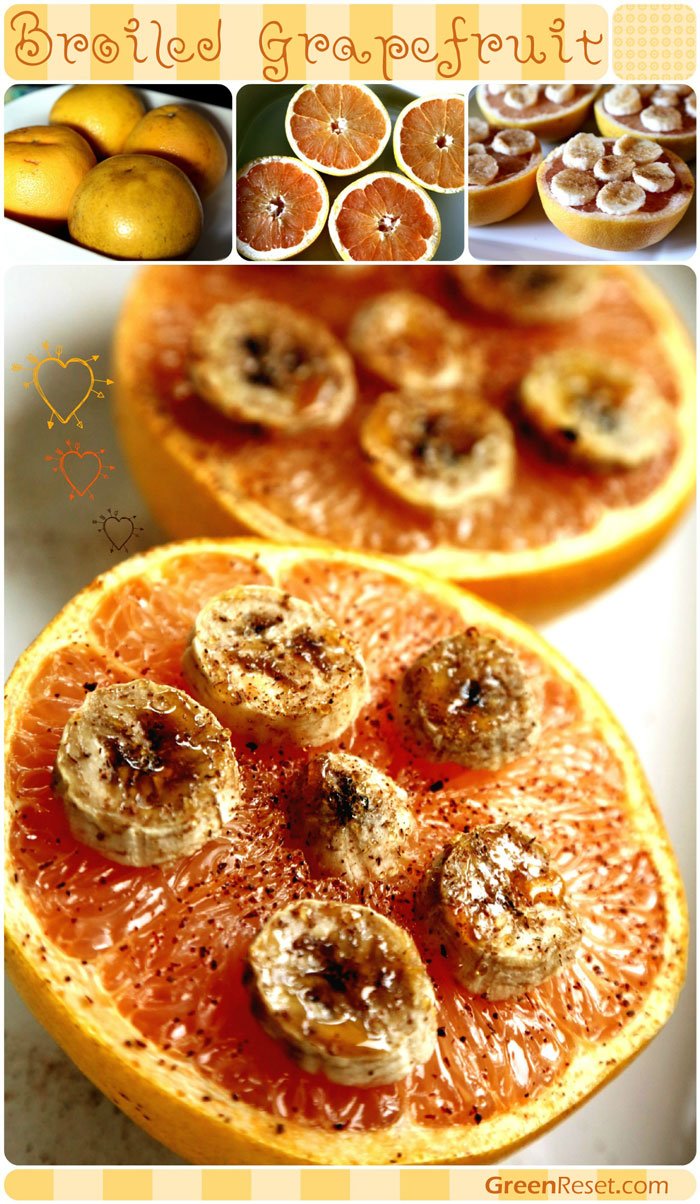
These would be a great dessert to impress your guests – even at those who come unexpectedly – because they look pretty and take under under 10 minutes to prepare.
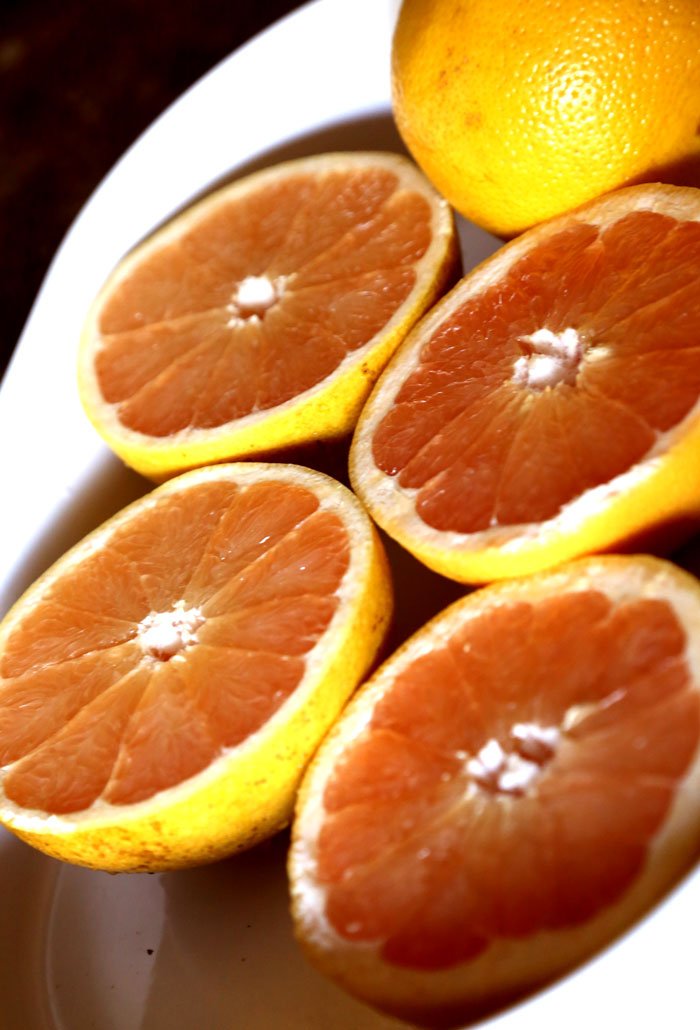
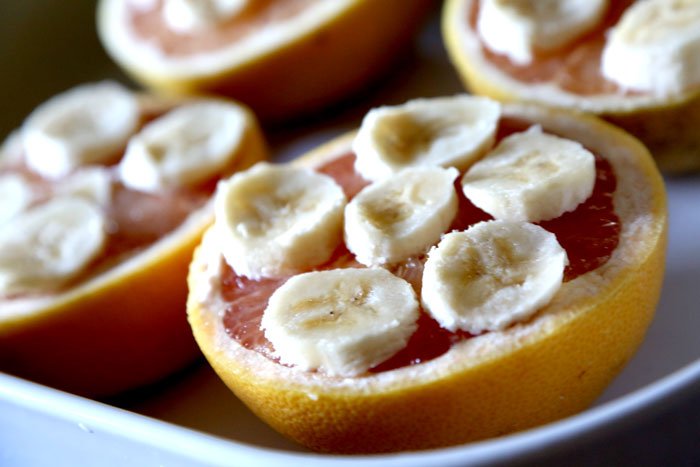

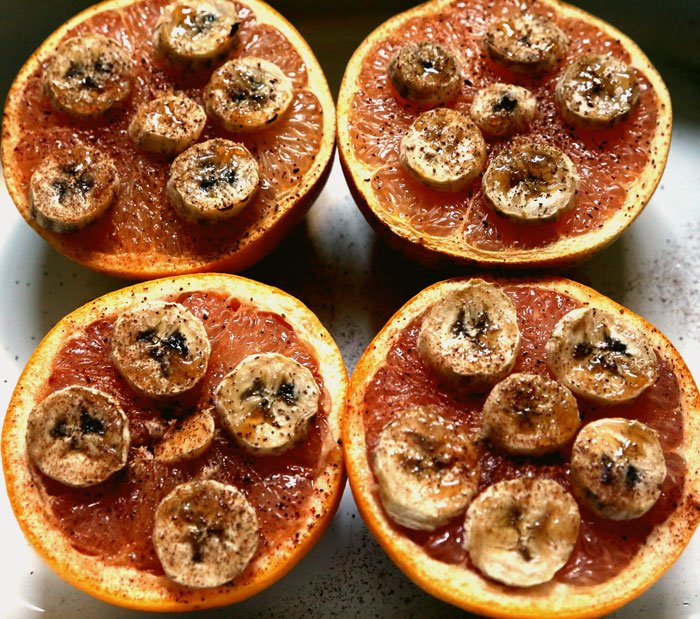
Just like regular grapefruits, these are great anytime – breakfast, lunch, dinner, snack, dessert.
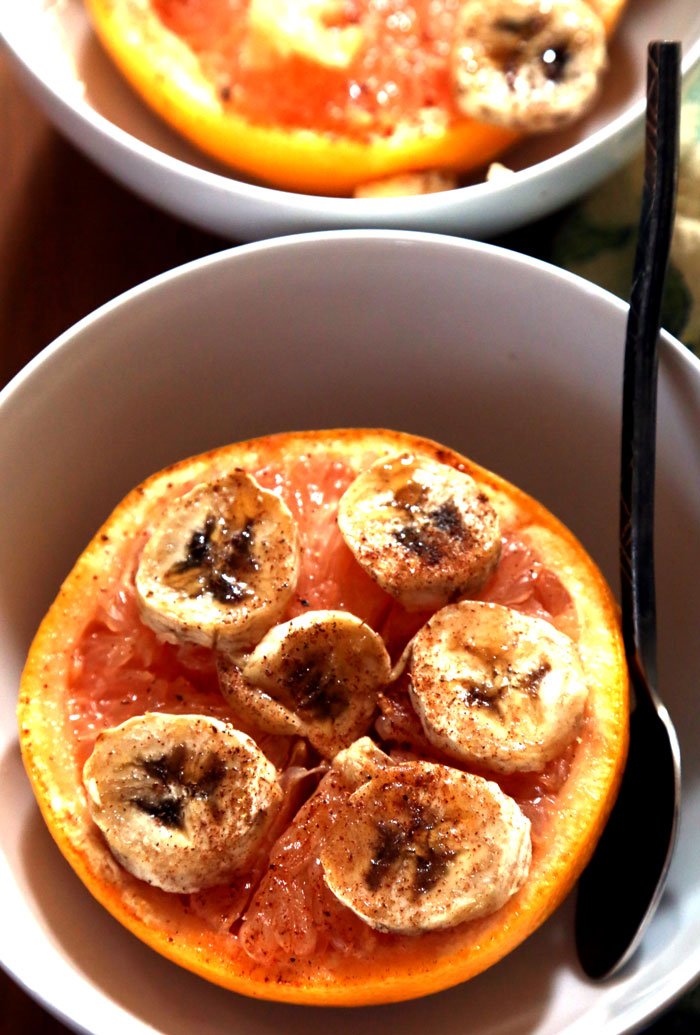
I’d never think about broiling a grapefruit, until I found this inspiration. When I saw the amazing pictures on that site, I knew I had to try it.
Questions? Comments? Suggestions?
If you have a favorite recipe, why not submit it here in the comment section of this smoothie recipes blog for others to enjoy too!
I also welcome any comments, questions and suggestions. Thanks!
(Guest Post)Whether you are planning a dinner party, or just want to make a special dessert for a family dinner, these recipes are sure to please. The ingredients are wholesome and keep it healthy, but the are still delicious. Dessert is a great way to round out a meal and gives everyone a special sweet treat to look forward to. The following recipes are sure to become guilt-free, animal-product-free, favorites. Those recipes included are also very versatile, they can be packed in lunches for a midday treat or served at your next summer barbecue…everyone needs to have at least a couple sweet recipes that can be made when time is short.
Caramel Bananas
This recipe is from the blog Uncooking 101, and is so ridiculously easy that you could let the kids make it for you. They would even be great served alongside a scoop of raw vegan ice cream. The ingredients list is really short, consisting of:
- 3 raw bananas
- 1/2 cup cashews that are nice and dry; and
- 2 tbsp of coconut crystals
On the blog there are detailed instructions, not to mention some great pictures as to how to assemble these impressively delicious treats that are going to be sure to please. The gist of it is that the bananas are cut into lengthwise pieces, that are halved, and then sprinkled with a crumbly mixture of the coconut crystals and cashews. Something this simple is exactly what you need when there are unexpected guests–Oh, and they are raw vegan as well!
Mmmm Cookie Dough Balls!
Over on the blog Averie Cooks, there resides a recipe that will please vegan, non vegans and raw foodists–even picky children. There can’t possibly be a person on this earth who doesn’t love cookie dough. This cookie dough is a million times better, in taste and health wise. The ingredients for these tasty, no bake morsels are:
- 2/3 cup raw cashews
- 1/3 cup rolled oats
- 2 tablespoons agave nectar
- 1 tablespoon maple syrup
- 1 teaspoon vanilla extract
- 1/4 cup chocolate chips
The ingredients list above is not truly raw, if that is a concern for you the actual post tells you how it can be adjusted to be a real raw recipe. Once you have all the ingredients the mixing can all be done mechanically with a high powered blender or food processor. Then all that is left to be done is roll it into balls–or just eat it with a spoon!
Lemon and Coconut–Oh my!
If you love light , melt in your mouth types of cookies, then this is the perfect recipe for you. To make these sweet treats from the blog Addicted to Veggies you will need:
- 1 ½ cups almond flour
- 1 ½ cups dry shredded unsweetened coconut
- 1/3 cup coconut flour
- 2 pinches salt
- 6 tablespoon agave nectar
- 4 tablespoons lemon juice
- 2 teaspoons vanilla
- 1 tablespoon lemon zest
The rest is simple, mix the wet, mix the dry, and then mix them both together. To finish the cookies there are a few options which are well detailed in the original post. You can choose to put them in a dehydrator, or chill them before serving. Whichever method you choose, they will both provide excellent results.
The three recipes above are great for the summer because they don’t involve cooking, but they are also good for the winter when comfort food abounds and the call to consume some, maybe, less than healthy foods beckons you. The saying guilt-free treats truly applies to these, and you should be able to master them whether you are a Nigella, or a kitchen newbie.
This article is a guest contribution by Georgia Webster. Georgia is a vegan who loves sharing the great recipes that she has found and enjoyed.
When someone is eating a healthy diet, high in fresh fruits, vegetables, greens, legumes, whole grains, nuts and seeds, and low in harmful substances – do they still need to take multivitamins?
I always stress the importance of a whole foods plant-based diet and urge everyone to get their nutrients directly from the source: plants. Just as people are trying to find an easy solution for wellness through pharmaceuticals, many are also replacing proper eating with vitamin and mineral supplements.
But does eating a healthful diet based on whole plant foods offer sufficient protection against chronic disease and excessive weight gain?
According to many experts, there are some nutrients that are lacking even in an ideal diet, and deficiencies can undermine your health. Also, we cannot be really sure that we are getting the precise optimal amounts of vitamins and minerals every day from our diet – especially since absorption efficiency and utilization of nutrients varies from person to person.
So, a high quality supplement can fill these gaps, ensuring that we get adequate amounts of essential micronutrients.
If I drink green smoothies and eat a healthy diet, do I still need a multivitamin?
The best way to find out whether or not you have any nutritional deficiency is by getting tested.
The following vitamins and minerals are often lacking even in a healthy diet and need to be supplemented:
- Vitamin B12
- Vitamin D
- Vitamin K2
- Iodine
- Zinc
Vitamin B12
Vitamin B12 is required for important biological functions like red blood cell production, nervous system function, and DNA synthesis. Deficiency in B12 can cause a variety of health problems including elevated homocysteine (a cardiovascular risk factor), anemia, depression, confusion, fatigue, digestive issues, and nerve damage. Insufficient B12 levels are also associated with increased risk of Alzheimer’s disease.
Vitamin B12 is unique in that it is made only by microorganisms. Because our produce is washed and often transported far before we eat it (soil contains B12-producing microorganisms), most of us are unable to get sufficient B12 from plant foods alone. Some foods (seaweed, mushrooms, tempeh, miso, tamari, and spirulina) have been marketed as good sources of B12, but this was based largely on faulty testing methods. Though they may contain some amounts of B12, many experts contend that these levels are not consistent enough for people to rely on these foods as the sole source of B12 in their diet.
B12 deficiency is common, especially in vegans who don’t supplement and in the elderly – our ability to absorb B12 decreases with age, and about 20% of adults over the age of 60 are either insufficient or deficient in vitamin B12. Supplementation with vitamin B12 is likely important for most people, and absolutely required for most vegans to achieve sufficient B12 levels.
Vitamin D
The best source of vitamin D is the sun, but many people spend most of their time indoors or wear sunscreen, which blocks the absorption of vitamin D. People living in northern climates – or in states with long, cloudy winters – miss out on this “sunshine vitamin.” Also, although most light-skinned people can make enough vitamin D exposing the face and arms each day with five to fifteen minutes of warm sunshine, people with darker skin need at least a half-hour.
Insufficient vitamin D levels are very common. Low levels of vitamin D levels are associated with several cancers, diabetes, cardiovascular disease, depression, and autoimmune diseases. Supplementing is often the best choice for achieving adequate vitamin D levels. Supplementing with at least 1000 IU or even 2000 IU – if you are deficient – you may want to get a blood test to confirm adequate levels.
Vitamin K2
There are two forms of vitamin K, K1 and K2. Vitamin K2 seems to be more important to supplement – vitamin K1 is abundant in leafy green vegetables; vitamin K2 is produced by microorganisms and is low in plant foods. Vitamin K2 supplementation has been shown to reduce the risk of fracture, reduce bone loss, and increase bone mineral density in women with osteoporosis. In several studies, vitamin K2 intake was associated with reduced risk of heart disease or coronary artery calcification (an indicator of increased cardiovascular risk). The human body can synthesize some K2 from K1, and intestinal bacteria can produce some usable K2, but these are very small amounts. Therefore, it is likely important to supplement with K2.
Iodine
Iodine is required by the body to make thyroid hormones. Most plant foods are low in iodine due to soil depletion. Kelp, a sea vegetable, is a good source of iodine, but is not commonly eaten on a regular basis and may actually provide excessive amounts of iodine. The chief source of iodine in the typical American diet is iodized salt. Since salt should be avoided for good health, it is important to supplement with iodine to maintain adequacy.
Zinc
Zinc is essential for immune function, growth, and reproduction, and supports hundreds of chemical reactions. Zinc is abundant whole plant foods, but is not readily absorbed. Beans, whole grains, nuts, and seeds contain zinc, but also contain substances that inhibit zinc absorption. Zinc is especially important for men, because it is concentrated in the prostate and promotes death of cancer cells, possibly by suppressing the activity of inflammatory molecules. Long-term zinc supplementation is associated with reduced risk of advanced prostate cancer.
Calcium
Calcium is a vital nutrient for bone health, muscle contraction, nerve transmission, blood clotting and much more. Calcium requirements vary by age. For adults it’s about 1000 mg. Getting enough calcium should not be a problem for anyone eating a healthy diet, rich in leafy greens, beans, nuts, as well as calcium fortified foods. Although dairy is usually considered the best source of this nutrient, there are many problems with this food group. Read more about calcium rich foods.
Iron
There are some variations for babies, toddlers, and seniors, but the daily recommendation for the U.S. and Canada is 8 milligrams for adult men; 18 milligrams for adult menstruating women, and 27 milligrams for pregnant women; 9 for lactating women (since they’re not menstruating); and 8 for postmenopausal women over 50. None of these groups should exceed 45 milligrams a day, as too much iron can cause an overload.
I get a significant amount of my iron from leafy greens such as parsley, kale and dandelion as well as through other sources in my diet throughout the day. I don’t rely solely on green smoothies for iron, however. Other iron-rich foods include iron-fortified cereals, beans, whole grains (oatmeal, quinoa), seeds (pumpkin) and dried fruits (apricots).
Generally, iron supplements should be avoided (see below). The appropriate times to supplement with iron, are when there is a deficiency or an increased biological need, such as in pregnancy.
Multivitamins must be chosen wisely
Though supplements may be essential when there is a true deficiency or need, they can be unnecessary or even detrimental when we use them as a substitute for a healthful diet. While most people can certainly benefit from a multivitamin, it is important to choose the right one. Some common ingredients in multivitamins may be harmful in isolated supplement form.
The following ingredients should be avoided:
- Vitamin A
- Beta-carotene
- Vitamin E
- Selenium
- Copper
- Folic acid
The synthetic folic acid in supplements is not the same as natural folate, found in high concentrations in green vegetables. If you are drinking green smoothies and/or eating your leafy green vegetables, you should be getting enough of this nutrient. Taking supplemental folic acid may increase the risk of breast, prostate, and colorectal cancers. Vitamin A and beta-carotene in supplement form have also been shown to increase the risk of cancers, possibly by interfering with the absorption of other carotenoids, and supplemental vitamin A, beta-carotene, or vitamin E are all associated with increased risk of death. These shocking scientific findings mean that most conventional multivitamins act as a double-edged sword, containing both helpful and harmful elements.
Excess iron may build up and become toxic. The most common culprits of iron and copper excess are red meat and multivitamins. The human body evolved to store excess iron and copper to fuel these reactions in case of extreme conditions like bleeding or famine. However, their accumulation over time may be detrimental because both metals are involved in generating oxidative stress, a byproduct of energy production, which contributes to chronic diseases — specifically cardiovascular disease and brain disorders like Alzheimer’s disease.
Resources:
http://www.drfuhrman.com/library/healthydiet_multi.aspx
http://www.drfuhrman.com/library/mulitvitamins-ingredients-to-avoid.aspx
http://www.compassionatecook.com/writings/podcast-media/the-safety-of-supplements-2
Questions? Comments? Suggestions?
If you have a favorite recipe, why not submit it here in the comment section of this smoothie recipes blog for others to enjoy too!
I also welcome any comments, questions and suggestions. Thanks!
Question: “Joanna, It has been 2 weeks since I have been on the green smoothie diet and feeling good, but being vegetarian I am worried about the protein intake. Do you have any ideas what I should add for protein and how much is good to reduce weight. Thanks”
This question often comes up in the context of plant-strong diet – as so many people are concerned about getting enough protein from plant foods, while also wanting to lose weight.
How much protein do you need?
We only need about 10% of calories coming from protein.
That’s it. Some experts recommend even less than that.
Meanwhile, an average person on a Standard American Diet consumes more like 20% of calories from protein (mostly coming from animals), which is a recipe for a disaster – such as kidney failure, kidney stones, heart diseases, diabetes, cancer, and other.
To calculate the amount of protein that you need, you may use this formula: (the amount of calories you need per day x 0.10)/4 = grams of protein per day.
Example:
For a 140lb female, calorie intake=1800 calories, protein=10%:
1800 x .10 = 180 calories from protein. Since 1 gram of protein = 4 calories, divide protein calories by four:
180/4 = 45 grams of protein per day.
Most people need only about 40-60 grams of protein per day.
Top food sources of healthy protein
Americans seem to be in constant search for protein sources.
What I feel is important to understand is that when you are eating enough calories from a variety of plant sources, such as leafy greens, vegetables, legumes, mushrooms, nuts, seeds, and whole grains, you will be supplying your body with sufficient protein to stay healthy.
Below I list some of the best sources of protein – I mean really, truly lean, mean, cholesterol-free (zero!), fiber- rich, antioxidant-rich, disease-busting, health promoting protein.
Again, what I want to stress is that you don’t need to spend your day with a calculator worrying about getting enough protein into your body. If you are eating a variety of these foods, you will be getting enough.
Keep in mind that all these foods are very low in calories, so in order to meet the caloric requirements, you can actually eat more of these foods, while staying healthy and slim.
1. Leafy greens and vegetables – the proper foundation for all diets. They provide the highest nutrient and protein amount per calorie.
1 cup raw spinach (7 calories) – 1 gram (57% calories from protein!)
1 cup raw kale (33 calories) – 2 grams (24% calories from protein)
1 cup raw broccoli (30 calories) – 3 grams (40% calories from protein)
1 cup cooked broccoli (52 calories) – 4 grams (30% calories from protein)
1 cup cooked spinach (41 calories) – 5 grams (49% calories from protein)
1 cup cooked sweet potato (180) – 5 grams (11% calories from protein)
2. Legumes, specifically lentils and beans, are a rich source of protein, while also high in fiber and zero cholesterol. They’ve constituted the foundation of many diets around the world for centuries.
1 cup soybeans – 28 grams (1 cup tofu – 22 grams, 1 cup tempeh – 30 grams)
1 cup lentils – 18 grams
1 cup boiled split peas – 16 grams
1 cup refried beans – 15.5 grams
1 cup chickpeas (garbanzo beans) and hummus – 15 grams
1 cup pinto, kidney, black beans – 13-15 grams
1 oz peanuts – 6.5 grams
3. Mushrooms
Mushrooms are a good source of protein. Since they are very low in calories, they are some of the highest sources of protein per calorie.
1 cup white mushrooms, stir-fried (28 calories) – 4 grams (57%)
1 cup portabella, grilled (42 calories) – 5 grams (48% calories from protein)
1 cup oyster mushroom (37 calories) – 3 grams (32% calories from protein)
1 cup shitake, stir-fried (43 calories) – 3 grams (28% calories from protein)
4. Nuts and seeds provide proteins too, but should be eaten in moderation if you are trying to lose weight, as they are quite high in calories and fat.
1 ounce cashews – 4.4 grams
1 ounce sesame seeds 6.5 grams, 3 tablespoons of tahini – 8 grams
1/4 cup (2 oz.) walnuts – 5 grams
1 oz. pistachios – 5.8 grams
2 tbsp almonds – 4 grams
Nut butters – peanut butter, almond butter, cashew butter – 2 tablespoons has about 8 grams of protein
5. Grains
Despite what Paleo diet proponents would like us to believe, people have been eating grains for millions of years – and there is more and more scientific research that proves that even in the Paleolithic era they had been using tools to process those grains into flour. Amaranth, bulgur, brown rice, wheat germ, oat bran and other grains are all good sources of protein. Even a bagel has protein, although it is high in calories too.
1 cup oatmeal – 11 grams
1 cup quinoa – 9 grams
1 bagel – 9 grams
Sprouted grain bread products – buns, tortillas, bread. 7-10 grams from the bread alone.
6. Non-dairy milk – Soy, almond, oat. 1 cup gets you 7-9 grams of protein.
7. Convenience foods and supplements: There are plant-based protein powders and bars to fill in the gaps on the go. Hemp – 30 grams of hemp powder in your smoothie gives you 11 grams of protein. Spirulina and chlorella provide rich nutrient content, and protein content.
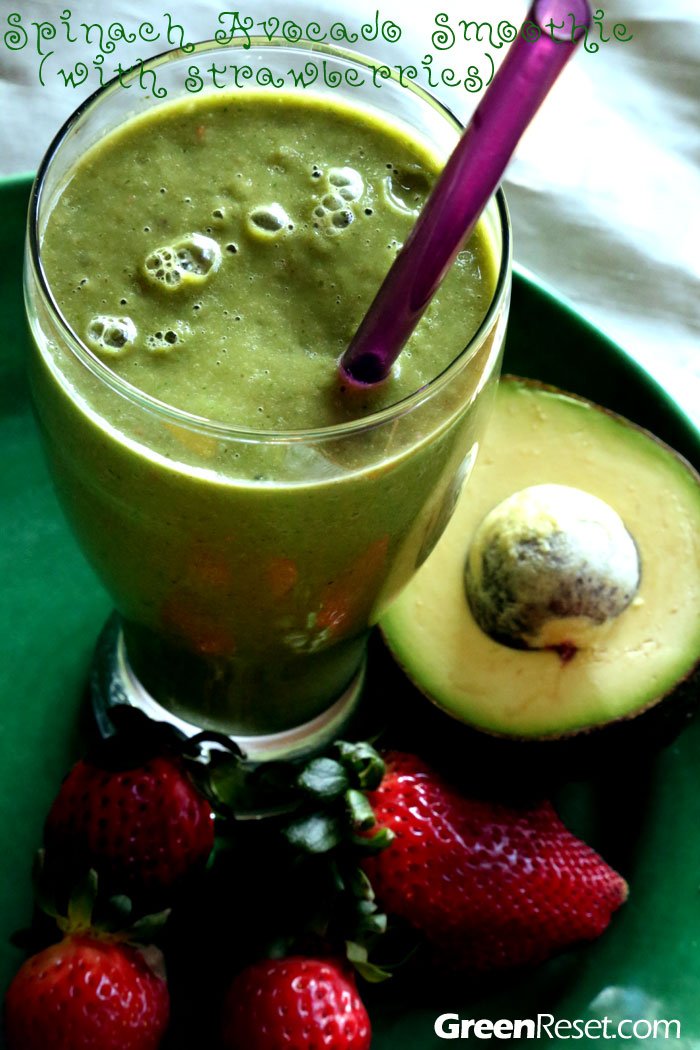
8. Fruits. Generally, fruits are low in protein, with some exceptions, such as avocado. One large avocado will provide up to 5 grams of protein.
How to make your smoothies rich in protein?
Since fruits are low in protein, if you are concerned about protein, make sure you load up your smoothie with greens.
To further increase the protein content of your smoothie, add a handful of nuts or seeds, such as pumpkin or sunflower seeds. Adding ground nuts or seeds to your smoothie not only adds protein, but boosts the healthy fat content which makes a green smoothie more satisfying and keeps you full longer. Nuts and seeds are also mineral powerhouses and will make your smoothie not only high in vitamins and antioxidants, but also rich with minerals.
Try small amounts of raw nuts such as almonds, cashews, walnuts, Brazil nuts or macadamia nuts. Sunflower, pumpkin, sesame, hemp, flax and chia seeds are all excellent when ground up and added to smoothies. You can also add a tablespoon of raw nut butter, or substitute water with almond milk.
Other ingredients you may add is non-dairy milk, a cup of whole grains (such as oats or quinoa), or legumes (a chunk of tofu).
Just don’t overdo the fat content of your smoothie or else bloating, gas and digestion problems may result.
What to eat besides smoothies?
Prepare main dishes or sides using beans and legumes, mushrooms, vegetables and whole grains. Beans and legumes offer a flavorful, inexpensive, low-fat, healthy protein source.
Snack on nuts and seeds with foods like trail mix, sunflower seeds and shelled nuts. Nuts, seeds and nut butters provide protein in a form that makes a quick snack on-the-go. Don’t discount nuts and seeds as an added dose of protein in your main meals, though. Nuts and seeds make tasty additions to salads and Asian noodle dishes, for example.
Add soy to your favorite dishes. Soy contains as much complete protein as meat. Soy products like textured vegetable protein give the feel and flavor of meat to sauces, casseroles and stews. Tofu, often used in Asian cooking, works well in soups and stir-fries.
Questions? Comments? Suggestions?
If you have a favorite recipe, why not submit it here in the comment section of this smoothie recipes blog for others to enjoy too!
I also welcome any comments, questions and suggestions. Thanks!