
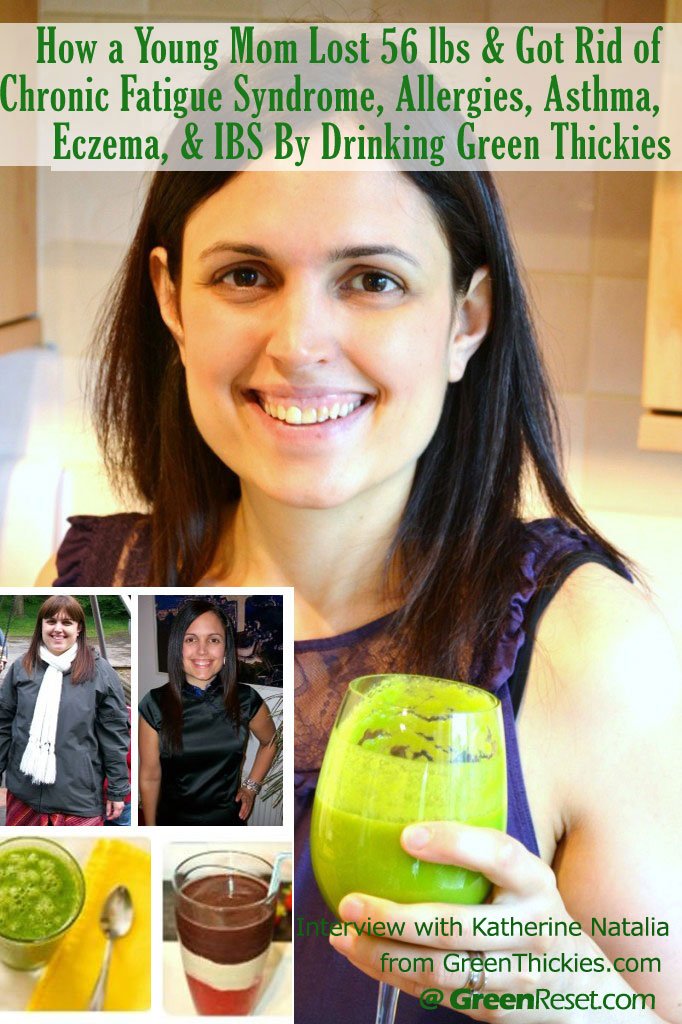
How a Young Mom Lost 56 lbs & Got Rid of Chronic Fatigue Syndrome, Allergies, Asthma, Eczema, Insomnia & IBS By Drinking Green Thickies
If you are struggling with weight loss and chronic health conditions, and you think that a healthier diet might help, but you are not sure how to implement that diet into your lifestyle, here is an inspiring story for you.
I have found Katherine’s website when browsing the web looking at other healthy eating/green smoothie websites.
I was intrigued by the name “Green Thickies” and wanted to know more about what they were and what’s so good about them. When I read that Katherine lost 56 pounds without going on a diet, as well as healed herself of chronic fatigue syndrome in 6 months – I definitely wanted to know more.
Still, when I read that she uses oats in her smoothies, I was skeptical. I prefer my smoothies to be just lots of greens and fruits, without any other ingredients. However, since lately I’ve been experimenting a lot with other ingredients in smoothies, such as root vegetables (beets, carrots), nuts, non-dairy milks, etc., I thought, “Why not? I’m going to try one of these “thickie” recipes!”
The first time I tried it I did not love it – I think I added too much oats, so the taste and texture were overpowering. But I tried again, adjusting the amount a bit, and adding some more liquid (non-dairy milk) – and I was sold. Right now I make green smoothies with oats for my son almost every day in the morning before he goes to school. I want him to get more calories than just in a green-fruit smoothie. He doesn’t like oatmeal or other healthy cereals that I try to offer to him, and he always asks for those highly processed ones, with lots of artificial colorings and sugar. He also doesn’t particularly like eating nuts, seeds or drinking non-dairy milks. So right now, he eats all of these without even knowing it. Problem solved.
So, I’m using the thickies to increase calories consumed in smoothies by my 8-year-old son (who is very tall for his age, and very thin), and my intention is for him to gain some weight in a healthy way; but the surprising aspect of Katherine’s story that is that is completely counter-intuitive is that these thick smoothies can actually help you lose weight.
Read the full interview with Katherine Natalia, the founder of GreenThickies.com.

Q &A
(Joanna) Can you tell us a little bit of your story: how did you come up with the idea of green thickies. What lead you to creating your first recipe?
(Katherine) While I was pregnant I had lots of time for making and eating healthy food. I used to have a green smoothie every morning followed by a bowl of oatmeal to fill me up. When my baby was born, not only did I not have the time for 2 breakfasts, but eating a bowl of hot porridge while looking after a baby just wasn’t practical. So one day I thought ‘Why not just add the oats to my green smoothie’. I had seen oats being added to fruit smoothies and being called ‘Thickies’ so this was my new invention, the Green Thickie. It worked perfectly, I could drink my healthy smoothie when I had time in the morning, not have to worry about it going cold and knowing that I was getting all the nutrients I needed for nursing my baby.
What diets did you tried before green smoothies? What were you eating? and what were the results?
Before green smoothies I had tried so many different types of diets to lose weight ranging from Weight Watchers, to Atkins and I never felt good on any of them. I had the wrong motivations as I was just trying to lose weight. When I became a vegan and started drinking green smoothies, my motivation was to become healthier, and that led to a long lasting change of my diet that is now just a way of life for me. A side benefit has been losing 56 pounds but if that had been my only motivation, I’m not sure I would have had the same success.

Before-After-Weight-Loss with Green Thickies
How was your health back then? You talk on your website how you healed yourself of Chronic Fatigue Syndrome in 6 months. Can you talk a bit about that… Did you have any other health issues?
Before I became a vegan my health had been getting slowly worse for a few years to the point where I could barely get out of bed. I had chronic fatigue syndrome and a whole range of other symptoms that led to debilitating health problems. I would collapse with stomach aches and be in pain every evening. I also spent all day long scratching my face non stop due to chronic allergies. I wrote a list of all my health problems and had over 50 symptoms. Whenever I went to the doctor they didn’t take me seriously as they couldn’t pinpoint exactly what was wrong with me. I had to give up my job and felt utterly useless.
I realized I had a dairy intolerance so I became a vegan and straight away I did notice a massive improvement in my health, but I still didn’t feel 100% as I was in need of a serious detox to clean out my system completely. So I went on a raw food diet where I ate nothing but fruit, veg, and some nuts and seeds for 6 months. I drank green smoothies for my breakfast and lunch every day. After a horrible detox period I started to feel amazing and within 6 months I had never felt healthier and stronger in my entire life. I was over the moon that I’d finally found something that had turned my life around.
Did you (do you) count calories in your smoothies or calculate nutrients that you consumed during the day?
When I first started the raw food diet I would log all my food to make sure that I was getting all the nutrients that my body needed and that I was actually consuming enough calories. My intention was never to lose weight, but just to get healthy so I ate enough calories to sustain my weight, however the weight still fell off and in 4 months I had lost 56 pounds. That proved to me that you don’t need to restrict your calories if you are eating healthily, your body will reach it’s ideal weight easily. After that I never counted calories again. After my pregnancy I had gained some weight again and managed to lose it by cutting out processed food and drinking green thickies.
How are you feeling today? How is your health? How is your energy? How is your skin, etc? Are you able to maintain your ideal weight?
Today I am still feeling very healthy. I still don’t have any of the problems that I used to have. My allergies have never returned, my asthma and eczema are gone, so is my insomnia. My IBS stays away as long as my diet stays healthy. I have enough energy for all the jobs I need to do each day, my skin is clear. I don’t have any more acne and have only had a couple of colds since I changed my diet. I used to spend each winter ill with one bug after another and I feel so much better now. I don’t feel quite as good as I did when I was on the raw food diet, but that might be because my baby has caused me a lot of sleepless nights. But despite not getting a good night sleep, I cope just fine with very little sleep where as I used to feel extremely ill if I missed just one hour of my sleep. I used to have an extreme reaction to the sun, feeling dizzy within 5 minutes of being outside but now I love being out in the hot sun. I used to have extremely long and painful periods but now they are very light and I have no symptoms at all. I used to have very low blood sugar and would feel sick and dizzy if I didn’t eat straight away in the morning. Now I can go a lot longer without food when I’m hungry without feeling ill.
What does your typical day look like: How much smoothies smoothies/thickies do you drink on one sitting? How many times per day? Do you drink them all at once or do you prefer to sip them throughout the day?
During a typical day I would usually drink between 1-2 pints of green thickies for breakfast and 1-2 pints for lunch. It depends how hungry I am and how filling the smoothie is but I generally just sip them for about an hour in the morning and about an hour at lunch time. That way I can get on with other jobs and look after my baby while I’m drinking them.
Healthy nutrition is not just about the smoothies. What else do you eat during the day? (I know that you tried eating raw foods exclusively for a while, but that didn’t quite work for you.) How much of your food is raw food? What cooked dishes do you enjoy making?
Sometimes at the weekend I enjoy sitting down at lunch to a big salad or a big bowl of soup if I have more time. In the evening I make a healthy vegan cooked meal, but I have a small portion of it on top of a big green salad. I love getting as many greens as I can in my diet as they give me so much energy.
Although I don’t follow a 100% raw food diet anymore I do believe that raw fruit and veg is extremely good for us so I try to consume as much as I can. I have raw fruit and greens in my thickies and in my salad at night. I’m not sure what percentage of raw food I eat but I do eat a lot more in summer.
The cooked dishes I enjoy making are quinoa, stews, chili, gluten free pasta, risotto, baked potatoes etc.
What are the foods that you never or rarely eat?
Food that I try and stay away from are meat, dairy, eggs, most processed foods especially with long ingredients lists, white flour/ most flours, refined sugar, vegetable oils, gluten, wheat, anything too stimulating such as cacao, or powdered super foods and chocolate. I have a terrible chocolate addiction that I usually only indulge on special occasions but I do suffer for it so always end up regretting it.
I have a very weak body that can’t tolerate many ‘normal’ foods, but I’m just thankful that my body is letting me know so strongly which food is good for me so I can enjoy good health.
I noticed that you never use any animal products in your smoothies and you talk about being vegan on your website. While most weight-loss program recommend eating “lean animal protein” and low-fat cow’s milk is heavily promoted as “weight-loss food” – this is not a popular choice. What were the reasons for you to go vegan? How important being vegan is for you and your health?
I was pretty much a vegetarian when I realized that I was intolerant to dairy so I initially gave up dairy and continued eating eggs. However I was reading lots of vegan books at the time that convinced me to become a vegan. So my reasons are mainly health reasons for being a vegan, but after reading about the animal cruelty and sustainability, this has also become a strong motivator in my decision to stay a vegan. I do believe people can still be healthy with limited animal products from healthy sources in their diet as long as they ate a mainly unprocessed diet, but I’ve never liked meat so I can’t see this ever changing in my life.
What is your daughter eating? Does she like green thickies and green smoothies?
My baby loves green thickies and always starts the day with a one. She also eats a lot of fruit, and pretty much whatever I’m eating. She doesn’t like salad however. She is a vegan at the moment but as my husband isn’t a vegan, this may change in the future especially when she makes her own choices. So far she’s been extremely healthy with no health problems.
How important is physical activity for losing weight? Do you exercise regularly? Can one lose weight by drinking smoothies without having to exercise?
I think diet has a lot more to do with losing weight than exercise does and I do believe you can lose weight easily without doing any exercise. When I changed my diet I didn’t do any exercise to start with as I was going through a hard detox but as soon as I got my energy back I couldn’t help myself as I had so much energy to burn. I would do an hour of P90X and go out for an hour long run each day. Something I never thought would ever be a possibility for me. I felt so fit and so healthy. I think for ultimate health and state of mind, exercise is extremely important.
However since having my baby I’m afraid I don’t get to do as much exercise as I would like to. I do get out for long walks with her and go through periods of doing workouts on DVDs but my baby doesn’t need any more sleep than I do, so she’s up all evening which doesn’t leave me any time on my own. I’m accepting that at this point in my life I don’t get as much time for focusing on myself, but it won’t be this way forever and I’m just trying to enjoy playing with my baby which is a workout in itself.
Is there anything else you’d like to share with people who are struggling to lose weight and improve their health.
I would suggest just trying to change one thing at a time. If you try and change everything all at once it can lead to failure. So just start off replacing your breakfast with a smoothie, then try and eat one more piece of fruit a day. Then replace all your snacks with fruit and then have a look at your meals. If you make everything from scratch with healthy ingredients you know exactly what you are eating and will be more likely to lose weight. If you are concerned you are eating too many calories you can always track them online using something like cronometer.com but if you try and fill at least half of your plate (or glass) with leafy greens they you will crowd out other foods and your body will start to naturally lead you to healthier choices.
If you want a quick detox and to kickstart your weight loss, a good place to start would be to take the 7 Day Green Thickies Challenge. You can find the details here: http://www.greenthickies.com/7-day-green-smoothie-challenge.
Thank you!
Questions? Comments? Suggestions?
If you have a favorite recipe, why not submit it here in the comment section of this smoothie recipes blog for others to enjoy too!
I also welcome any comments, questions and suggestions. Thanks!
Making Oatmeal Chocolate Chip Cookies in the Wake of Hurricane Sandy & Reflecting on Global Climate Change
What do oatmeal chocolate chip cookies have in common with the Hurricane Sandy and global climate change? Let me explain.
I live in Northern New Jersey, in an area that has been affected by the recent hurricane Sandy.
I’m grateful that my family has not been greatly affected by this disaster, even though our area got a lot of flooding and trees had been broken.
Our storage compartment and our parking area got completely flooded, but we had moved our cars to safe locations prior to the storm, so the only things we lost is our AC unit that is located in the storage is not functioning, and our Christmas tree decorations getting completely soaked – so we had to discard them.
These are not devastating losses, I know, many people were not as lucky, losing their homes to water and fire.
As we recover from the disaster, I hear that now over 60% of people in the New York City area now believe in human-caused climate change, so the number of climate-change deniers is going down.
But does it mean we are taking the actions that are needed to reverse the damage that has been done and prevent any further damage?
Hardly.
As the Eastern coast recovers from Sandy, I listen to the Democracy Now! broadcasting from the annual U.N. Climate Change Summit, as it convenes in Doha, Qatar.
A shocking new report commissioned by the World Bank is warning temperatures could rise by 4 degrees Celsius (7.2 degrees Fahrenheit) by the end of the century, causing devastating food shortages, rising sea levels, cyclones and drought — even if countries meet their current pledges to reduce emissions.

If these promises are not met, the increase could happen even sooner. Meanwhile, scientists say it is still not too late to minimize the devastating impact of climate change. A separate report by the Climate Action Tracker says global warming could be kept below 2 degrees.
“This is an imminent risk that will affect every living person on the planet if we push the ecosystems of the world into a major extinction crisis, says Bill Hare, a leading physicist and environmental scientist who helped produce both of these latest reports.
I believe we should all get educated about what is happening in the world today. We all seem to be living in a bubble, not realizing what is going on around us, or – as Mary Robinson said in her interview for Democracy Now! “We’re all in a kind of sinking ship together, going into a 4-degree-or-plus world. ”
Well, climate change is very real and it is an imminent risk that will affect all of us – every living being on the planet. It will push the ecosystems of the world into a major extinction crisis. It will cause massive problems for us humans.
Listen to the full interview here. You can also download it to your iPod or mp3 player and listen whenever you can. I also listen to it at Pacifica WBAI.

So we need to get educated, but education is just the first step. The second is start taking action. We all need to become activists in the modern world.
And, even though, there is no easy way out of this horrific situation, and it’s easy to feel powerless and overwhelmed, there are certain easy-to-implement things that each and everyone of us can do – beginning today – but more about this later.
Post Hurricane Sandy
As I took a walk around my neighborhood with my son Adam assessing the damage (I live in a condominium complex) – he was happy and running around excited (no school for the whole week!) – I couldn’t help but wonder what will the world be like for him in 20, 40, or 60 years.
What will the future bring?
What kind of world will it be when we have far more weather shocks, far more drought, far more food insecurity and water stress?

After Sandy – Taking a walk with my son around our neighborhood

After Sandy – despite the disasters – the moods are high

After Sandy – Fallen trees and broken branches

My son hiding under a fallen tree

After Sandy – Taking a walk in my neighborhood – flooded deck

After Sandy – flooded parking lots and destroyed marina (in the back)
In the Wake Of Hurricane Sandy
It easy to feel frightened and powerless in the face of such disaster.
But what can an individual do?
Do individual actions even matter?
Will individual actions be enough?
Of course, an individual cannot reverse the damage that has already happened. Individually, we can only do so much.
But, does it mean we should just give up?
There is still a lot each of us can do – without impacting our lives too dramatically or causing too much hardship.
“Don’t do nothing because you can’t do everything. Do something. Anything.” says Colleen Patrick Goudreau on one of my favorite podcasts “Food For Thought” at CompassionateCooks.com
One thing we can do easily do is to change our diet.
So my action for the day following Sandy – after taking a stroll around my neighborhood – was to make vegan oatmeal chocolate cookies.
Why make vegan cookies? I wrote about the benefits of switching to vegan diet here. People do it for health or ethical reasons.
But you can also do it for the environment.
Did you know that our entire food production system – from growing crops and raising livestock, through distribution, and waste removal – is responsible for approximately one-third of all man-made greenhouse gas emissions?
While most people are well aware that meat and dairy consumption are associated with heart disease, cancer and diabetes; few of us realize that raising animals for food is one of the top contributors to the worst environmental problems around the planet at every level – from local to global.
Here are a few more facts for you it’s worth to know about:
– Livestock production alone is responsible for as much as 18 percent of the global climate change.
– Animal agriculture is a greater contributor to global warming than transportation, according to the United Nations. And due to their high methane output, cattle are one of the worst offenders of all farmed animals.
– The livestock sector is responsible for 18 percent of greenhouse gas emissions, about 40 percent more than the entire transport sector – cars, trucks, planes, trains and ships – combined (according to the UN).
– Nearly 10.2 billion land animals were raised and killed for food in the US in 2010. Globally, the number of land animals killed each year for food has exceeded 65 billion. Approximately 53 billion aquatic animals were killed for food in the U.S. in 2010.
– Animal agriculture uses enormous quantities of water, monopolizes land that could be more productive for crops, and contributes to deforestation of critical rainforest and other habitats.
– It takes over 5,000 gallons of water to produce one pound of meat.
– 55% of our fresh water is being given to livestock.
– Over 70 percent of the grain in the US is fed to livestock.
– 70% of rainforests have been slashed and burned in order to raise livestock.
– One acre of land, if used for vegetables, grain, and/or legumes, yields 10-20 times the amount of food in pounds than if devoted to meat production.
– Omnivores contribute seven times the volume of greenhouse gases that vegans do.
Oatmeal Chocolate Chip Cookies Recipe For the Changing World
So here is a vegan oatmeal chocolate cookies recipe for you.
I’m making the cookies dairy and egg-free. Making egg free and dairy-free cookies is actually very easy and fast once you learn about some good egg substitutes for baking and cooking (check out this easy pancake recipe too!).
Oatmeal Chocolate Chip Cookies
Ingredients
- 2 cups quick-cooking oats
- 2 cups all purpose flour
- 2/3 cup vegetable oil
- ¾ cup brown sugar, packed
- ¼ cup white sugar
- 1 teaspoon vanilla extract
- 1/2 teaspoon salt
- 1 teaspoon baking soda
- 1/2 teaspoon baking powder
- 1/2 cup nondairy milk
- 1 tablespoon ground flax seeds
- 1 cup chopped pecan pieces
- ½ cup vegan chocolate chips (or more 🙂
- ½ cup shredded coconut
- Additional nuts and chocolate chips for decorating tops of cookies (optional)
Instructions
- Preheat oven to 350F. Line tow baking sheets with parchment paper.
- In a medium size bowl mix oats, flour, baking soda, baking powder and salt. Set aside.
- In a large bowl, beat together oil, nondairy milk, sugar, flax seeds, and vanilla. Fold in the flour mixture, and add chocolate chunks, and pecans. Don't overmix. The dough will be thick and sticky.
- For each cookie, drop 1/4 cup dough onto cookie sheets. Flatten slightly. Bake at 350F for 15 to 20 minutes, until edges begin to brown. Let the cookies rest for 5 minutes. Enjoy!
- Yield: 2 to 3 dozen.

As I’m making cookies with my son, I find it hard not to think about what will future bring for him in the next 20, 40, 60 years…
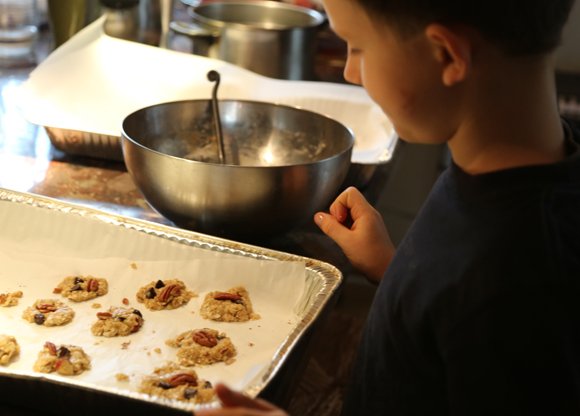
Making faces – mostly happy, smiling, but some sad and angry, too.

Tasting Oatmeal Chocolate Chip Cookies (my son, Adam)
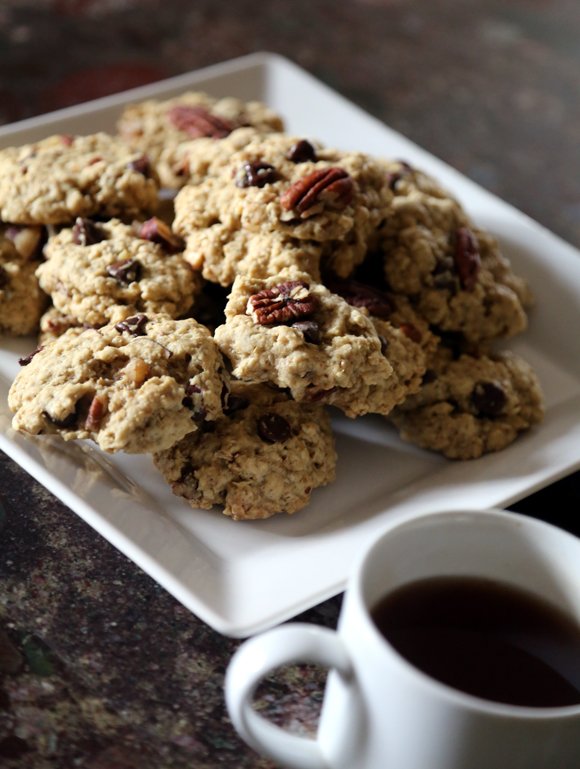
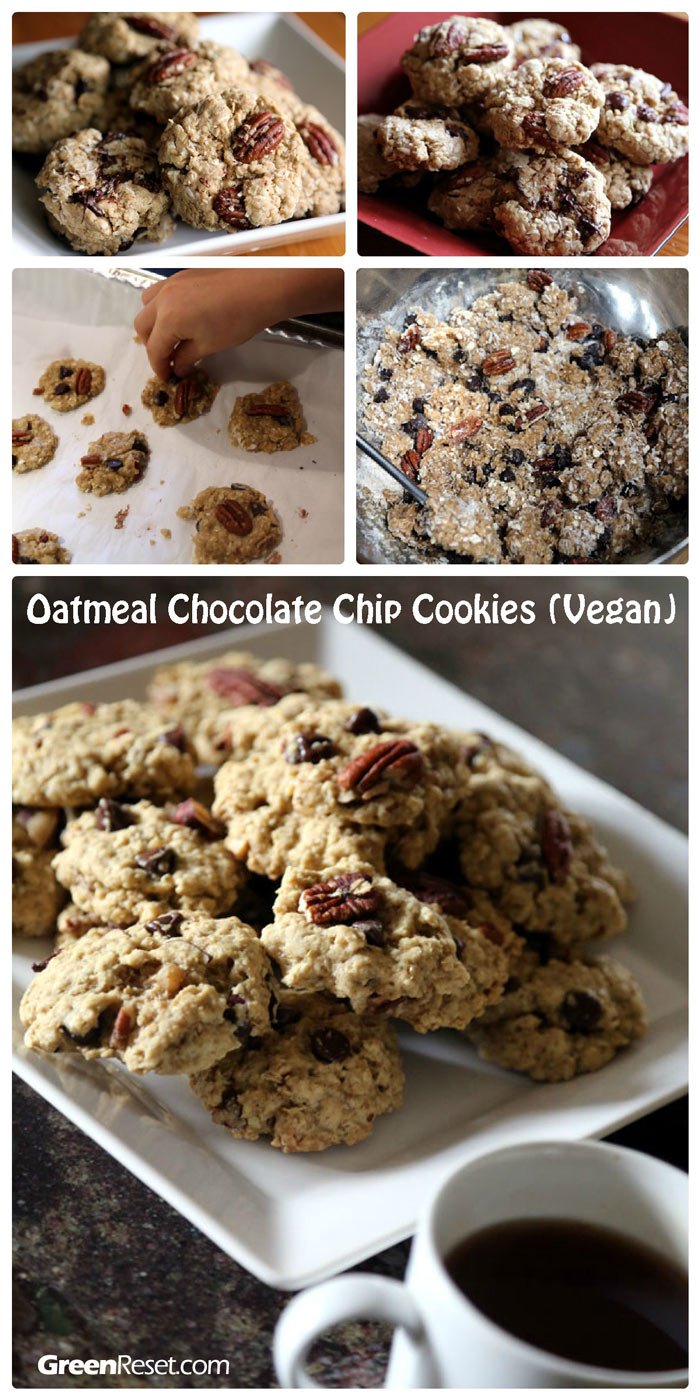
Oatmeal Chocolate Chip Cookies

Questions? Comments? Suggestions?
If you have a favorite recipe, why not submit it here in the comment section of this blog for others to enjoy too!
I also welcome any comments, questions and suggestions. Thanks!
Green Smoothie With Cranberries
I love cranberries in my smoothies!
Most people have cranberries as cranberry sauce, usually a highly sweetened, over-cooked concoction. I used to always prepare it as a side dish to a roasted turkey meat on Thanksgiving dinner. I went vegan earlier this year (it’s been almost 6 months now as I am mostly vegan, sometimes vegetarian – usually during trips), so that combination is no longer acceptable for me, but I still love my cranberries in sauces, dressings and smoothies.
I love making a raw cranberry sauce or cranberry dressing, with oranges and other fruits – I will post a recipe for a delicious cranberry sauce soon.
For now, why not have some raw cranberries in your green smoothie?
Cranberries add a delicious, tart flavor to green smoothie recipes. You can add them to most berry smoothies to boost the tartness and antioxidants. Begin with 1/2 cup, then adding more to taste.
Health Benefits of Cranberries
These tasty little berries are a good source of fiber and vitamin C. They also contain small amounts of magnesium, vitamin K, manganese, calcium, iron, potassium and phosphorus.
Cranberries have powerful antiviral properties and are famous for their ability to protect against urinary tract infections. They are well known for their powerful, disease-fighting antioxidant properties – just what the doctor ordered for the fall-winter season! What’s more, eating cranberries on a regular basis may promote cardiovascular health, boost the immune system and protect against certain cancers. They may also help lower bad cholesterol while raising good cholesterol.
Adding greens to your cranberry smoothie (such as, kale, spinach, or parsley), will boost the nutrition (and potential health benefits) practically off the charts!
Cranberry Basics
In Season: In the U.S., fresh cranberries are available from October through December. Some markets also carry frozen cranberries year-round.
What to Look For: Look for bright-colored, firm cranberries in the produce section. Avoid bags that have brown or shriveled berries at the bottom.
How to Store: Store in the original packaging for up to two weeks in the refrigerator, or up to one year in the freezer. To prep, rinse and discard any discolored or soft berries; if frozen, there’s no need to thaw before use.
Green Cranberry Smoothie Recipe
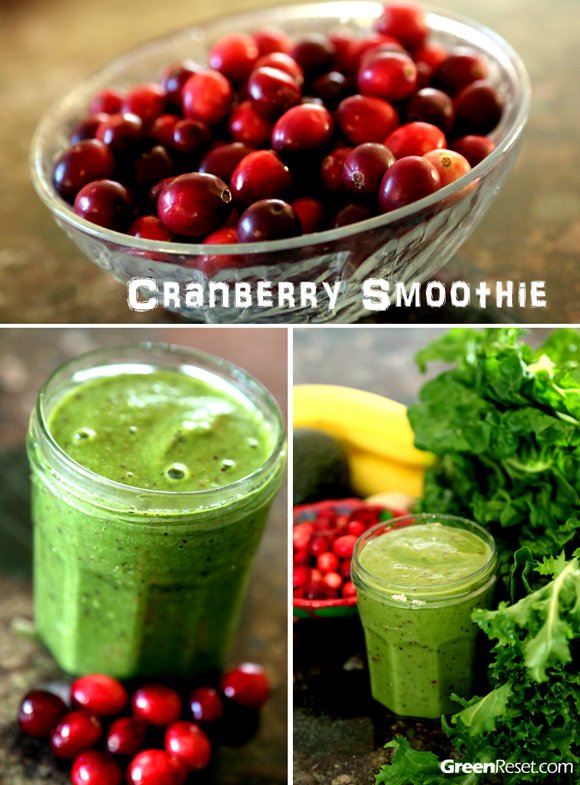
Smoothie With Cranberries
Green Smoothie With Cranberries
Ingredients
- 4 cups leafy greens (spinach, kale, collars, or whatever you have. I used escarole and chard)
- 1 cup cranberries
- 1/2 cup strawberries or other berries (optional)
- 2 ripe bananas
- 1 ripe pear (optional)
- 1/2 small avocado
- a small piece of fresh ginger root
- 1 cup water (or more, depending on how thick you want your smoothie to be)
Instructions
- Blend all ingredients in your power blender until creamy.
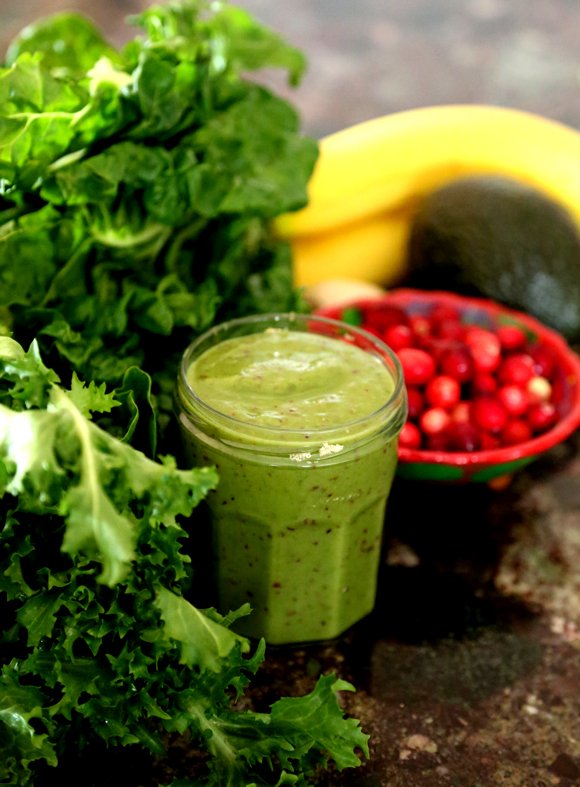
Green Smoothie With Cranberries

Ingredients for my cranberry smoothie
For all my blending recipes I use Vitamix. If you don’t already own a VitaMix, I strongly encourage you to check out what this machine is capable of! For more information about VitaMix you can go directly to the VitaMix website. You may also want to read my post about the Best Blender.
I LOVE my VitaMix and highly recommend investing in one if you are ready to make serious changes to your diet. I have had mine for almost 5 years and use it daily!
If you decide to purchase Vitamix – be sure to use Promotional Code 06-004554 to get free shipping.
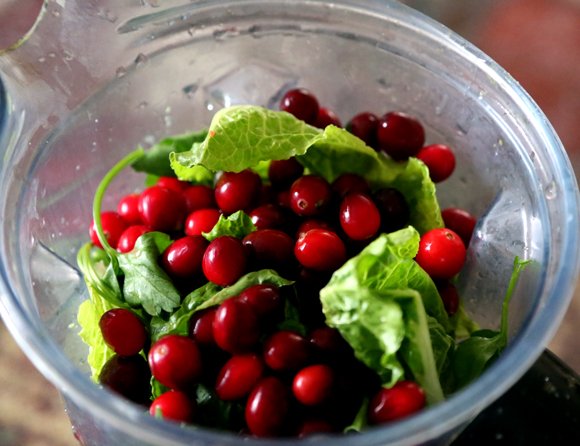
Green Smoothie Ingredients in Vitamix
Questions? Comments? Suggestions?
If you have a favorite recipe, why not submit it here in the comment section of this smoothie recipes blog for others to enjoy too!
I also welcome any comments, questions and suggestions. Thanks!
Starting My Juicing Life Style Today
(Guest Post) Most people know the importance of nutrition, but we fail to make a life style change.
Yeah, I know it’s hard especially when we live in a society that wants everything right away and fast food joints are everywhere you look. If you are like me you have tried a number of things to eat health and loose weight.
Three things come to my mind right now like HCG drops, the lemon aid diet and the grapefruit diet. What in the world was I thinking? These schemes and products where just temporary fixes and now that I’m sitting at 258lbs I have decided I better make some life style changes soon.
These changes are not because I need to make them before it’s too late it’s never too late in my book. I just need to live a healthier life style. I can no longer take the path of least resistances. You see it’s going to take tremendous effort on your part to start and maintain a healthy life style.
Nurses are now using practices most commonly associated with nutritionists and wellness doctors, as different diets and workout regimens are helping nursing professionals reach every patient. Online nursing schools as well as brick and mortars have begun really stressing the ease and efficiency of proper nutrition and exercise.
How do I know? Because I have be on start stop for a long time. I start a doing good for a while than I stop. I loose the weight then I gain it all back plus some. I started to ask myself am I insane? Is there some type of drug in those Pop Tarts I creep down stairs and eat often along with a glass of my son’s chocolate milk.
Things Must Change Permanently
Here’s my plan. I started implementing juicing daily on March 19th, 2013. My goal is to substitute juicing for one meal and do light exercise. I’m documenting all of this on my website like my favorite juice recipe here:
Pineapple Green Juice
1/4 large pineapple, peeled, cored and cut into cubes
6 kale leaves 2 cups spinach 1/2 cucumber
4 celery stalks1 (1-inch) piece of ginger
*Adapted from Reboot Your Life.
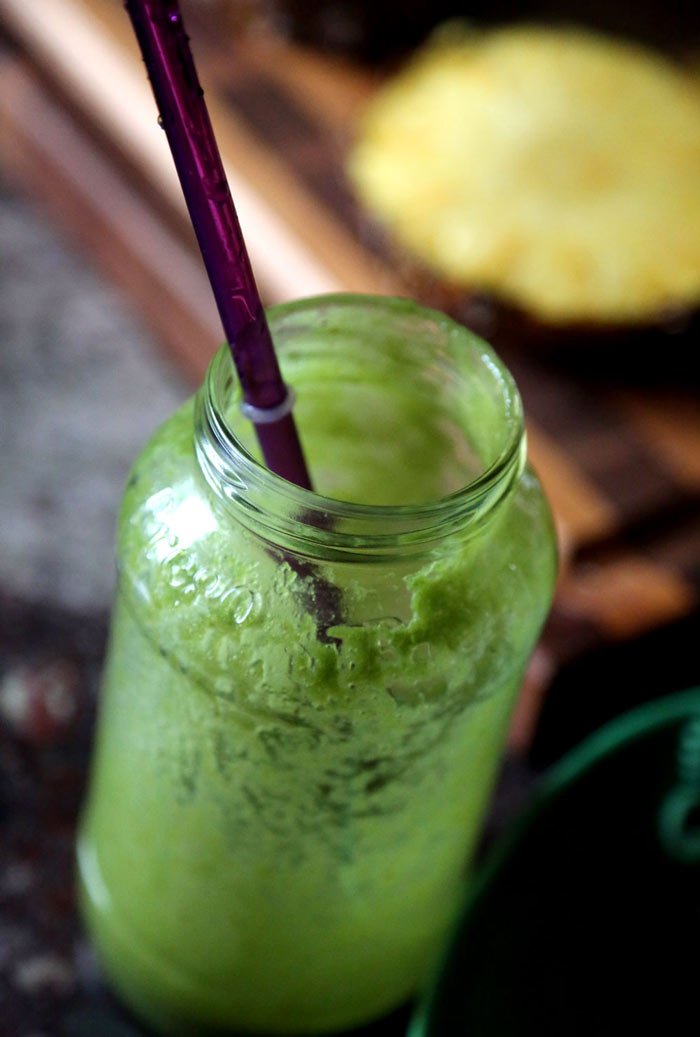
I also add a little shredded red cabbage also.
I hoping to get support from the web community so please visit my site and and leave a comment with you experience with juicing good or bad. I believe we can help each other life a healthier life style.
Donnell Lowery
http://iworldvideo.net/juicing-for-weight-loss-my-journey/
Vegetable Soups: Easy to Prepare, Versatile and Simply Delicious!
Although green smoothies and salads are fantastic, most people cannot live on them alone 🙂
So, today I have a vegetable soup recipe for you.
Vegetable soups are a great healthy standby and are easy to prepare, digest and absorb. They are great comfort food, and are a great dish to warm us up in the middle of cold weather.
I recommend that you make a big pot that will last you a couple of days, or even longer (keep several portions in your freezer for “emergencies”).
The following recipes are just an inspiration. Don’t feel you cannot prepare the soup if you are missing one (or more) ingredients. Just as when making the green smoothies, experiment with your recipes, using what’s available in your kitchen, garden or grocery store.
Keep in mind that:
- You may add any vegetables of your choice, including leafy greens.
- Add beans, chickpeas, or lentils for more protein and “staying power.”
- Add some mushrooms.
- Add some whole grains, such as fine barley or quinoa.
- Use vegetable stock to add even more flavor.
- Add fresh herbs right before serving, such as parsley, dill or cilantro.
- Serve alone or with a side-dish of raw leafy green salad.
Vegetable Quinoa Soup: Easy to Prepare, Versatile and Simply Delicious!

Ingredients
- 2 large onions, chopped
- 5 clove garlic, minced
- 2 large leeks, washed well and chopped (white and green parts)
- 3 carrots, chopped
- 2 stalks of celery (with the tops) chopped
- 2 red skin potatoes, chopped
- 1 large red bell pepper chopped (optional)
- 1/2 medium butternut squash, remove skin and seeds, dice same as potatoes
- 1/2 head small cabbage, coarsely chopped
- a few white button mushrooms or other mushrooms of choice, cleansed and chopped
- 1 cup fresh parsley or dill, chopped
- 1 tsp. cumin (optional)
- 1 cup quinoa
- 8 cups water or vegetable broth
Instructions
- In a large saucepan, saute in the oil the garlic, onions, leeks and celery in a few tablespoons of water or vegetable broth for several minutes - until onions are translucent.
- Add other ingredients, water or broth and simmer till all ingredients are tender, about 30 minutes.
- Add fresh parsley or dill. Season with pepper and salt (if using) to taste. Time permitting, let the soup sit for 30 minutes to fully develop the flavor. Heath through and pour into individual bowls and serve.
- Serve alone, with a side salad or bread.
*This recipe uses quinoa, a gluten-free grain, that can be found in health food stores and some supermarkets. If you cannot find it, you may try substituting with millet, amaranth, fine barley, or other grain.
This recipes comes from my recently released ebook:
“Comfort Soup Recipes For Body and Soul”
Easy Soup Recipes Bursting With Flavor and Compassion! Your Guide To Cooking Rich and Decadently Creamy Soups With No Added Saturated Fat, No Cholesterol, and Low in Sodium Using Simple, Healthy & Inexpensive Ingredients”
For less than the price of a few cans of processed organic soup, you can have my collection of the best comfort soup recipes you’ll ever taste. And they’re easy to make, too!

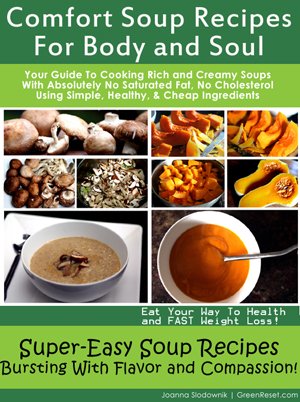
- This ebook is filled with tips and tricks that will make you into a true soup wizard. You’ll be able to impress your family and friends every time you step your foot into the kitchen to make soup.
- Rich, Creamy Soups Guilt FREE. Low in fat, low in cholesterol, low in sodium. I teach you techniques to create super rich soups, without the added fat and cholesterol. No need to deny yourself these comforting creamy soups, if you use the ingredients that are healthy and perfect for weight loss.
- Immunity Boosting, Cholesterol-Lowering and Anti-Inflammatory Benefits. These soups are chock full of healthy ingredients, that have been proven to posses immunity-boosting, cholesterol-lowering and anti-inflammatory properties.
You will find many more recipes there, as well as lots of invaluable tips and strategies to make delicious soups that are also good for your body.
Find out more about the book here.
To your health,
Joanna
Cinnamon Smoothies: Spice Up Your Smoothies and Stabilize Blood Sugars
Ah, cinnamon… I remember years ago on my trip to Morocco, I went to a restaurant where, for dessert, we were served neatly cut orange circles sprinkled with cinnamon powder. It was a truly elegant and delicious dessert! Plus, it’s a testimonial that simple things are often better…
Anyway, cinnamon can be a great addition to your smoothie. It is not expensive, has no unpleasant side effects, and provides lots of proven health benefits.
Although you can certainly buy cinnamon capsules, a much better way to enjoy the health benefits of cinnamon nutrition, is to add cinnamon to your smoothies and other dishes. While in the US, we use cinnamon mostly as a spice to be used in pies and other sweet-tasting baking recipes, in many parts of the world it is used in savory dishes as well.
What Are the Kinds of Cinnamon?
Cinnamon is the bark of one of a group of trees belonging to the same family. Many related species are marketed as cinnamon.
The two varieties mostly used are: Ceylon cinnamon (also called “true cinnamon”)and cassia cinnamon (or “Chinese cinnamon” is what you’ll typically find in your grocery store’s spice aisle) . Cassia cinnamon is the kind most often used for baking and cooking. It’s also the variety most researchers have used when they’ve studied cinnamon and diabetes.
The two kinds of cinnamon come from different plants. Cinnamomum Cassia, used in curry powder and in Chinese and Korean dishes, is dark brown. The other variety of cinnamon, Cinnamomum Zeylanicum, is a lighter brown or tan.
Cinnamon “sticks” or “quills” are rolls of dried bark, and can be grated into a powder or soaked in liquid. Most people buy cinnamon pre-ground.
Cinnamon Nutrition
Would you believe that a mere teaspoon of cinnamon provides 28 mg of calcium, almost one mg of iron, over a gram of fiber, and quite a lot of vitamins C, K, and manganese? Yep. It also contains about half a gram of “usable” (non-fiber) carbohydrate.
What are the Health Benefits of Cinnamon?
In traditional medicine, cinnamon has been used for digestive ailments such as indigestion, gas and bloating, stomach upset, and diarrhea. It has a mild anti-inflammatory effect, slows down the spoiling of food, and has anti-fungal properties as well.
Health benefits of cinnamon include:
• Supporting digestive function
• Relieving congestion
• Relieving pain and stiffness of muscles and joints
• Reducing inflammation and symptoms of arthritis
• Helping to prevent urinary tract infections, tooth decay and gum disease
• Relieving menstrual discomfort
• Stimulating circulation with blood-thinning compounds
Cinnamon May Help Improve Type 2 Diabetes and Insulin Resistance
The majority of the research seems to be pointing in the direction of cinnamon being beneficial for people with diabetes. Along with the improvement in blood sugar, studies have documented improvements in triglycerides, blood pressure, and LDL cholesterol.
Several studies have shown improved insulin sensitivity and blood glucose control by taking as little as ½ teaspoon of cinnamon per day.
A study published in the December 2003 issue of the journal Diabetes Care, tested daily consumption of 1, 3, or 6 grams (1 gram = 1,000 mg) of cinnamon or a placebo every day for 40 days. The researchers found that among diabetics who used cinnamon:
- Fasting glucose was lowered 18 to 29 per cent.
- LDL, or “bad,” cholesterol fell by 7 to 27 per cent.
- Total cholesterol fell 12 to 26 per cent without any loss of the protective HDL cholesterol.
- Fasting triglycerides fell 23 to 30 per cent.
The benefits of using cinnamon continued even after supplementation was stopped. That means, if you used cinnamon regularly, you do not necessarily need cinnamon every day to receive the full benefits for blood sugar regulation and lowered levels of LDL, cholesterol, and triglycerides. In the interest of full disclosure, however, it is important to note that one recent study did not find the benefits of cinnamon to accrue in just 14 days. It is apparently necessary to use cinnamon in food for at least 40 days before you can “take a day off” and still get the protective benefits. (Source: Natural News)
Clearly, adding ample amounts of cinnamon to your diet is incredibly beneficial. Just remember, unless you are adding it to a proper diet — high in vegetables and especially leafy greens — it is unlikely you will experience any noticeable benefits.
Cinnamon in Smoothies
Cinnamon adds a wonderful flavor to green smoothies. It goes especially well with smoothies using apples, pears, citrus (oranges, tangerines), and bananas. Cinnamon can be used on its own or with other spices like nutmeg, clove, ginger and all spice.
Cinnamon combines best used with mild, less-bitter greens like romaine, leaf lettuce, baby spinach, and celery tops. I would caution against using it with bitter greens like kale and dandelion, or with flavorful berries.
The optimum dose is between 1-3 grams a day. 1 gram is around 1/4 teaspoon of ground cinnamon, about the amount you would use in a single-serving smoothie.
Most smoothie recipes suggest adding cinnamon “to taste,” but a good place to start is with 1/2 teaspoon of ground cinnamon for every 2 cups of smoothie. Adding cinnamon before blending maximizes aroma and flavor. But you can always sprinkle more on top as a garnish.
If you are interested in saving money, I recommend that you buy your cinnamon in bulk amounts. Make sure to store your extra cinnamon in a closed container for optimum freshness.
Note: More cinnamon is not necessarily better. Cinnamon contains a compound called coumarin, a substance that can be toxic to the liver in large amounts. People with liver damage should be careful not to overdo it, however, because large amounts of cinnamon may increase liver problems.
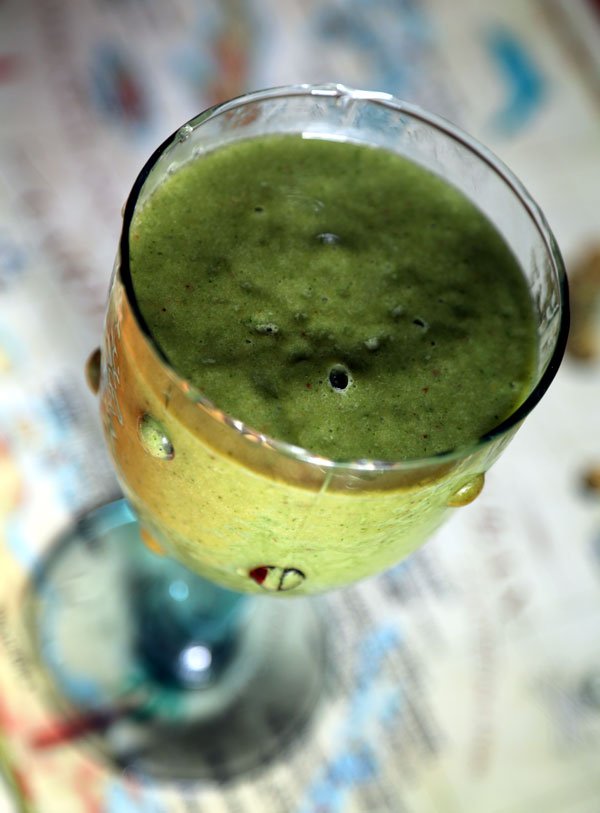
Cinnamon-Apple-Celery Smoothie
Celery Apple Cinnamon Smoothie: A Tasty Way to Stabilize Blood Sugars
Ingredients
- 4 stalks of green celery with or without the leaves
- 1 medium size apple (a green tart apple or a red fuji apple), leave the skin on if organic
- 1 cup baby spinach leaves or other mild leafy greens (optional)
- 1/4 to 1/2 teaspoon ground cinnamon
- 1 1/2 cups of water
Instructions
- Blend all ingredients until smooth. Pour into a glass and drink immediately.
Orange Cinnamon Smoothie Recipe
Orange Cinnamon Smoothie

Ingredients
- 1 medium orange, peeled and deseeded
- 1 medium very ripe mango, peeled and pitted; or 1 cup frozen mango
- 1/4 cup rolled oats
- 1/2 to 1 teaspoon ground cinnamon
- 2 ounces of filtered water
Instructions
- Start by adding the liquid to your blender (I use a Vitamix), followed by the remaining ingredients. Blend on high until the smoothie is creamy.
- Note: If you don’t have a high-speed blender, you’ll want to grind the oats in a coffee grinder before adding them to your blender.
Questions? Comments? Suggestions?
If you have a favorite recipe, why not submit it here in the comment section of this smoothie recipes blog for others to enjoy too!
I also welcome any comments, questions and suggestions. Thanks!
Broccoli Rabe Smoothie with Garbanzo Beans
After a whole week of drinking cabbage and beet smoothies in various combinations, I’m ready to move on.
I decided to try broccoli rabe in a smoothie.
This is not a green that I use very often, so why not try it with some juicy fruit and see what happens. I’m also experimenting with adding beans to smoothies to create more filling, meal replacement recipes – but if this is too much for you, feel free to skip the chickpeas in the recipe.
Here is a recipe I just tried this morning that turned out quite tasty and filling.
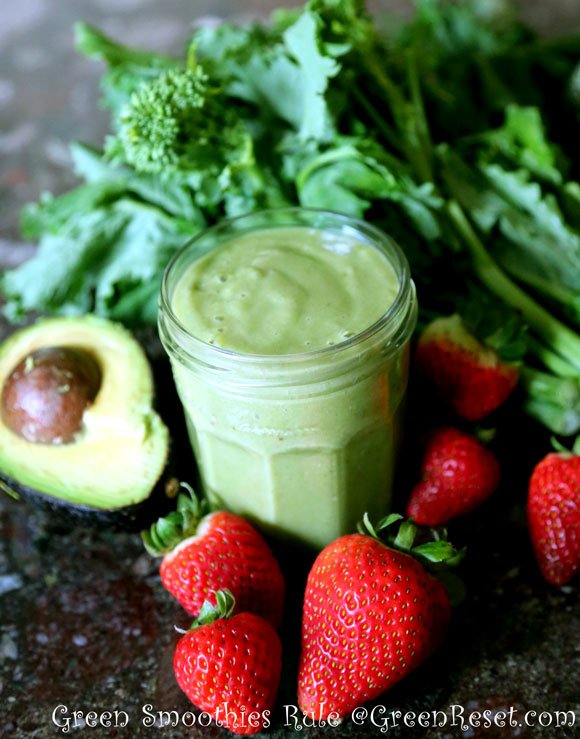
Broccoli Rabe Smoothie with Garbanzo Beans
Ingredients
- 2 cups broccoli rabe
- 2 cups spinach
- 2 very ripe bananas
- 1 cup mango, frozen
- 1 cup strawberries, fresh (or frozen)
- 1/2 cup avocado
- 1 cup garbanzo beans (chickpeas)
- 2 cups water
- 1 grapefruit - it will add tartness to the smoothie, so skip it if you prefer a sweeter smoothie
- 2 packets of stevia, or other sweetener to taste
Optional
Instructions
- Blend all ingredients on high until very smooth.
1 cup of chickpeas (garbanzo beans, bengal gram) add 269 calories to this smoothie, plus 15 grams of protein!
Chickpeas are also a great source of Dietary Fiber, Protein and Copper, and an excellent source of Folate and Manganese. 1 cup of chickpeas satisfies over 70% of daily folate requirement.
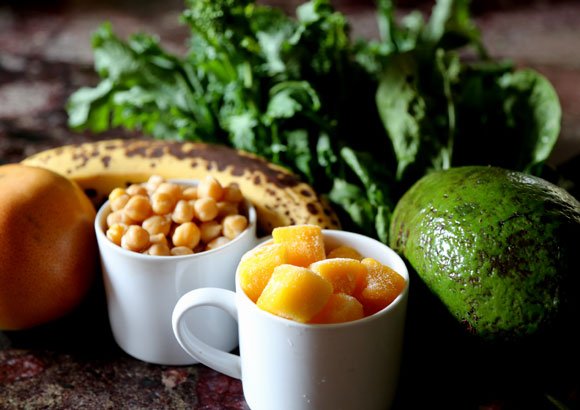
Broccoli Rabe Green Smoothie
For all my blending recipes I use Vitamix. If you don’t already own a VitaMix, I strongly encourage you to check out what this machine is capable of! For more information about VitaMix you can go directly to the VitaMix website. You may also want to read my post about the Best Blender.
I LOVE my VitaMix and highly recommend investing in one if you are ready to make serious changes to your diet. I have had mine for almost 5 years and use it daily!
If you decide to purchase Vitamix – be sure to use Promotional Code 06-004554 to get free shipping.
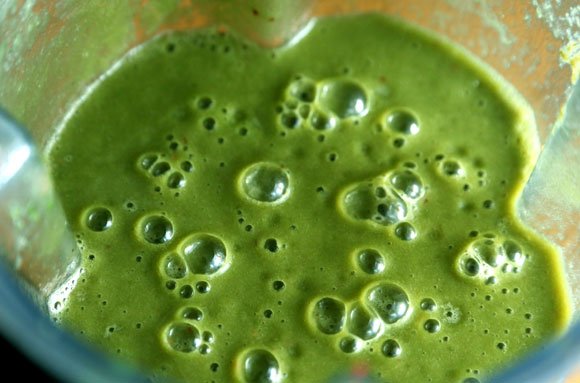
The Making of Green Smoothie: Inside of my Vitamix
Questions? Comments? Suggestions?
If you have a favorite recipe, why not submit it here in the comment section of this smoothie recipes blog for others to enjoy too!
I also welcome any comments, questions and suggestions. Thanks!
Does Blending Destroy 90% Of Nutrients?
This is a question that sometimes comes up on the health and raw food forums, usually causing a lot of heated debate. There are a few experts, with a lot of credibility, who are saying “Don’t drink green smoothies. Green smoothies are not good enough. You need to be eating your greens in salads, eating sprouts, fresh water algae, seaweeds, and/or other “super-foods,” as well as drinking freshly made green juices made from sprouts and organic vegetables using high-quality juicer.”
Some of these people make it sound like blended green smoothies are no better than *junk food*.
One of the experts that has been very outspoken on this topic is Dr. Brian Clement. Dr Clement is the director of the Hippocrates Health Institute, a highly renowned institution, that has been helping people with terminal cancers and other life-threatening diseases for many decades. A disciple of Ann Wigmore, the founder of the wheatgrass movement, Dr. Brian Clement believes in juicing – wheatgrass, sprouts and green vegetables.
Dr. Clement has made several statements online claiming that blending destroys approximately 90% of the nutrients in the fruits and vegetables. According to him, the loss of nutrients is due to oxidation that is happening during blending. As oxygen is being sucked into the blender during a blend cycle, nutrients in the food are being destroyed, and as a result your blended smoothie would only contain about 10% of the nutrients in the fruit and greens that you put in the blender.
Does Blending Destroy 90% Of Nutrients?
According to Dr. Clement, oxidation is the reason that smoothies should not be considered “health food” and should instead be considered “recreational” or “transitional” (“bridge”) food, for people switching from the SAD diet, because the process of blending them for 90-120 seconds destroys 90% of nutrients.
Okay, so let’s look at some facts:
1. There is no denying that some nutrient loss does occur from blending. However, nutrients are lost whenever whole foods are chewed, cut, chopped, juiced, shredded, peeled, dehydrated and otherwise exposed to air. Nutrients in food begin to degrade the instant they are harvested, exposed to UV light and heat. You can’t get 100% of the nutrients in every food unless you eat plants right after they are picked, and even then, you will destroy nutrients just by chewing the food.
However, that doesn’t mean that the kale sitting in your refrigerator right now is devoid of nutrients – or unhealthy. And it certainly doesn’t mean that green smoothies are junk food.
2. A professional blender, such as Vitamix, blends a smoothie in about 10-20 seconds, not 90-120 seconds. I certainly wouldn’t blend a green smoothie for a solid two minutes, but even so, I doubt that it would result in 92% nutrient loss.
3. Secondly, green smoothies are loaded with antioxidants such as vitamin C, vitamin E, flavonoids and carotenoids that help reduce and prevent oxidation.
4. Victoria Boutenko conducted an experiment on potatoes where she juiced one and blended the other. After two days, the blended potato had very little oxidation, most of which was at the top of the glass where the liquid was exposed to air. The juiced potato turned brown and oxidized much more rapidly. She asked two scientists to comment on the results, and they both agreed that her experiment proved that blending may indeed be better than juicing in this respect.
5. Also, the amazing results that people are getting by adding green smoothies to their diet, certainly prove beyond a shadow of a doubt that this is not “junk food.”
And even Dr. Clement admits that smoothies are an excellent bridge food from what people are eating now to what he would call a “healthy” diet. He even goes so far to say that blending is “infinitely better” than what most people are eating.
In fact, the cornerstone of the Living Foods Lifestyle at the Hippocrates institute is the Energy Soup, a blended mixture of greens, sprouts, vegetables, Rejuvelac, and dulse. Energy soup is a complete meal, containing every nutrient in a balanced form that the body needs.
Ann Wigmore, when she developed the Hippocrates diet, advocated juicing fruits and vegetables as a way to obtain optimal nourishment. However, in her later years, she became a proponent of blending foods rather than juicing them. The only juices she used were watermelon and wheatgrass.
Ann Wigmore believed that juices can be too cleansing for most people’s bodies.” Blending helps the body to clean itself and thus it restores health much quicker than just eating the foods as salads, yet it does not overtax the system with the rapid cleansing action of juices,” she wrote. “Also, juices do not contain fiber. Separating the fiber and other elements from the juice results in a food that is not as balanced as Nature would have it.”
The thing you need to consider is this: If you are already eating a big bunch of kale and other greens in your salad, along with other vegetables, as well as drinking freshly made organic juice every day, then you probably don’t need green smoothies, and you will not observe any benefits from adding them to your diet, other than perhaps time that you will save by blending your produce, instead of preparing salads and juices.
However, my guess is that 99% of the people are not there yet.
The forgotten fact is, in ANY form, Americans simply aren’t eating the sufficient quantity of good-quality natural plant foods.
EVEN IF a salad is superior (and I dispute that, even though I love salads too!), guess what? Virtually no one is eating that much salad. If your goal is perfection, then perhaps you need to start growing your own organic vegetables and sprouts, and eat them freshly picked in salads, chewing them to perfection. I choose to operate in facts and realities to come up with solutions that people will actually DO.
Green smoothies are an excellent first step that is easy to take for anybody. It literally doesn’t get any easier than this. It’s the best use of your kitchen time, so even if you only spend 20 minutes in the kitchen right now, you can fit it into your lifestyle.
Plus it’s a sustainable habit. Most people who buy juicers don’t use them every day. My juicer has been sitting unused, collecting dust, for a long time, even before I started blending. Since I purchased my VitaMix four years ago, I’ve been using it almost EVERY SINGLE DAY when I’m home, a few times per day. (I say almost every day, because I don’t take it with me when I travel).
Try putting 2 lbs. of fresh greens and vegetables on a giant platter. Tell someone to eat it in a day. It’s beyond daunting—it’s virtually impossible unless you’re going to spend 30 minutes chopping and 90 minutes chewing. Most people cannot spend hours a day preparing food and trying to get all my food down, so blending is their best option.
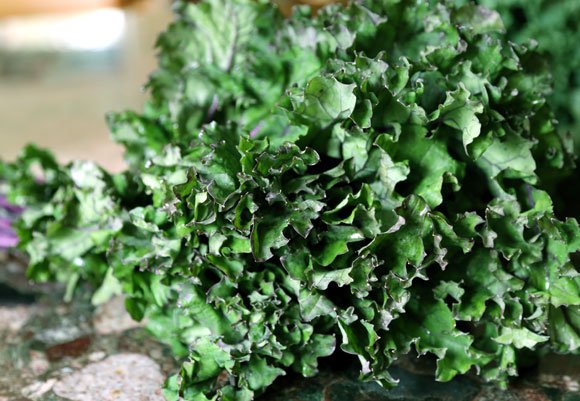
Try putting 2 lbs. of fresh greens and vegetables on a giant platter and eat it in a day. It’s beyond daunting.
Nutrients oxidize a little bit upon blending, but then again, nutrients are also lost when greens are chewed and swallowed. Nutrients are also lost because the narrow modern palate doesn’t break them down well enough to get absorbed fully.
Just think that you’d have to eat a giant platter of plain greens daily that you get in your quart of green smoothie–I doubt that you’d actually do it. Green smoothies are nutritionally superior to 99.9% of what 99.9% of Americans are eating all day.
I obviously feel strongly that green smoothies are a great way to spend 10 minutes to get up to 15 servings of raw fruits and greens in the diet. Don’t forget that a quart will completely fill your stomach, with only 200 calories. You don’t need any dressing to get it down. You don’t have to prep it for 30 minutes and spend another 30 minutes eating it.
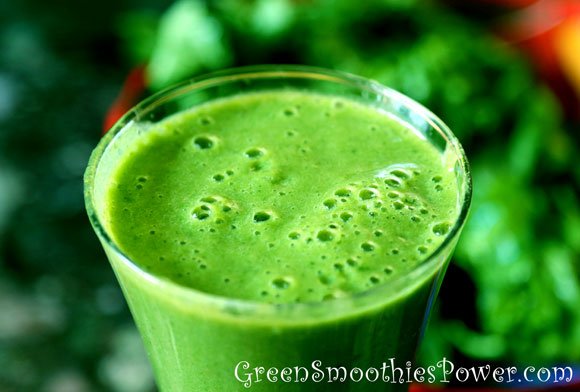
Does blending destroy 90% of nutrients? Are green smoothies junk food?
So, if you ask me, even if green smoothies are not the “Holy Grail” of nutrition (there are many more things that you can and should be doing, such as eating big salads, loaded with greens, sprouts, seaweeds, and other healthy foods :-); you can also add freshly made green juices to your repertoire) — for overall nutrition, made quickly, consumed easily, for high impact on many different health issues, green smoothies win hands down.
Are green smoothies no better than junk food?
What are your thoughts?
Asparagus Soup Recipe: Dairy Free, Yet Deliciously Creamy
This recipe is for cream of asparagus soup. However, it’s very versatile: If you can’t find nice asparagus, use broccoli floretts or broccoli rabe to make cream of broccoli instead.
This simple soup is easy to make, contains only 5 easy-to-find ingredients, and yet has that look of sophisticated elegance that is sure to impress even the most discriminating guests. It can be served during holidays and other special occasions.
It is also a perfect comfort soup for the cold winter days.
You will literally not believe that this soup has no dairy.
It looks rich and creamy, and yet has no saturated fats, no cholesterol, and is low in calories.
Four asparagus spears, cooked, boiled, drained, without salt (60g) have only 13 calories!
Asparagus is also a good source of Vitamin B6, Calcium, Magnesium and Zinc, and a very good source of Dietary Fiber, Protein, Vitamin A, Vitamin C, Vitamin E (Alpha Tocopherol), Vitamin K, Thiamin, Riboflavin, Niacin, Folate, Iron, Phosphorus, Potassium, Copper, Manganese and Selenium.
This recipe is completely dairy free, lactose free, and wheat free. It therefore contains no cholesterol and very little fat.
The secret to the delicious creaminess is…cashews.
Cashew cream stands in for dairy here and makes for an equally rich, delicious dish.
Cream of Asparagus Soup
Ingredients
- 2 large bunches asparagus, ends trimmed, cut into 2 inch pieces
- 2 cups fresh baby spinach
- 2 stalks celery, chopped
- 1 large onion, chopped
- 2 tablespoons olive oil (optional)
- ½ cups raw cashews (2 ounces)
- 8 cups water or vegetable stock
- Sea salt and freshly ground pepper to taste
- Dill or other greens
- 1 cup chickpeas or white beans, cooked
For Garnish
Optional (to make the soup more protein-rich and filling)
Instructions
- In a large cooking pot, sauté the asparagus, celery, and onion in olive oil until soft. If you want to skip oil, add a few tablespoons water and sauté the vegetables for 5-10 minutes. Add liquid and simmer for 30 minutes. Add beans, if using.
- In a blender, add 1 cup liquid and cashews and blend on high for 30 seconds, until very smooth. Pour into the pot with the soup and simmer for a few more minutes.
- Working in batches, pour the soup into a blender, cover the lid tightly (the hot liquid tends to erupt), and blend on high.
- Add salt and pepper to taste. Pour into soup bowls and decorate greens. Enjoy!

Calories in Asparagus Soup:
2 bunches asparagus spears (approx. 40 spears) : 130 calories
2 cups spinach (60g): 14 calories
1 large onion (150g) = 60 calories
2 stalks of celery, cooked (74g) = 14 calories
2 ounces cashews (56g): 300 calories
Total Calories: (without cashews) 218/6=37 calories; with cashews: 518 calories total /6 servings = 86 calories per serving
If you’d like to reduce calories even further, while adding more protein to the soup, add 1 cup garbanzo beans or other white beans to the soup.
1 cup garbanzo beans has 269 calories, and 36 calories from fat. It also contains a whopping 15 grams protein. Chickpeas are also an excellent source of Dietary Fiber, Protein and Copper, as well as Folate and Manganese. Read More http://nutritiondata.self.com/facts/legumes-and-legume-products/4326/2#ixzz27mYy2xXB
I used to make this soup with a potato, which is a great way to add some creaminess to the soup. I was never a heavy heavy cream user, so I usually would skip that ingredient or just add a bit of milk.
Since I became vegan, I’m experimenting with various substitutes of animal products and reading tons of cookbooks for inspiration on how to transform conventional dishes that I love into delicious dishes that are also full of compassion.
The Secret to Creamy Soup Without Dairy or Wheat
Most conventional creamy soup recipes call for heavy cream, half-and-half, butter and/or flour.
I first read about using cashews in creamy soups in “The Conscious Cook” by Tal Ronnen. He inspired me to try cashews in creamy soups, instead of dairy, and it really works. Since I read about it a few weeks ago, I’ve been using cashews in various soup recipes, such as this Cream of Celery Root Soup, and they really are a terrific little nuts to have in your kitchen.

Asparagus spears: You can also use broccoli or broccoli rabe in this recipe
For all my blending recipes I use Vitamix. If you don’t already own a VitaMix, I strongly encourage you to check out what this machine is capable of! For more information about VitaMix you can go directly to the VitaMix website. You may also want to read my post about the Best Blender.
I LOVE my VitaMix and highly recommend investing in one if you are ready to make serious changes to your diet. I have had mine for almost 5 years and use it daily!
If you decide to purchase Vitamix – be sure to use Promotional Code 06-004554 to get free shipping.
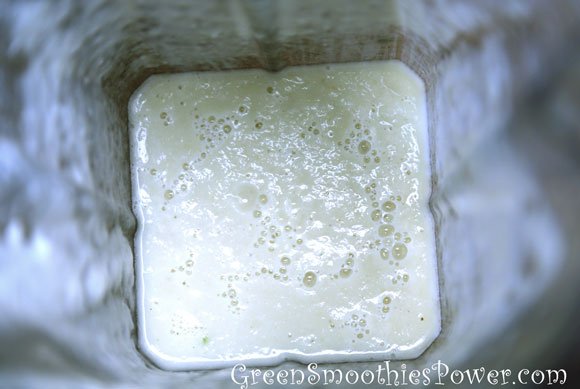
The Making of Cream of Asparagus Soup: Blending Cashews into a cream
Questions? Comments? Suggestions?
If you have a favorite recipe, why not submit it here in the comment section of this smoothie recipes blog for others to enjoy too!
I also welcome any comments, questions and suggestions. Thanks!
Cream of Celery Root Soup with Granny Smith Apple
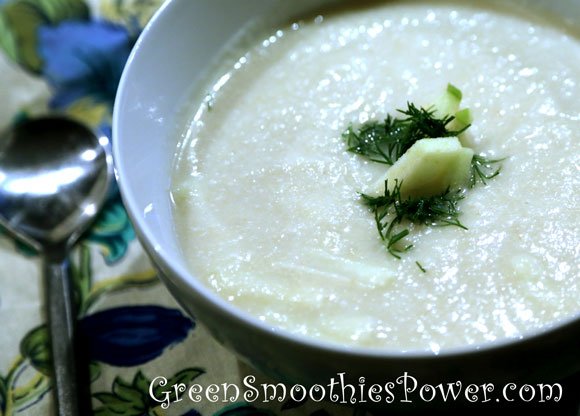
If you never made cream of celery root soup, you are in for a big surprise.
This simple soup is easy to make, contains only 5 simple ingredients, and yet has that look of sophisticated elegance that is sure to impress even the most discriminating guests. (For even easier version, check out this raw celeriac apple soup version that I tried recently). It can be served during holidays and other special occasions.
It is also a perfect comfort soup for the cold winter days.
You will literally not believe that this soup has no dairy, because it looks like a big bowl of heavy cream. It looks rich and creamy, and yet has no saturated fats, no cholesterol, and is low in calories.
One cup celeriac, cooked, boiled, drained, without salt (155g) has only 42 calories.
This recipe is completely dairy free, lactose free, and wheat free.
The secret to the delicious creaminess is…cashews.
Throwing in some diced apples to garnish the soup at the end adds a surprising tartness, plus a dash of dill gives it dramatic finish.
Creamy Celeriac Soup with Granny Smith Apple
Ingredients
- 2 medium celery roots, peeled and cut into pieces
- 2 stalks celery, chopped
- 1 large onion, chopped
- 2 tablespoons olive oil (optional)
- ½ cups raw cashews (2 ounces)
- 8 cups water or vegetable stock
- Salt and pepper to taste
- 1 tart apple, such as Granny Smith, not peeled, very finely diced
- A dash of dill
For Garnish
Instructions
- In a large pot, sauté the celery root, celery, and onion in olive oil until soft. If you want to skip oil, add a few tablespoons water and sauté the vegetables for 5-10 minutes. Add liquid and simmer for 30 minutes.
- In a blender, add 1 cup liquid and cashews and blend on high for 30 seconds, until very smooth. Pour into the pot with the soup and simmer for a few more minutes.
- Working in batches, pour the soup into a blender, cover the lid tightly (the hot liquid tends to erupt), and blend on high.
- Add salt and pepper to taste. Pour into soup bowls and decorate with the diced apple in the center. Enjoy!
Silky smooth and with a crunchy apple topping, this seductive soup packs a range of flavors — earthy, creamy, and tart-sweet.
Cream of Celery Root Calories:
Celery root (approx. 4 cups): 148 calories
2 ounces cashews (56g): 300 calories
1 large onion (150g) = 60 calories
2 stalks of celery, cooked (74g) = 14 calories
1 medium apple (182g) = 95 calories
Total Calories: 617/6 = 103 calories per serving
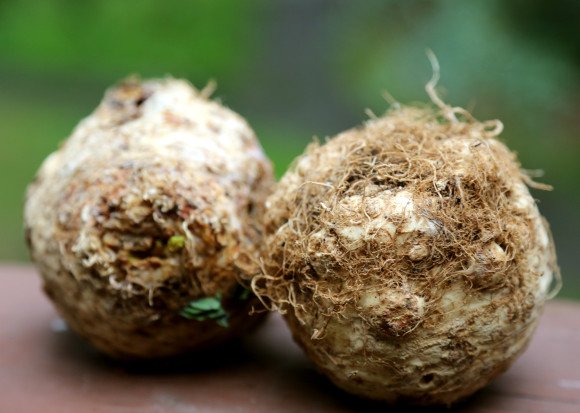
Celery Root (Celeriac): I bet you don’t use this veggie in your cooking very often.
This soup is a perfect excuse to use one of the most unappreciated veggies: celeriac root.
I used to make this soup with a potato, which is a great way to add some creaminess to the soup. I was never a heavy heavy cream user, so I usually would skip that ingredient or just add a bit of milk.
Since I became vegan, I’m experimenting with various substitutes of animal products and reading tons of cookbooks for inspiration on how to transform conventional dishes that I love into delicious dishes that are also full of compassion.
The Secret to Creamy Soup Without Dairy or Wheat
Most conventional creamy soup recipes call for heavy cream, half-and-half, butter and/or flour.
I found this recipe in “The Conscious Cook” cookbook by Tal Ronnen. It inspired me to use cashews, instead of heavy cream, to add that amazing creaminess to the soup, and it works amazingly well. Since I read about it a few weeks ago, I’ve been using cashews in various soup recipes, and they really are a fabulous ingredient.

Cream of Celery Soup (Celeriac Soup): I swear it will look like a bowl of heavy cream!
I think you could still use one medium potato as a substitute for cashews if you want to save money or reduce calories even further. I will try it next time to compare and let you know. I bet the texture will be slightly different, and it may not have the same level of sophistication when you explain the ingredients to your guests ;-).
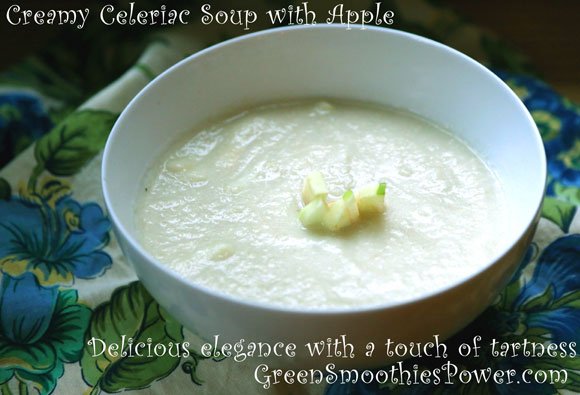
Cream of Celery Soup (Celeriac Soup)
For all my blending recipes I use Vitamix. If you don’t already own a VitaMix, I strongly encourage you to check out what this machine is capable of! For more information about VitaMix you can go directly to the VitaMix website. You may also want to read my post about the Best Blender.
I LOVE my VitaMix and highly recommend investing in one if you are ready to make serious changes to your diet. I have had mine for almost 5 years and use it daily!
If you decide to purchase Vitamix – be sure to use Promotional Code 06-004554 to get free shipping.
The Making of Cream of Celery Soup: Inside of my Vitamix
Questions? Comments? Suggestions?
If you have a favorite recipe, why not submit it here in the comment section of this smoothie recipes blog for others to enjoy too!
I also welcome any comments, questions and suggestions. Thanks!
Why Diets Don’t Work: Nutritional Quality, Food Addictions & Weight Loss
According to Dr. Joel Fuhrman, diets don’t work, because people who are already nutritionally deficient, when they cut back on calories, they become even more nutritionally deficient. As a result, their body develops a series of cravings and sensations that drives them to overeat preventing them from successfully losing weight.
Until the food addiction is addressed and removed, people cannot comfortably eat less calories. Since they desire MORE calories, not LESS, to tell them to eat less food is like telling a person to breathe less oxygen for five minutes – they’ll soon be gasping for air.
Today you can listen to Dr. Fuhrman speaking on the Food Revolution Summit here.
Dr. Fuhrman TODAY on the Food Revolution Summit
Participation in the summit is FREE. You can sign up and listen here

Why Diets Don’t Work: Nutritional Quality, Food Addictions & Weight Loss
Without attention to nutritional quality, nutritional density, and nutritional completeness, you build up toxins in your body and as the level of toxins increases in the cells, it’s as if you were smoking cigarettes or snorting cocaine – you become addicted to those toxins that come from improper nourishment to the body.
Here is how it works: When you try to eat less or stop eating, you feel shaky and weak, because your body goes into a stage of detoxification or cleansing. The more toxic you are, them more shaky and weak you will feel. You may get headaches, stomach cramps, etc. Eating food relieves these sensations, because eating stops the detox. So you have to keep eating just to feel okay. It becomes a vicious circle.
Until you understand the powerful addictive nature of conventional food – of processed foods, junk foods, and concentrated animal products – and the consequences of not eating enough of the plant foods: fruits, vegetables, beans, mushrooms, nuts and seeds – and not getting the phyto-chemicals and antioxidants that the body needs – you are setting yourself up for failure.
Not knowing these simple facts sets people for weight gain and makes it impossible to lose weight or have a long and healthy life.
The point is nutritional quality does matter, it’s not just about the amount you eat, it’s not just about calories.
Certain foods have powerful effects that make you lose weight irrespective of the calories consumed.
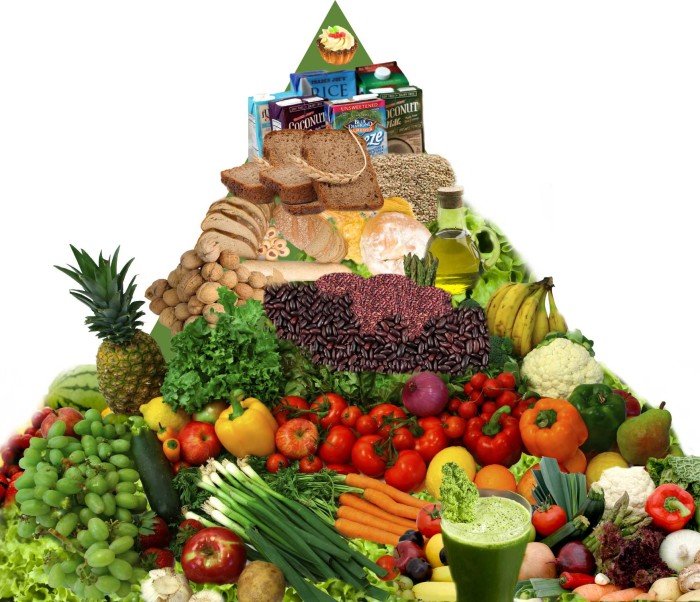
2000 calories for some person can cause a person to become heavy, and 2000 different calories in different person can cause them to become thin, based on the factors in the foods, especially the factors in foods such as greens, mushrooms and onions, that make it difficult for the body to store fat.
Basically it’s a whole biological system that gives us the instinctual connectivity between the amount of calories we need and how much we enjoy eating that works. It works and it makes people desire and enjoy the food they require and no more. We shouldn’t desire to be 180 pounds, or 220 pounds. We shouldn’t desire to eat until we are 200 pounds or 300 pounds. And we don’t when we eat the proper nutrients. When we don’t eat the proper nutrients, we get unrelenting food cravings and we are not just uncomfortable – we become food addicts. An average American person is a significant food addict.
We need to shift our perspective about nutrition and change the way we think about what we eat. It’s not about the volume amount of food, weight amount of food, or even a caloric amount of food, it’s about the nutritional amount that’s important.
Your hunger diminishes as you meet your nutritional needs better. And the perception of hunger changes.
People find that hunger is a pleasurable sensation not a painful sensation. And when they felt hunger, it made food taste so much better, because of the enhancement of the taste sensation. So people actually prefer to wait to eat till they are hungry, and they prefer not to overeat at lunch, because they want to be hungry for dinner, because eating when they are hungry is such a pleasurable sensation/so intensely pleasurable, that the body becomes an automatic computer, directing people to the precise amount of calories to maintain the perfect weight, and people don’t become overweight.
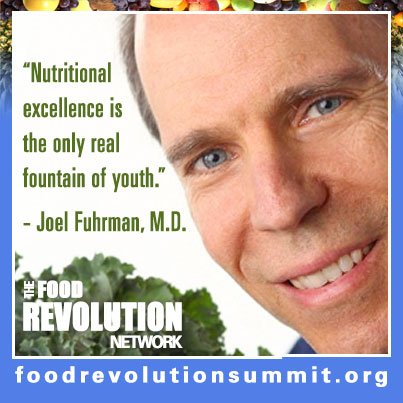
Listen to the Interview with Dr. Fuhrman on Responsible Eating and Living

Download and listen to an interview with Dr. Joel Fuhrman on Responsible Eating and Living and here, where he talks at length about diet and health.
Joel Fuhrman M.D. is a board–certified family physician, best-selling author and nutritional researcher who specializes in preventing and reversing disease through nutritional and natural methods. As one of the country’s leading experts on nutrition and natural healing, Dr. Fuhrman has appeared on hundreds of radio and television shows including: ABC, CBS, NBC, FOX, CNN, Today, Good Morning America, the Discovery Channel, TV Food Network, CNBC, the Dr. Oz Show. His own PBS television show, “3 Steps to Incredible Health,” aired nationwide in June 2011. His book, Eat to Live, published in 2003 (Little Brown) has gone through over 20 printings and been published in multiple foreign language editions. The revised version was released by Little Brown in January 2011 and is still on the NY Times best-sellers list. His recent works include Disease-Proof Your Child and has had published a total of 7 books on human nutrition to date. Dr. Fuhrman is actively involved in scientific research in human nutrition. His discoveries on food addiction and human hunger were published in the scientific journal, Nutrition Journal, in November 2011 entitled, The Changing Perception of Hunger on a High Nutrient Density Diet. His research activities include working with researchers at the National Institute of Health on dietary interventions for specific autoimmune diseases. Visit his website here.
Questions? Comments? Suggestions?
If you have a favorite recipe, why not submit it here in the comment section of this smoothie recipes blog for others to enjoy too!
I also welcome any comments, questions and suggestions. Thanks!